
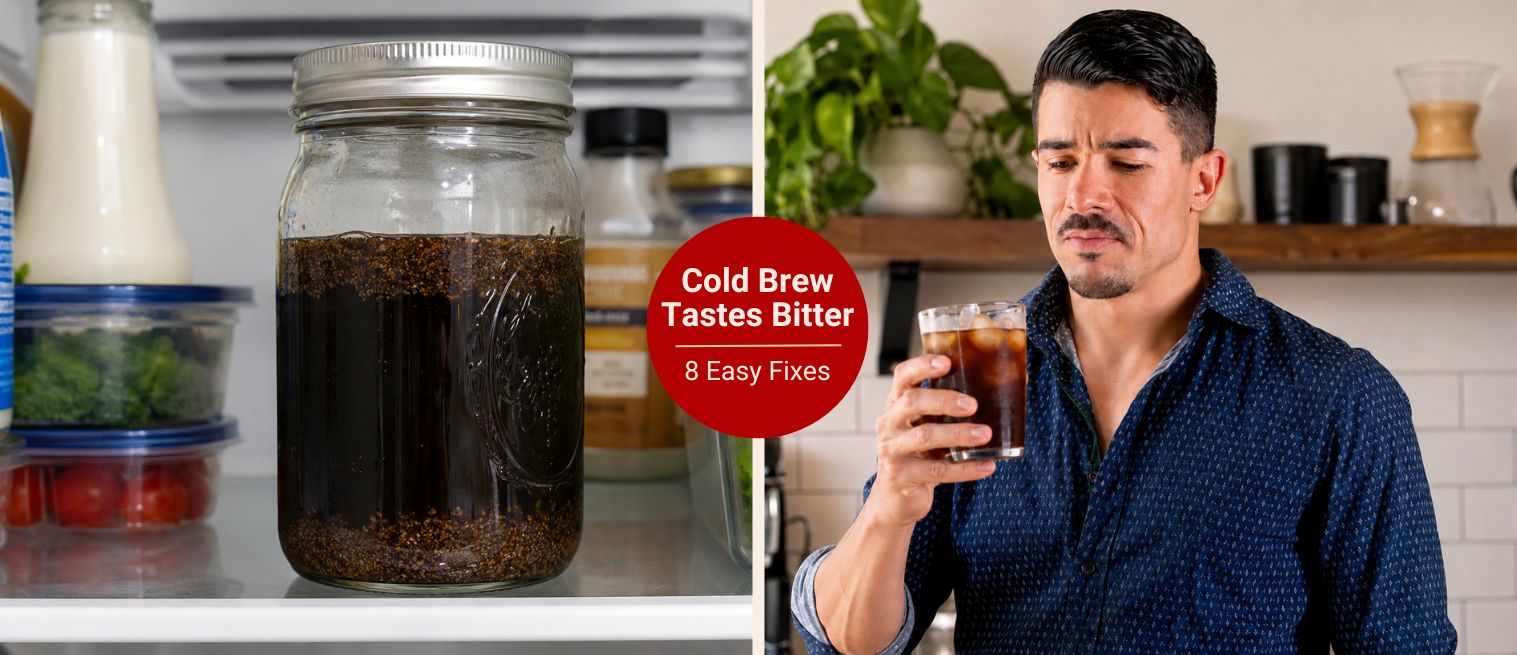
Why Does My Cold Brew Taste Bitter? 8 Causes and Easy Fixes
Summer calls for cold brew. At least that’s how it has been for me lately.
One cold brew when I wake up. Another after lunch. Maybe one more in the middle of the afternoon. But not too late, because then I’m in bed at night with my eyes wide open, quietly regretting my caffeine decisions.
That has been my schedule. A little ridiculous, maybe. But summer does that.
Some days, I grind the coffee with my Wirsh Geimori T38 Plus, set up the jar, let everything steep, and expect that smooth, mellow cold brew. Then I take the first sip and it tastes wrong. Not strong in a good way. Bitter, dry, and almost woody, and then I look at the jar and wonder, “What happened?”
Yes, I’m still learning.
The annoying part is that when cold brew tastes bitter, the cause is not always obvious. It could be the grind, the steep time, the beans, the ratio, the temperature, or even fine sediment sitting in the finished coffee.
The good news is that some bitter cold brew can still be saved before you pour the whole batch down the sink.
Is Your Cold Brew Bitter, Sour, or Simply Too Strong?
Before changing the recipe, taste the cold brew properly. I know. Not the most exciting test if the first sip already made you suspicious.
But take a small sip and ask what your palate is actually telling you.
Bitter cold brew usually tastes harsh, woody, burnt, or drying. Sometimes it lingers at the back of the tongue in a way that makes the whole drink feel heavier than it should.
Sour cold brew is different. That one tastes sharp, tart, thin, or almost lemon-like. Not bright in a nice way.
Strong cold brew. Strong cold brew can taste intense and heavy, but once you dilute it, it may become balanced. That means the batch was not necessarily ruined. It may have just been too concentrated.
Quick test
Pour a small amount into a glass and dilute it with half as much water, or even an equal amount if it tastes very strong. If the coffee suddenly tastes smoother, the main problem was probably strength. If it still tastes burnt, woody, or rough after dilution, then something else happened during brewing.
Adding water can calm down a concentrate. It cannot fully erase bad beans, too much sediment, or a brew that already went too far.
1 – You Are Drinking Cold Brew Concentrate Without Diluting It
So you make the batch, strain it, pour a glass, and think something went wrong because it tastes intense, heavy, maybe even bitter. But sometimes the only problem is that you’re drinking it straight.
Fix This Batch
Start small. Don’t dilute the whole jar yet.
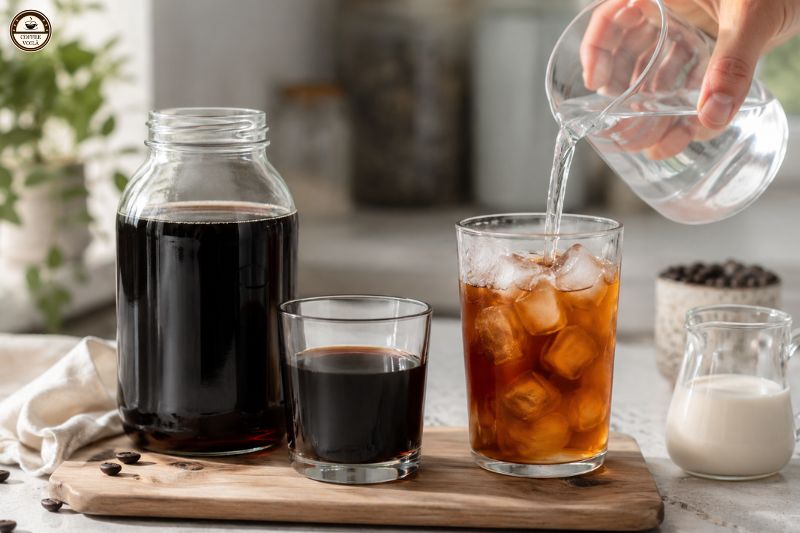
Pour a little concentrate into a glass and add cold water. I’d start with about two parts concentrate to one part water, taste it, then add more water or milk if it still feels too heavy. Some concentrates need more dilution than others. So don’t marry one exact ratio just because you saw it online.
Milk, oat milk, or ice can also soften it. Especially if the coffee is strong but not truly unpleasant.
Fix the Next Batch
Before brewing, decide what you actually want.
Do you want a concentrate you can mix later, or do you want ready-to-drink cold brew you can pour straight over ice?
That choice matters. If you follow a concentrate recipe and then judge it like it was supposed to be a smooth black cold brew from the start, the coffee may seem worse than it really is.
2 – The Coffee Was Ground Too Finely
Fine coffee grounds can make cold brew turn rough faster than you expect. They have more surface area touching the water. So extraction can move quicker, and cold brew already sits there for hours doing its slow little job.
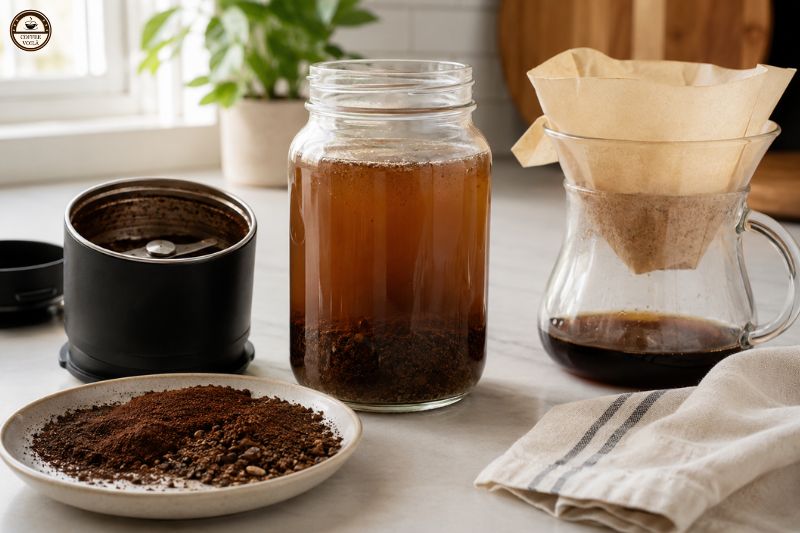
This is why ordinary pre-ground coffee can be tricky. It may work, but a lot of it is finer than I’d want for cold brew. Same with blade grinders. You press the button, shake the thing around, and hope for the best. But inside you usually get some chunky pieces and powdery bits.
Signs this might be the problem:
- The cold brew looks cloudy.
- Sediment collects at the bottom of the jar.
- The coffee feels silty or drying.
- You used regular pre-ground coffee.
- You used a blade grinder and got uneven pieces.
Fix This Batch
Filter it again.
Pass the cold brew through a paper coffee filter and let it drip slowly. Don’t squeeze the filter. That can push more fine particles through and make the drink feel rough again.
This may clean up the texture and make the cold brew easier to drink. It will not fully undo flavors that already extracted. However, it can help if sediment is making the bitterness feel worse.
Fix the Next Batch
Use a coarse, more even grind next time. Think coarse sea salt, not table salt.
If you’re grinding at home, go coarser than you would for drip coffee. If you’re buying pre-ground coffee, look for coffee ground specifically for cold brew or French press. I’d also take a quick photo of the grounds the first time you get it right. Sounds unnecessary, I know, but it helps when you try to repeat the batch later and suddenly forget what “coarse” looked like.
3 – You Steeped It for Too Long
Cold brew is slow, but slow does not mean endless.
I know the temptation. You put the jar in the fridge at night, then the next day gets busy, and suddenly the coffee has been sitting there much longer than planned. Maybe not a disaster. But sometimes that extra time pushes the drink from smooth into woody, dry, or bitter.
Fix This Batch
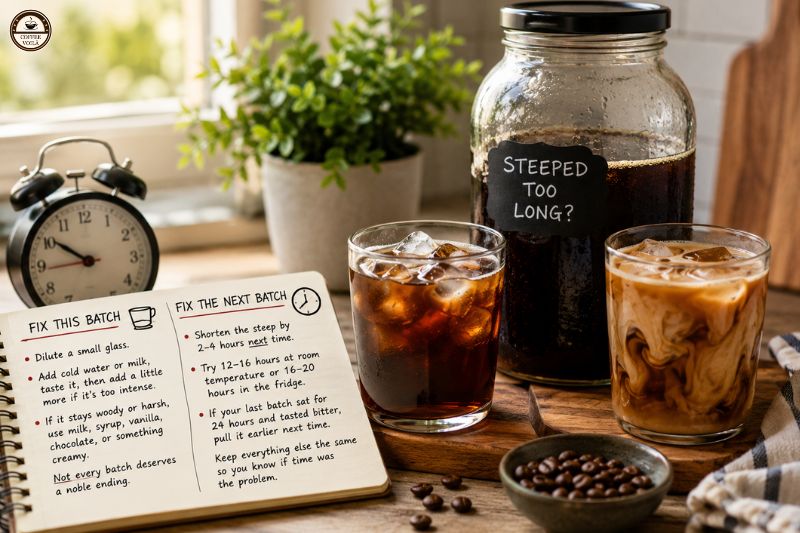
Dilute a small glass before you decide the whole jar is ruined.
Add cold water or milk, taste it, then add a little more if it still feels too intense. If the bitterness calms down, you may still have a usable batch.
If it stays woody or harsh, I’d stop trying to drink it black. Use it with milk, syrup, vanilla, chocolate, or something creamy. Not every batch deserves a noble ending.
Fix the Next Batch
Shorten the steep by two to four hours next time.
As a starting point, try around 12–16 hours at room temperature or 16–20 hours in the refrigerator. If your last batch sat for 24 hours and tasted bitter, don’t change everything at once. Keep the same coffee and ratio, then pull it earlier. That way you know whether time was the thing causing the problem.
4 – Your Brewing Temperature and Time Do Not Match
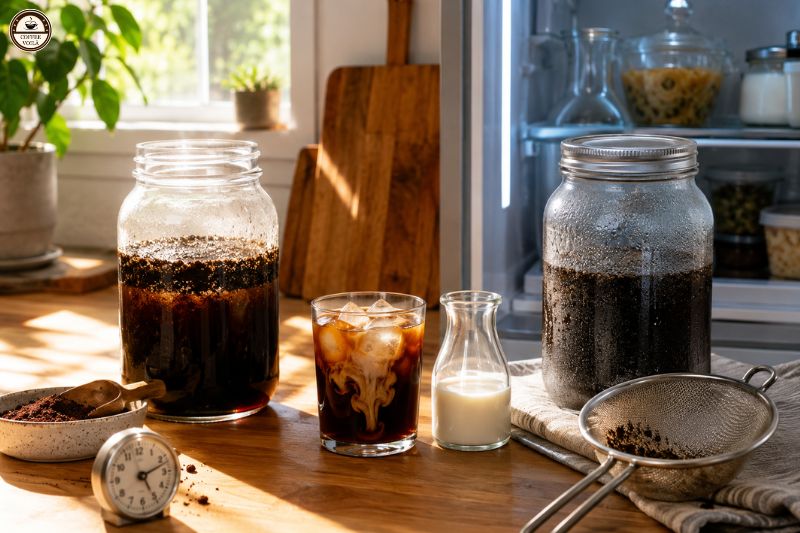
Cold brew in the fridge is not the same as cold brew sitting on the counter.
It sounds like the same recipe because the jar looks the same. Same grounds and water. But temperature changes how fast the coffee extracts. Higher brewing temperatures can increase the extraction rate. So a batch left on a warm counter may brew differently from one sitting quietly in the refrigerator.
This matters more in summer. A recipe that works fine in the fridge for 20 hours may taste rough if you leave it on the counter all day, especially if the kitchen is warm.
Fix This Batch
Filter it, dilute a small serving, and chill the rest immediately.
Don’t leave it sitting out longer while you decide what to do. If it already tastes too strong or bitter, more time on the counter will not make it friendlier.
Try it with cold water, milk, or oat milk. If that softens it, you still have something useful. If it stays woody or harsh, use it in a milk-based drink instead of forcing yourself to drink it black.
Fix the Next Batch
Write down where you brewed it.
Not a full coffee diary with emotional reflections. Just the basics:
- Fridge or countertop
- Approximate room temperature
- Start time
- Filtering time
During warmer weather, check countertop cold brew earlier instead of automatically leaving it for 24 hours. I’d rather taste it earlier than open the jar later and realize the coffee has gone past the point where dilution can do much.
5 – The Coffee-to-Water Ratio Is Too Strong
Sometimes the cold brew is not bitter because you ruined the extraction. It is bitter because you made it too strong.
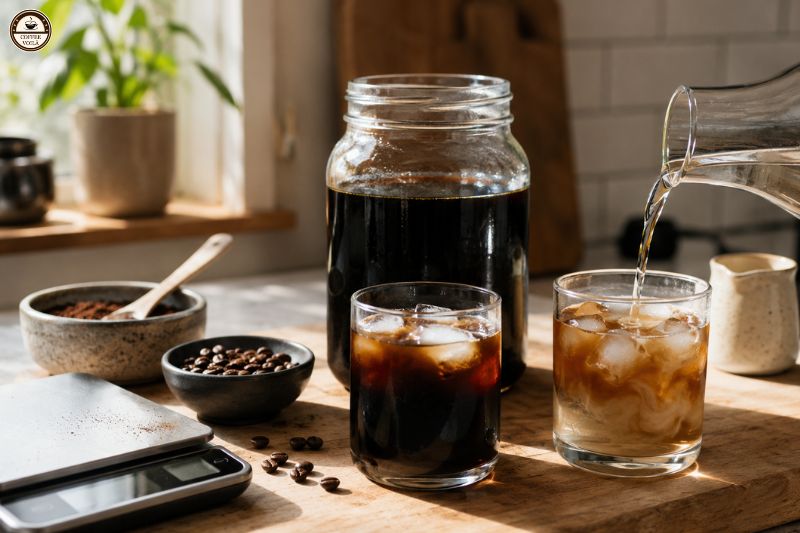
If you use a lot of coffee and not enough water, the batch can taste heavy, intense, and a little harsh even if the steep time was fine. This happens fast when you measure with cups or scoops. One scoop today is rounded and tomorrow it is flatter. Then the grind changes a little, and your brew no longer tastes the same.
Fix This Batch
Dilute one serving at a time.
Pour a small amount into a glass, add cold water, milk, or oat milk, and taste it again. Don’t dilute the whole container right away. That’s how you go from bitter cold brew to sad brown water, and now you have a new problem sitting in the fridge.
If it tastes better after dilution, the ratio was probably too strong.
Fix the Next Batch
Measure the coffee and water by weight if you can. It removes some of the guessing.
A simple starting point:
For concentrate: use 1:8
Example: 100g coffee + 800g water
For ready-to-drink cold brew: use 1:12
Example: 100g coffee + 1200g water
I’d test both before deciding which one belongs in your routine. A recipe online can point you in the right direction. But your beans, grinder, water, fridge, and patience all have a way of changing the result.
6 – The Beans or Roast Are Naturally Too Bitter for You
Sometimes the recipe is not the villain. The coffee is.
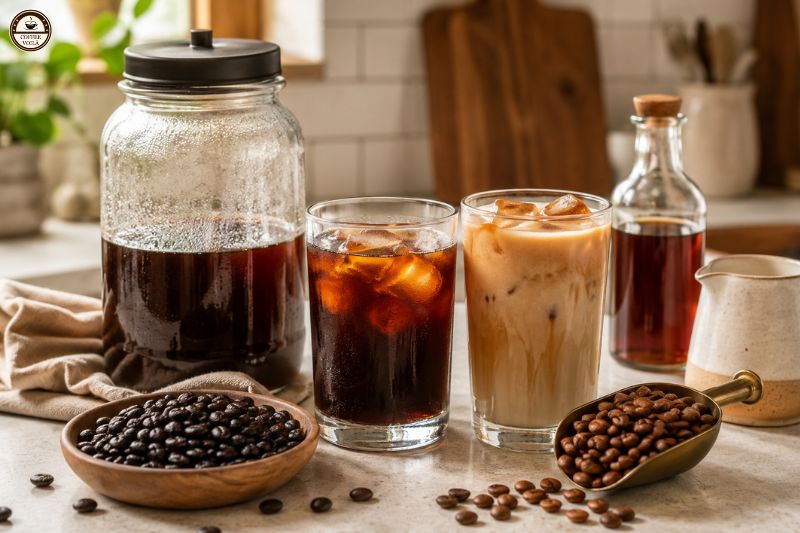
I don’t mean the beans are bad. But some coffees already lean dark, smoky, roasted, or bitter before you put them anywhere near a cold brew jar. If the beans smell a little burnt when you open the bag, the finished cold brew may carry that same flavor. Cold water will not politely remove it for you.
Signs this might be the problem:
- The beans look very dark or oily.
- They smell smoky or burnt before brewing.
- Hot coffee made with the same beans also tastes bitter.
- Changing the steep time did not help much.
Fix This Batch
Use it with milk, sweet cream, vanilla, or something that works with darker coffee.
A bitter dark roast can be rough black, but much better as an iced latte. I’d try milk or oat milk first, then a little vanilla syrup if it still feels too sharp. Not a river of syrup. Just enough to pull it back.
Fix the Next Batch
Try a medium roast next time.
Look for beans with chocolate, caramel, nutty, or mild fruit notes. Or just use a coffee you already enjoy hot. That sounds boring, but it helps. If you dislike the coffee hot, cold brew may smooth some edges, but it probably will not turn it into a different personality.
Dark roast is not wrong for cold brew. Plenty of people like it. It may just be wrong for the kind of cold brew you want to drink.
7 – Fine Sediment Continued Affecting the Flavor
Sometimes the cold brew is not bitter in a clean way. It is bitter and muddy.
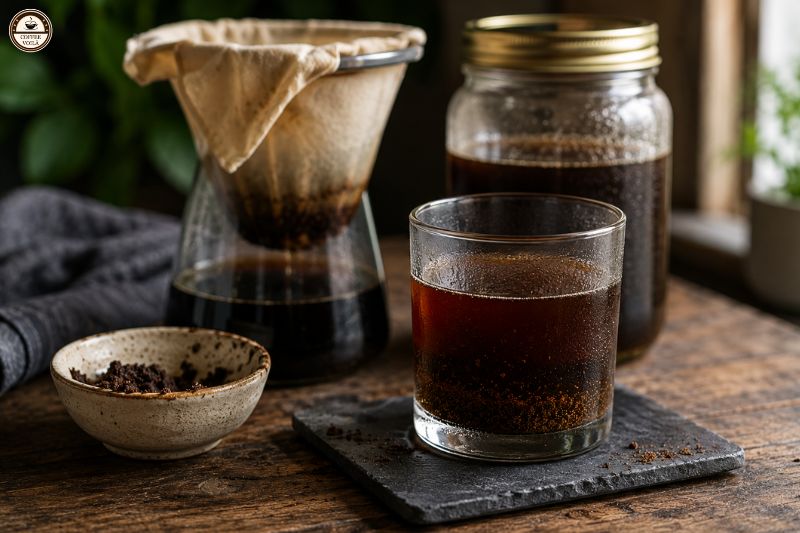
That usually means fine sediment made it into the finished coffee. A metal mesh filter can let small particles slip through, especially if the grind was uneven. You pour the cold brew into a glass, and at first it looks fine. Then you reach the bottom and there’s that dark little layer sitting there.
That sediment can make the drink feel rougher than it really is.
Fix This Batch
Filter it again.
Use a paper coffee filter, a clean cloth filter, or a finer cold-brew filter. Let the coffee drain on its own. Don’t squeeze the grounds or press the filter too hard. That can push more fines through and bring the same problem back.
The cold brew may not become perfect, but it should taste cleaner.
Fix the Next Batch
Use a coarser grind next time and try to keep it more consistent.
A better grinder helps here. So does filtering in two stages if your cold brew setup allows too much sediment through. You can use the built-in filter first, then pass the finished coffee through paper after that.
Clearer cold brew is not automatically better. Some body is fine. But if the sediment is taking over the mouthfeel, the coffee starts tasting like the bottom of the jar.
8 – Your Water or Brewing Equipment Is Affecting the Taste
Cold brew is mostly water, so if the water tastes strange, the coffee will not politely ignore it. Chlorine, heavy mineral taste, or that stale fridge smell can sneak into the batch. You may blame the beans, the grind, the ratio, the entire cold brew method, and meanwhile the problem was the water from the beginning.
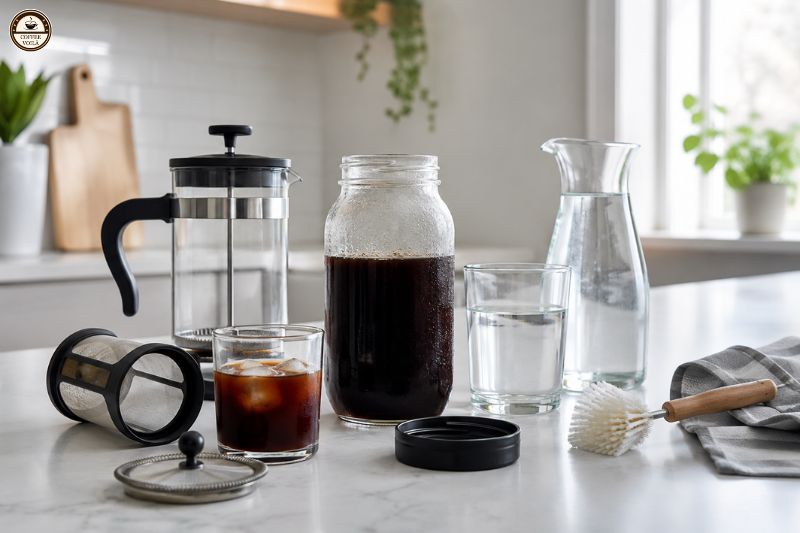
The equipment can do it too. Old coffee oils inside a jar lid, a mesh filter that never gets properly cleaned, a French press that still smells like yesterday’s brew. I’ve opened lids before and thought, no, this is not going anywhere near coffee today.
Fix This Batch
Taste the water on its own.
If the water already tastes unpleasant, diluting the cold brew with the same water will not help much. Try a small serving with filtered water instead, or use milk if the coffee is still drinkable but rough.
Also smell the jar or bottle where the cold brew was stored. It sounds strange, but sometimes the container gives itself away before the coffee does.
Fix the Next Batch
Use clean, neutral-tasting filtered water if your tap water has a strong taste.
Wash the brewer properly, especially the lid, mesh filter, spout, and any little rubber seal that likes to hide old coffee smell. Rinse away soap completely too, because soapy cold brew is a special kind of disappointment.
Then check your storage container. If it has absorbed garlic, onion, or whatever was sitting in the fridge last week, use something else.
A Reliable Starting Recipe for Smoother Cold Brew
After all the troubleshooting, I like having one boring recipe to return to. Not boring in a bad way. Boring like, “I know what happened here.”
Start with this:
- 100g coarse coffee
- 800g cold or room-temperature water
- Ratio: 1:8
- Grind: coarse, similar to coarse sea salt
- Steep time: 16 hours in the refrigerator
- Filter: strain once, then use a paper filter if the coffee looks cloudy
- Result: cold brew concentrate
- Dilution: start with 1 part concentrate and 1 part water or milk
If you prefer ready-to-drink cold brew, use the same idea but change the ratio to 1:12. So 100g coffee and 1200g water. That gives you something easier to pour straight over ice.
The main thing is not to fix everything at once. Change the grind size, steep time, ratio, or beans. One at a time. I know it’s tempting to adjust the whole recipe after one bad batch. However, then you end up with a second batch that tastes better or worse and no idea why.
A small brew log helps. Just a note on your phone with the coffee, ratio, grind, steep time, and what annoyed you about the taste.
Last Thoughts
What usually makes your cold brew taste bitter? Was it the grind size, the steep time, the beans, or something else?
And if you’ve found a cold brew ratio or small fix that made your batch smoother, leave it in the comments below. I’d like to hear what worked for you.


I FOUND THAT IF YOU ADD A LITTLE BIT OF SALT TO BITTER COFFEE, IT WILL NEUTRALISE THE WORST BITTERNESS.
Yes, I sometimes do that with Moka pot coffee that tends to be a bit more bitter with certain blends. It definitely makes a difference. Thanks, Tanya, for the advice.