5 Best Espresso Machines for Small Spaces (2026)
Last updated on May 4th, 2026 at 02:54 pm
I lived in an apartment once where the kitchen was genuinely small. Not cozy-small. I mean, small-small. Arms stretched, fingertips touched both walls. Everything in that kitchen had to earn its place . The toaster, the kettle, and the cutting board were on top of the microwave because there was nowhere else for them.
We still had an espresso machine. A compact one, tucked into one corner, and it made awesome coffee. But getting there took some wrong turns first. A machine that looked fine in the product photo and arrived too tall for the cabinet. Another that fit but stuck out so far it ate the only prep space we had.
That’s the thing about espresso machines for small spaces: the spec sheet doesn’t tell you what it’s actually like to have one. Width matters. So does depth, height, where the water tank sits, and how far the portafilter handle swings. None of that shows up in the main photo.
This list is the stuff I wish someone had just told me before I started measuring twice and ordering anyway.
What Makes an Espresso Machine Good for Small Spaces?
A machine can be small and still be wrong for a small kitchen. I learned that the hard way, with one shoved beside a bread bin and a jar of wooden spoons that kept tipping whenever I reached for the tamper.
Compact width
Width is what people notice first because it is easy to notice. Somewhere around 7 to 8 inches usually slips in without much complication. And I’ve seen 9 or 10 inches work too, though that depends on what else is already on the counter.
Shallow depth
Depth is the part that sneaks up on you. The machine fits, but it comes too far forward, and now the space in front of it is gone, which was the part you were using without thinking about it.
Height clearance
This one doesn’t show up until the machine is home. But it sits nicely under the cabinet, then you go to lift the lid or pull the tank and realize you bought something that fits only when nobody touches it.
Front-access water tank
I pay attention to this now more than I used to. A tank that slides out from the front saves you from dragging the whole machine forward every time it needs water. That sounds like a small annoyance until you do it before coffee.
Minimal footprint vs usable workspace
Some machines look compact until you start using them. The tray sticks out, the handle needs room, the wand gets in the way, and the counter feels smaller than it did before.
Built-in vs external components
A built-in grinder can save a setup. So can an attached milk system, depending on the machine. But sometimes those features make the unit fatter and taller, and a separate grinder tucked somewhere else works better. Although “somewhere else” in a small kitchen can mean next to the fruit bowl or on top of the microwave.
5 Best Compact Espresso Machines
Not all of them are perfect. But each one made the cut for a reason.
Ultra-slim space saver
Rating:
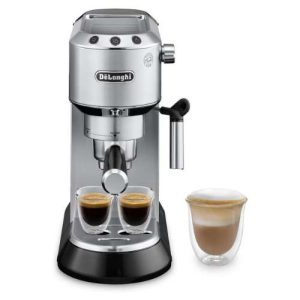


1 – De’Longhi Dedica
At 5.9 inches wide, it fits where many espresso machines don’t. That part is obvious. What took me a little longer to appreciate was that it also doesn’t feel cheap or toy-like once you start using it. It has a 15-bar pump and heats up in 40 to 45 seconds. And, for a compact machine, it pulls a good shot.
There is a learning curve. I noticed that pretty quickly with this one. It is a single-boiler machine. So the workflow is not as smooth as on bigger and more expensive models.
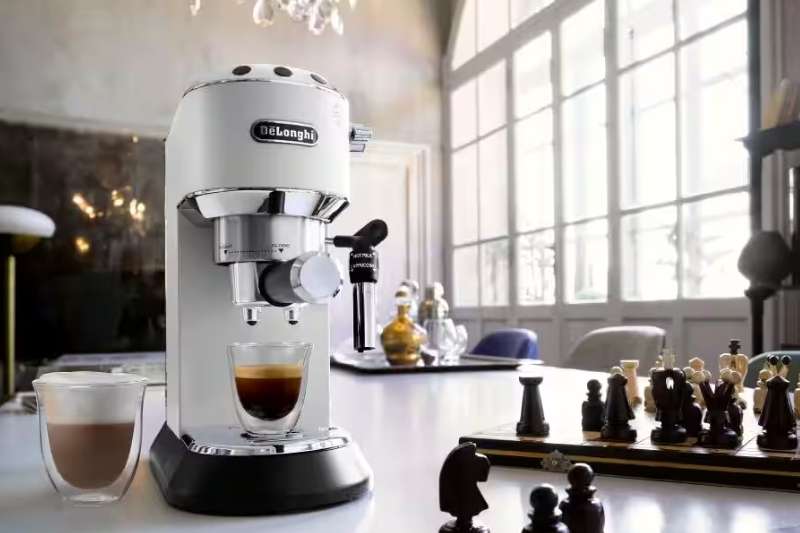
You pull the shot first, then steam the milk after. If you try to rush it the other way around, things get awkward. Still, once you settle into how it likes to work, it makes good coffee. Very good sometimes, with the right beans. I’ve seen it produce crema that looked better than what some larger entry machines manage.
It also helps that the machine is easy to live with. The 1-liter water tank and drip tray come off easily. The cup clearance is flexible because of the adjustable tray, and the whole thing looks sharp on the counter.
Best compact all-rounder
Rating:
2 – Breville Bambino Plus
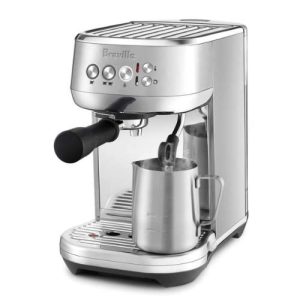
The Bambino Plus is not the slimmest machine in this list. But still, it’s great if your kitchen is small and your mornings are rushed. It has a compact body, 7.6 inches deep, 12.5 inches wide, 12.2 inches high and somehow still manages to feel more capable than its size suggests.
That is usually the appeal with this one. It doesn’t ask for much space, yet it doesn’t work like a stripped-down machine either.
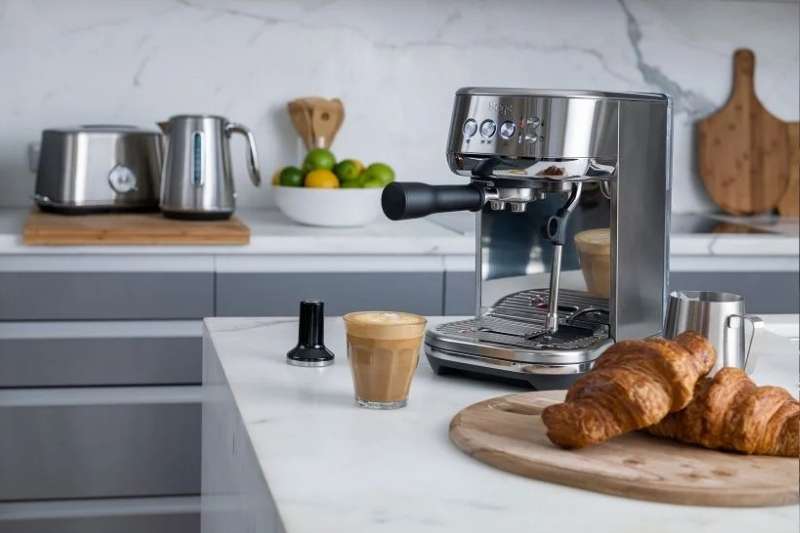
A lot of that comes from how quickly it gets going. The ThermoJet system heats in about 3 seconds. So there is little standing around waiting for it. It also uses PID temperature control and low-pressure pre-infusion. I know it sounds technical.
But what matters in practice is that shots can come out balanced once the grind is right. The 54 mm portafilter helps too. So does a decent grinder. Without one, no machine really saves you.
The other thing people tend to like here is the milk setup. The automatic steam wand is convenient, especially for lattes and cappuccinos. Though it has one little habit: if the wand auto-purges after steaming and you are not paying attention, it can spit water and milk where you didn’t ask for it. Small mess. Not a tragedy.
The portafilter can also feel tight at first, then loosen up after a few uses, which is a strangely common Bambino note.
Compact enthusiast machine
Rating:
3 – Gaggia Classic Pro
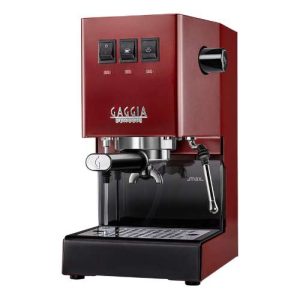
The Gaggia Classic Pro is compact, but not in the same way as the Dedica. This one is 9.5 inches wide. So yes, it works in a small kitchen. But it feels more like a serious machine. Steel body, 58 mm portafilter, commercial steam wand, 3-way solenoid valve. You notice quickly that it was built for someone who wants to get involved.
That is also where people get caught. They buy it thinking entry-level means simple, and it doesn’t, not here. The Classic Pro has that slightly dangerous quality where one purchase turns into four.
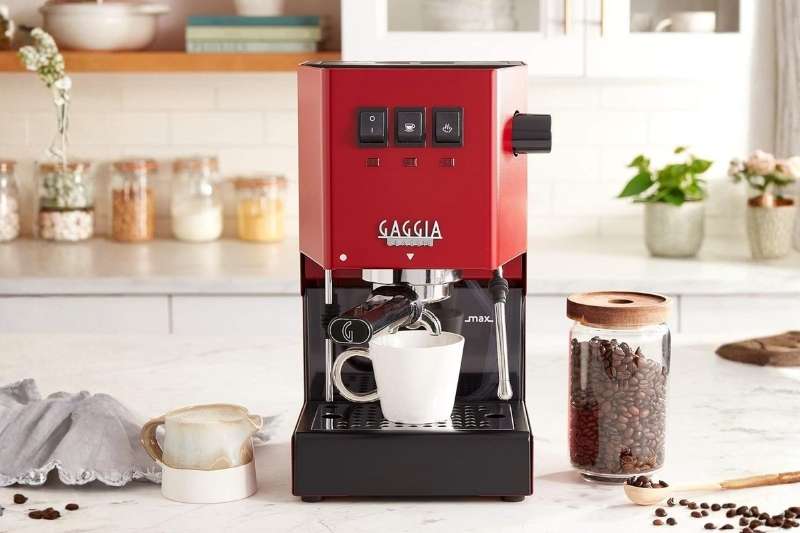
First a grinder, then a scale, then a better tamper, and before long you’re up at midnight reading forum threads about temperature surfing and why the shot ran fast. Still, when it is dialed in, it can make espresso that tastes well above the usual beginner-machine level. The 9-bar extraction helps. So does the heavier commercial-style hardware.
It also rewards patience more than convenience. If you don’t let it warm through properly, people sometimes think it runs cool, when really the machine just isn’t ready yet. The rocker switches are simple, the frame is sturdy, and it looks like something that belongs on a counter next to a metal milk pitcher and a folded dish towel that never fully dries.
Easy all-in-one convenience
Rating:

4 – Philips 2200 Series LatteGo
The Philips 2200 goes in a different direction from the machines above. This one is for the person who wants espresso without turning the counter into a hobby. Beans in the top, water in the tank, press the button, wait a moment, drink the coffee.
It has a built-in grinder, a simple touch display, and handles grinding, dosing, brewing, puck disposal, and even the rinse cycle. That’s the sort of thing some people call boring right up until six-thirty in the morning.
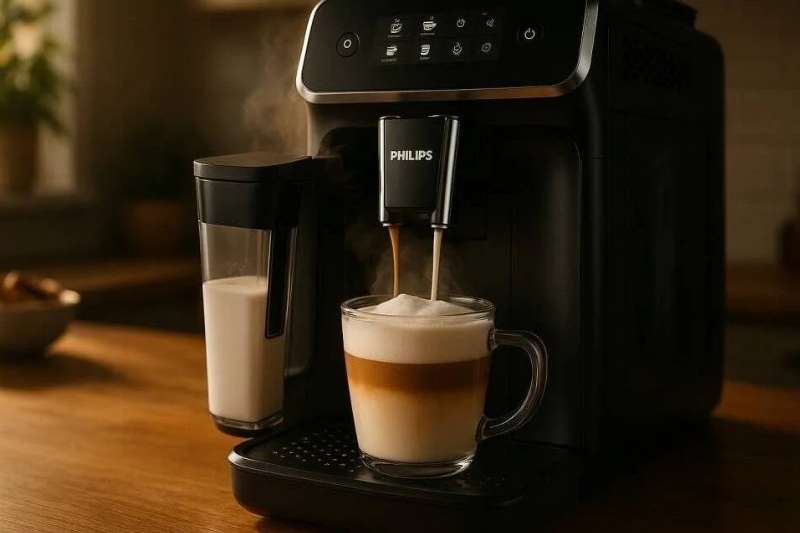
It is not exactly slim, measuring 9.6 inches wide and 17 inches tall. But for a bean-to-cup machine, it fits better than many bulkier automatic models. You give up some narrowness, but you also avoid having a separate grinder beside the machine.
The removable brew group helps too. So does the AquaClean filter. The whole machine is built around the idea that maintenance should not become a weekend project.
Now the taste leans isn’t perfect. Once dialed in, it can make decent coffee, especially americanos.
Straight espresso, maybe cappuccino too depending on your standards, can come across thinner than what a good semi-automatic machine will give you. Also, the used grounds container needs regular cleaning. Miss a day or two and things start looking wrong in there.
Best budget starter option
Rating:
5 – De’Longhi Stilosa
The Stilosa is the machine people buy when they want real espresso at home but do not want to spend Bambino or Gaggia money. That usually means compromise. But not always in a bad way. It is a compact manual machine with a 15-bar pump, a 1-liter tank, and a manual steam wand.
So, on paper it gives you the right pieces. In the kitchen, it feels like a beginner machine that still expects you to pay attention.
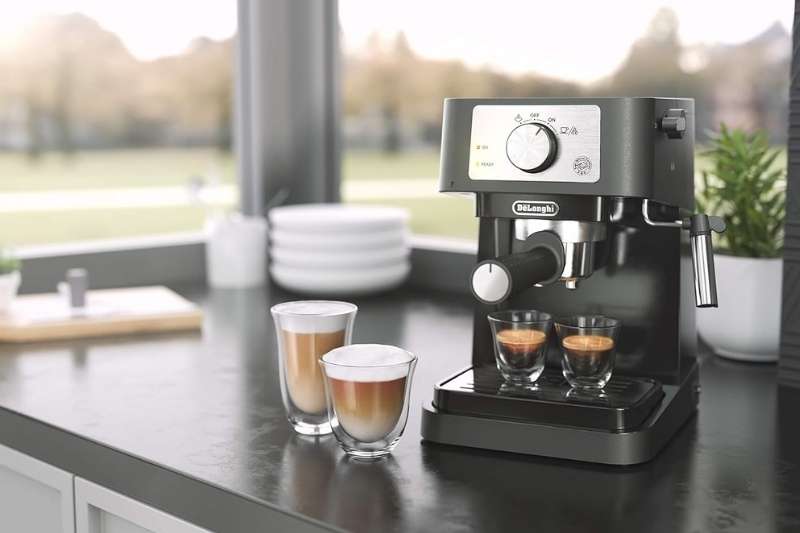
The Stilosa does not run the shot for you. You start it, you watch it and stop it. At first that might throw some people off. Then again, that is also how some people learn what a shot is supposed to look like. From ruining two or three and staring at the cup.
The included tamper does not help much either. It is light, a bit flimsy, and upgrading it makes more difference than it should.
Still, for the price, there is something likable here. The stainless steel boiler is a good sign, the two-level cup holder helps more than you’d think, and once the grind, dose, and timing stop fighting each other, it can make solid milk drinks and decent espresso.
Compact vs Regular Espresso Machines (What You’re Giving Up)
You don’t notice the trade-offs at first. It looks smaller, cleaner, and easier to place on the counter and then a few things start showing up.
Size vs performance
Smaller machines can make good espresso. But they don’t always keep up. You pull one shot, it’s fine. You go for a second, maybe a third, and the rhythm breaks a bit. For instance, temperature drifts, timing feels off. Not always. Just enough that you notice on some mornings and not others.
Boiler size & steaming power
This is where it becomes obvious. Steam feels weaker. Takes longer. You’re standing there with the pitcher, waiting for the milk to catch up, and it eventually does. But not the same way a bigger machine would handle it. It has less pressure and consistency. It still works, just slower.
Water tank capacity
Smaller tank, more refilling. Sounds minor until you hit a stretch where you’re using it every day. You forget once, start the machine, and nothing comes out. Then you’re pulling the tank out, usually at an angle because the cabinet above gets in the way. It’s a small interruption, but it repeats.
Workflow limitations
Everything sits closer together: cup, portafilter, drip tray; there’s not much room to move. You adjust how you work without thinking about it. Shorter movements, quicker cleanups, and less space to leave things lying around. It can feel efficient. Or cramped. Depends on the day.
Who should NOT go compact
If you’re making multiple drinks back-to-back, especially milk drinks, it starts to show. Or if you enjoy taking your time dialing things in, tweaking, and experimenting. The smaller setup pushes back a little. It prefers quick routines. Not long ones.
Small Kitchen Setup Tips (How to Maximize Your Space)
A few things that helped me when counter space was basically a negotiation.
Go vertical
A small shelf above the machine, a wall-mounted holder for the tamper and spoons. Anything that gets gear off the counter without putting it in a drawer you’ll never open. Most small kitchens have wall space that sits there doing nothing.
Give accessories a home
The scale, the extra portafilter basket, and the cloth that’s next to the machine. They don’t seem like much until they’re all competing for the same two square feet. A small tray helps. Not because it saves space exactly, but because it gives everything a place to belong. Easier to wipe down too.
Consider a combo machine
If you’re still running a separate grinder, a built-in grinder saves one more thing from landing on the counter. One less cable too.
Sort the cables
Nobody mentions cables. A small kitchen with three appliances can look like a network closet if you ignore them. A clip or a short extension routed along the wall takes four minutes and makes the whole setup feel less like a mistake.
Keep the workflow tight
Daily stuff within reach, everything else somewhere else. The less you move to make a coffee, the more likely you are to actually make one.
Last Thoughts
Still not sure which one fits your space?
If you’re stuck between two machines, or something feels like it might almost work but you’re not fully convinced, tell me what your setup looks like. Counter space, cabinets, whatever’s getting in the way.
I’ve probably run into something similar. Or close enough.
Questions? We Have Answers.
Get answers to a list of the most Frequently Asked Questions.