14 Best Burr Coffee Grinders (2026 Tested Picks)
Last updated on March 31st, 2026 at 10:54 am
Ever wonder why your coffee can taste amazing one day… and flat the next, even when you swear you did everything the same?
For years, I blamed the beans or the water or maybe the weather. Anything except the cheap little blade grinder sitting on my counter. It wasn’t awful. It did something. But the grind? Pure chaos.
I’d get this strange mix of dust and gravel. One morning, after yet another sour, disappointing cup, I finally borrowed a burr grinder from a friend.
The first spin sounded different: calmer, almost confident and the grounds fell out in this perfectly even pile. That first sip tasted sweeter and rounder. That’s when it hit me: I’d been drinking the wrong version of my favorite beans for years.
This post walks you through the best Burr Coffee grinders in 2026 and why they matter more than almost any other piece of coffee gear. I’ll share what’s new in grinders this year, how to choose the right one for your brewing style, which features improve flavor, and which grinders are worth your money.
Our Top 5 Coffee Burr Grinder Picks


Best for ultra-clean, café-style filter coffee
Fellow Ode Brew Grinder Gen 2


Best all-rounder for multiple brew methods
Sage Smart Grinder Pro


Best affordable grinder that actually handles espresso
Fellow Opus Conical Burr Grinder

Best grinder for beginners who want reliability
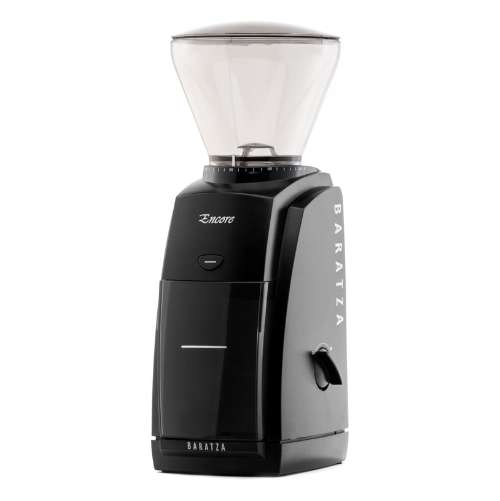
Baratza Encore

Best grinder for aesthetics + casual home brewing
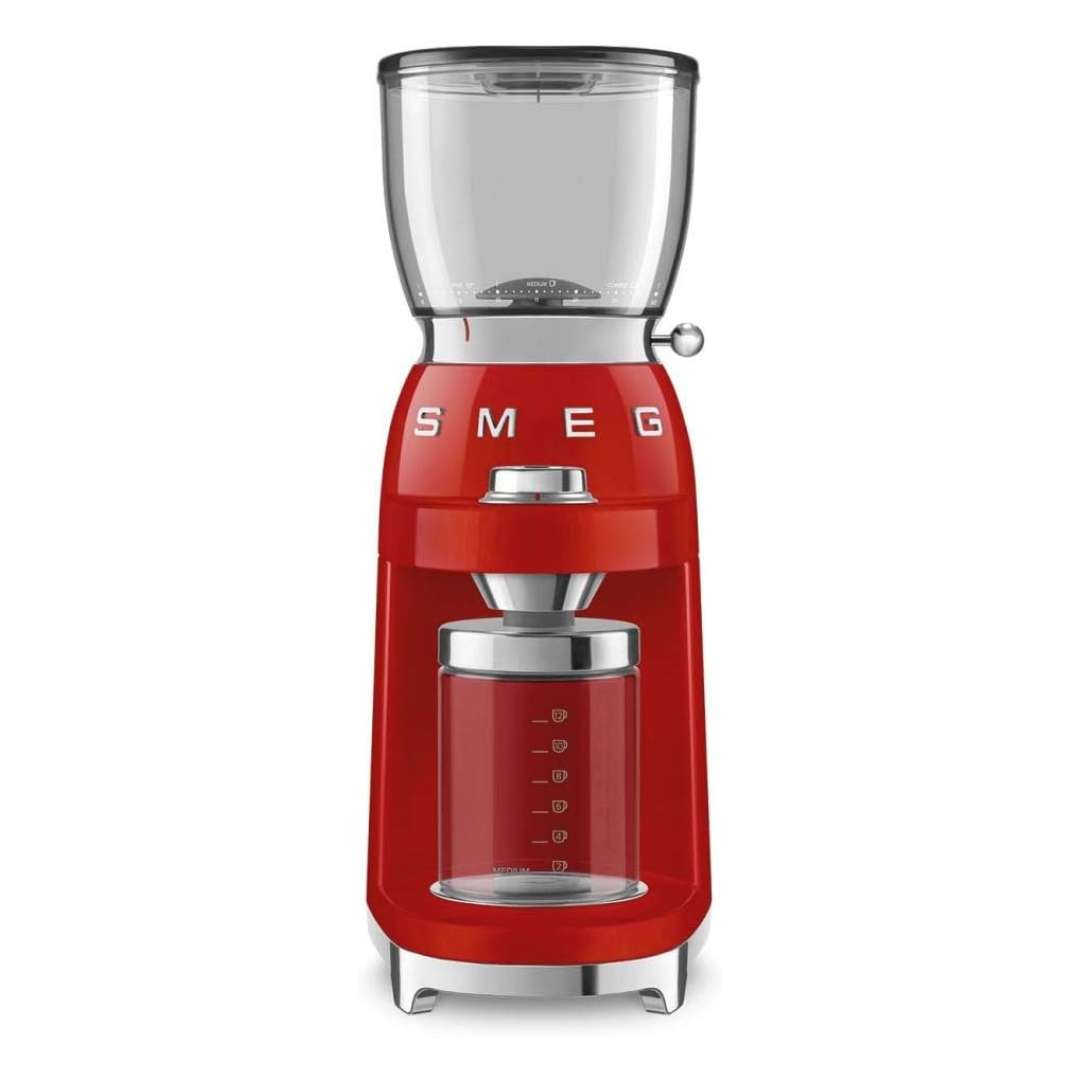
Smeg Coffee Grinder
What’s New in 2026? Choosing the Right Coffee Grinder
I didn’t expect massive changes in the coffee grinder world this year. When you’re buying one, you’re still looking at the same basic job: you turn beans into consistent grounds. But here’s what has shifted this year.
Better Tuned
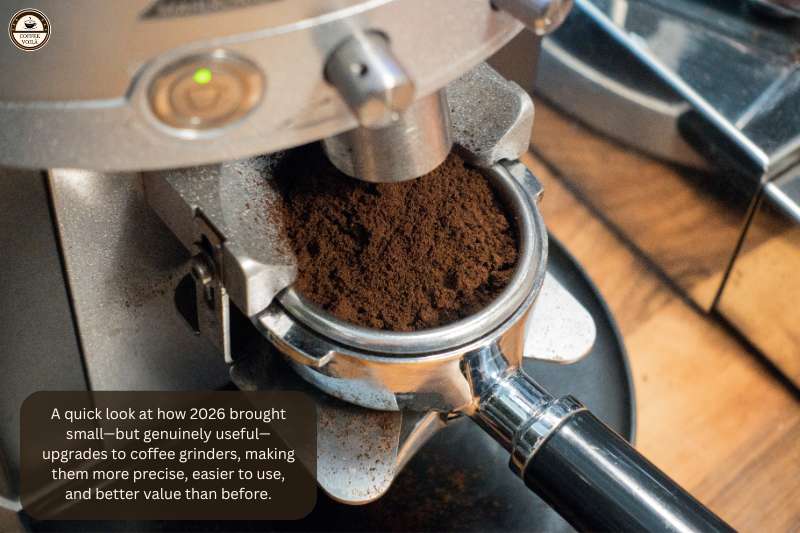
First, grinders are becoming better at fine-tuning what they do. I’m talking smoother burrs, less retention (that clumpy mess you get when your grinder holds onto grounds), and smarter interfaces.
Some brands are even starting to adopt what used to be café-only tech (think: “grind-by-weight”, wireless connectivity, custom profiles) for home machines.
Improved User Experience
The other part is that user experience finally catches up. For instance, handles feel better, parts are easier to clean and entry-level models no longer feel like leftover budget equipment.
That means whether you’re grinding for an espresso shot or a filter brew, the machine spends less time being a source of noise, mess or frustration.
Pricing
Pricing and value are more honest. The “buy this because of brand name only” days are fading. Now you’ll pay more because the tech is better. Not just because of marketing. On the flip side, for many people, decent performance is now available at a lower tier than it used to be.
In short: Nothing radical. But real improvements where it counts.
3 Things You Should Look For
When you’re shopping for your next coffee grinder (manual or electric), keep these three practical criteria in mind:
1 – Consistent Grind Size & Burr Quality
One of the biggest faults? Too many fine particles or too many big chunks. A well-matched burr set (flat or conical) and a machine that holds its setting matter more than flashy features. The difference shows up in extraction.
2 – Workflow & Usability
Ask yourself: How easy is it to load beans? To dial in the grind size? To empty the grounds? If it’s too complicated, you’ll avoid using its best settings. Grinders in 2026 are trending toward better ergonomics and easier maintenance.
3 – Fit for Your Brewing Style & Volume
Are you grinding for an espresso puck several times a day? Or maybe you’re brewing one cup of filter in the morning. Your grinder needs to match: size, speed, heat build-up, retention.
A heavyweight café grinder may be overkill for your kitchen table. A tiny manual might cause frustration if you’re doing 60 g batches often.
14 Best Burr Coffee Grinders in 2026
If you’ve been wondering which grinders are truly worth your beans this year, these 14 are the ones that stood out.
Trusted consistency for daily brews
Rating:
1 – Baratza Encore
The Baratza Encore doesn’t have fancy screens or sleek aluminum panels. You get plastic, a simple switch, and a burr set that has earned cult status for a reason.
The Encore has this way of making you feel more “in control” of your coffee without overwhelming you. You turn the hopper, hear the soft click-click-click through its 40 grind steps, and suddenly the process feels calmer.
You’re not wrestling with a blade grinder throwing dust and boulders everywhere. You’re actually getting a repeatable grind size. The kind that doesn’t sabotage your pour-overs.
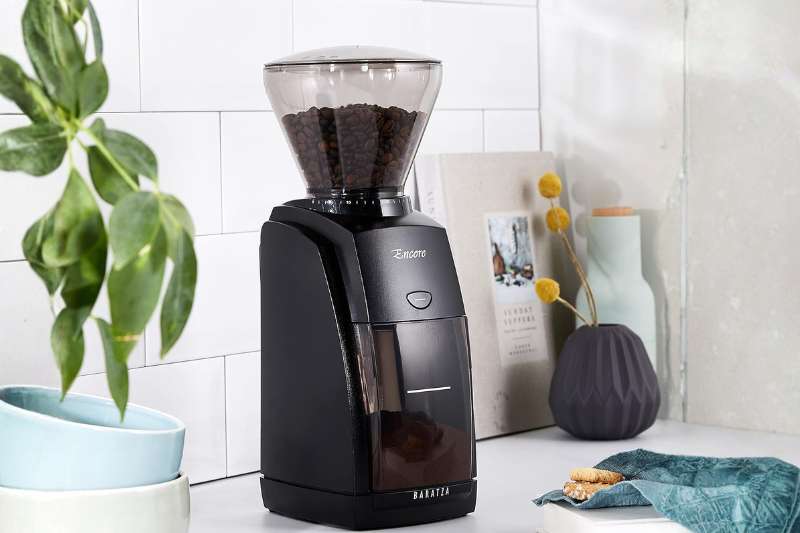
And while Baratza packs a lot of plastic inside, the gears are reinforced with glass-filled thermoplastic, the burrs are hardened steel, and the 550 RPM motor keeps heat low so your beans don’t taste prematurely stale.
It’s also one of the few grinders in this price range you can actually repair. Something jams? Baratza built the gearbox to stop itself before destroying anything. Something breaks? They send parts. Easy.
You’ll still see a few quirks. The static cling is real. The grind can feel slow. And no, it will not magically pull café-level espresso. But for everyday brewing, pour-over, French press, Aeropress, moka pot, the Baratza Encore is still the grinder people buy, use for years, and then recommend without hesitation.
Super-clean cups with flat burrs
Rating:

2 – Fellow Ode Brew Grinder Gen 2
If you care more about filter coffee than espresso, the Fellow Ode Gen 2 is one of those grinders that make your brews feel “grown up.”
You’ll notice the quiet first. You hit the button and instead of that high-pitched grinder scream, the Ode simply hums along.
Then there are the new burrs. Fellow ditched the old interlocking set and dropped in their Gen 2 brew burrs, which grind finer with a tighter distribution.
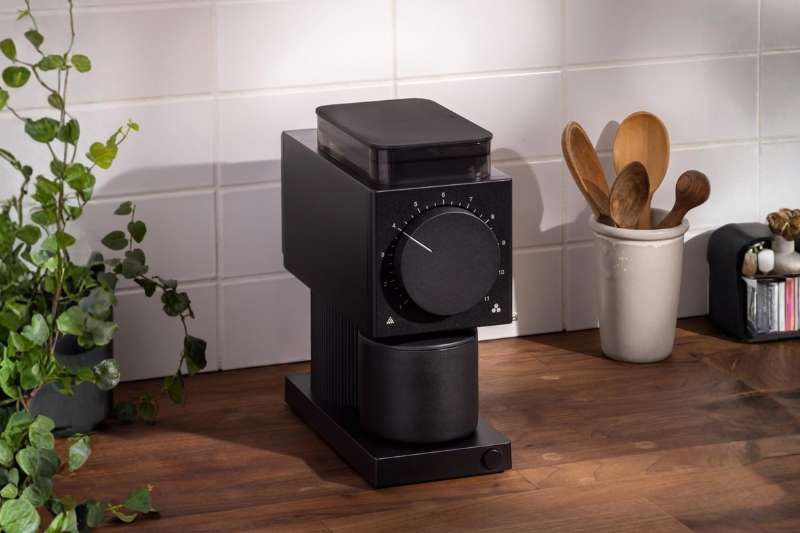
In other words, expect more sweetness, more clarity and less mud. If you love light or medium roasts, you’ll taste that extra definition in the cup.
The anti-static upgrade is also a big deal.
On the old Ode, grounds sprayed and clung to everything. Here, most of the coffee actually ends up where it should: in the catch cup, not on your counter and hands.
It’s not a do-it-all grinder, though. The Ode Gen 2 is very honest about its lane: brewed coffee only.
So, no espresso, no super-fine Turkish settings. Think of it as your dedicated filter workhorse. This grinder is perfect if you want clean, consistent cups and something that doesn’t make your kitchen look like a coffee explosion every morning.
Ultra-quiet, smooth filter grinding
Rating:

3 – Eureka Mignon Filtro
There’s something charming about the Eureka Mignon Filtro. You look at it, it’s small, squared-off and then it surprises you with the kind of grind quality you normally expect from bulkier and pricier grinders.
You’ll probably notice it the first time you turn the adjustment dial, that little oh, this thing means business moment. One small twist and suddenly you’re jumping from a tight V60 setting to a fuller French press grind. It feels stepless.

The flat burrs are the real hero here. Those 50 mm hardened steel plates chew through beans with this calm, confident sound… almost like the machine is saying, “Relax, I’ve got this.” And because of the low-RPM motor, the grounds stay cool and even.
No burnt smell, no heat, just clean, well-cut particles that make your pour-overs taste brighter.
You’ll also appreciate how tidy it is. Eureka really fixed the static issues that plague cheaper grinders. Most of the grounds fall straight into the catch cup instead of decorating your counter.
Is it perfect? No. It’s not an espresso grinder, and retention exists. Though a quick puff with bellows solves most of it. But for filter lovers? For people who brew V60, Chemex, Aeropress, batch brews… this thing punches way above the price tag.
Wide range with easy precision
Rating:
4 – Sage Smart Grinder Pro
This grinder you turn it on and… nothing feels confusing. The screen tells you exactly where you are. The buttons actually make sense. And for once, you don’t feel like you need to watch three YouTube videos to grind a handful of beans.
If you enjoy bouncing between brew methods, espresso one day, V60 the next, maybe a cheeky Aeropress when you don’t want to think too hard. This grinder handles all of that easily. It’s the definition of a true “all-rounder.” The kind that quietly becomes the grinder you rely on every single day.
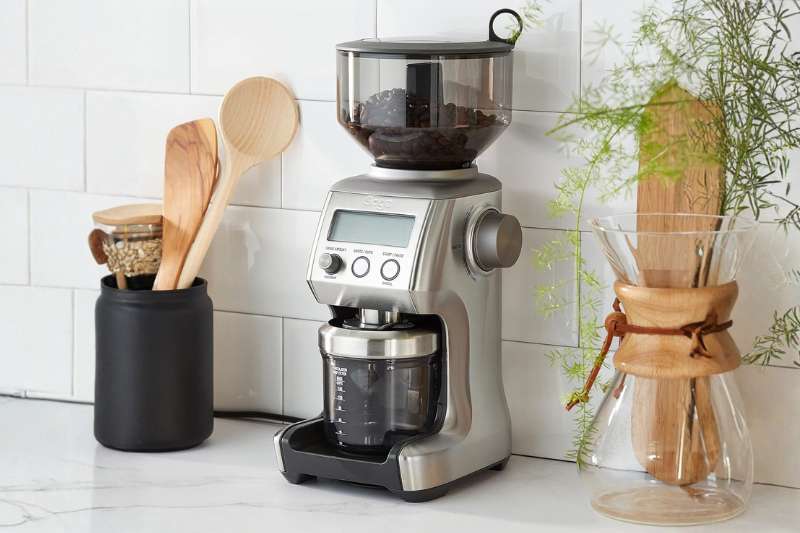
What makes it stand out is the amount of control you get. Sixty grind settings. A digital time dial that moves in tiny 0.2-second steps. And that internal burr adjustment? That’s the feature nobody talks about but saves the grinder’s performance years later.
You tweak the inner burr ring, and suddenly you’ve brought your grind range back to life.
The Smart Grinder Pro does have personality quirks. Very light, dense beans can make the motor’s failsafe clutch engage. So you’ll hear that little click-click until you go coarser. Not a deal-breaker, just the grinder protecting itself. And yes, it’s not a specialist.
But you know what? That’s why it’s great. You get consistency, ease, and espresso capability under one roof without spending one month’s rent.
And when you pair it with a Bambino, Gaggia Classic, or any entry-level machine… it just works. Every morning without problems!
Balanced grinding with great clarity
Rating:
5 – Baratza Virtuoso+
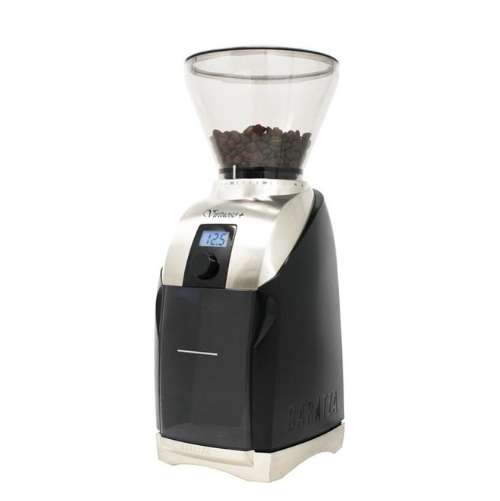
If you’re the kind of person who brews coffee half-asleep, lights off, kettle whispering in the background, the Baratza Virtuoso+ makes that moment feel a little more put-together. You press the button, the soft LED glows under the grounds bin, and the whole experience feels calmer.
What stands out first with this grinder isn’t even the grind quality (which is great). It’s the weight. You pick it up and immediately think, yeah, this is going to last. The stainless-steel burrs, the DC motor that barely warms up, the chunky adjustment collar. It all feels like Baratza built it for people who don’t plan on replacing their grinder every two years.
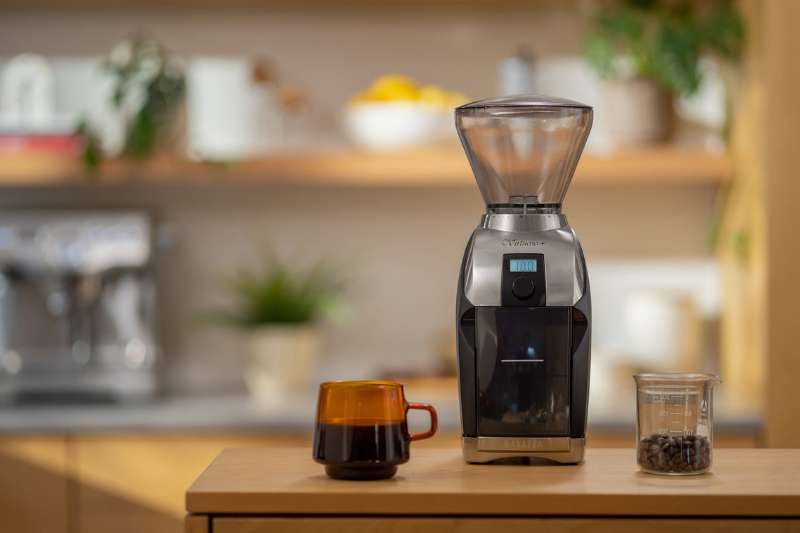
And you’ll notice the difference in your cup. Medium to medium-coarse settings are where the Virtuoso+ really shines. Think clean V60 brews, rich drip batches, French press without that weird sludge at the bottom.
When you start playing with different roast levels on this grinder, you’ll probably find yourself hovering somewhere in the 12–17 range. And you’ll notice the flavor shift with each tiny adjustment. This kind of control makes brewing feel more like a fun experiment than a chore.
As for espresso? Yes, you can pull shots with it, especially if you’re using a pressurized portafilter. But when it comes to dialing in a classic, traditional espresso, you’ll feel the grind steps holding you back. They’re just a touch too wide. Not terrible, just not the Virtuoso’s specialty.
But if what you want is rock-solid performance for pour-over, Aeropress, or drip coffee, the Virtuoso+ is one of those grinders that quietly becomes part of your daily routine. Reliable, predictable, and easy to keep running for years with only a quick burr clean now and then.
Beginner-friendly with steady results
Rating:
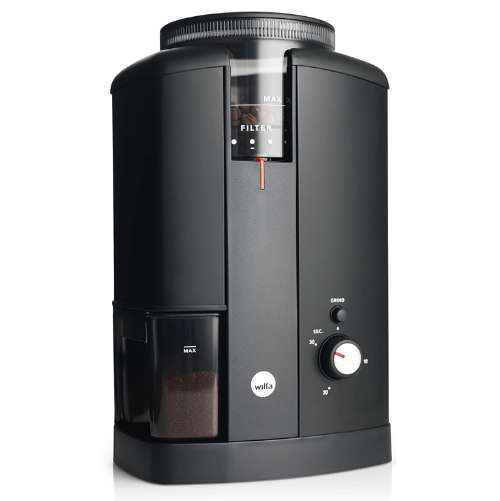
6 – Wilfa Svart CGWS-130B
The first time you use the Wilfa Svart, you notice something funny: it doesn’t look like a coffee grinder. It’s basically a matte-black box that sits there quietly, almost pretending it’s a router or some Scandinavian tech gadget. Honestly, people will ask what it is. You’ll get used to saying, “No, it’s not a speaker… it’s my grinder.”
But once you actually start grinding with it, there’s this little spark of satisfaction that kicks in. Maybe it’s the soft thunk when the beans drop into the burrs, or the way the whole machine hums (steady, confident and not frantic).
You get five guide marks for grind size, but don’t let that limit you. You can slide in-between the marks to dial in your sweet spot. And the consistency? Surprisingly good.

Even when I switched between settings, the texture stayed predictable, which is what you want when you’re chasing better brews without spreadsheets and magnifying glasses.
Using it day to day feels easy, almost too easy. Scoop beans, twist the hopper, tap the timer, hit the button. Five seconds later you’ve got fresh grounds waiting in the (slightly annoying) bin.
And yes, you’ll end up complaining about that bin at least once… probably while shaking grounds out of the weird angle-cut corner.
Still, for a grinder at this price, the Wilfa Svart brings more to the table than you expect.
Espresso-to-coarse true versatility
Rating:
7 – Fellow Opus Conical Burr Grinder
If you’re the kind of person who brews espresso in the morning, a V60 mid-day, and a big French press on Sundays… the Fellow Opus was built for you.
You can switch between all those brew methods without forcing a grinder to do something it wasn’t meant to. Which, let’s be honest, is usually what happens under $200.
You turn that outer ring and hear these clean, solid clicks… then you remember there’s a secret inner ring hiding under the hopper, letting you make micro-adjustments that actually matter for espresso. It’s a level of control you don’t expect at this price range.

The 40 mm conical burrs chew through beans with this low, steady hum, no screeching, no angry espresso-machine-in-pain noises.
You’ll probably notice the V60 tastes incredibly clean around setting 6, and when you nudge it a couple of clicks coarser for a Chemex, the cup suddenly feels sharper and clearer. Almost as if someone pushed the clarity slider to max.
But yeah… the static. You’ll probably give the Opus a little smack on the side to knock loose the grounds. It’s not dramatic, just slightly annoying. And the dosing cup is clever, but the little mountain of grounds it leaves? You’ll end up tapping it like you’re waking it from a nap.
Still, as an all-rounder, the Fellow Opus is legitimately impressive. You get versatility, great taste, and a compact grinder that actually looks good on your counter, without spending half your budget on a flat-burr machine.
Stunning design with solid performance
Rating:
8 – Smeg Coffee Grinder
This grinder is pure countertop drama. You pull it out of the box and it feels as if you’re unwrapping a 1950s sports car. Even the packaging makes you think, “Okay… they really know design.”
But here’s where your brain and your heart start arguing. Because once you use the Smeg, you realize it’s a grinder built for people who want beauty first and performance second.
You’ll still get a good grind for pour-over, Chemex, drip machines. That whole medium-range zone is pretty consistent.

When you start pushing it toward espresso, though, you’ll notice the limits fast. Thirty grind settings sound fine on paper… until you’re standing there with a portafilter in one hand, trying to coax a decent shot out of beans that simply won’t go fine enough.
And yes, you can use the preset espresso doses or the supposed portafilter holder. However, you’ll quickly discover you still have to hold the portafilter yourself like a human tripod.
The big bean hopper, the tinted Tritan plastic, the weight, you feel the quality. What you won’t love is when 20 grams go in and only 18 grams come out unless you knock the grinder.
Still… if you’re brewing drip or pour-over and want your kitchen to look amazing, the Smeg Coffee Grinder delivers. If you’re chasing espresso dreams, though? You’ll want to look elsewhere. Probably, something that’s more than just a pretty face.
Budget burr upgrade with simplicity
Rating:

9 – Cuisinart Electric Burr One-Touch
If you’re someone who wants fresh grounds without spending a small fortune or learning how to calibrate espresso micro-steps. You just load your beans, twist the hopper to pick your grind size, and choose how many “cups” you want.
The grinder does the rest, automatically stopping itself when the cycle finishes. It’s about as beginner-friendly as burr grinders get.
Performance-wise, you’ll find the sweet spot in the middle of its 18-step range. The ceramic block burrs create a decent, even grind for things like drip makers, Aeropress, and everyday pour-over. At these settings, extraction is pretty good for something at this price.

If you try pushing it into espresso territory, though, you’ll notice the limits fast. I mean, it’s only usable with a pressurized portafilter, and even then it’s more “good enough” than “dialed in.”
Is it loud? Yes. Is there some static? Also yes. But the value is honestly undeniable. It’s fast, it’s approachable, and it’s backed by a long warranty, which you don’t see often with budget grinders.
If you’re upgrading from pre-ground or a blade chopper, this machine feels like someone just opened a window and let fresh air into your coffee routine. It’s imperfect, but in the kind of way that’s easy to live with.
Premium flat burr accuracy
Rating:
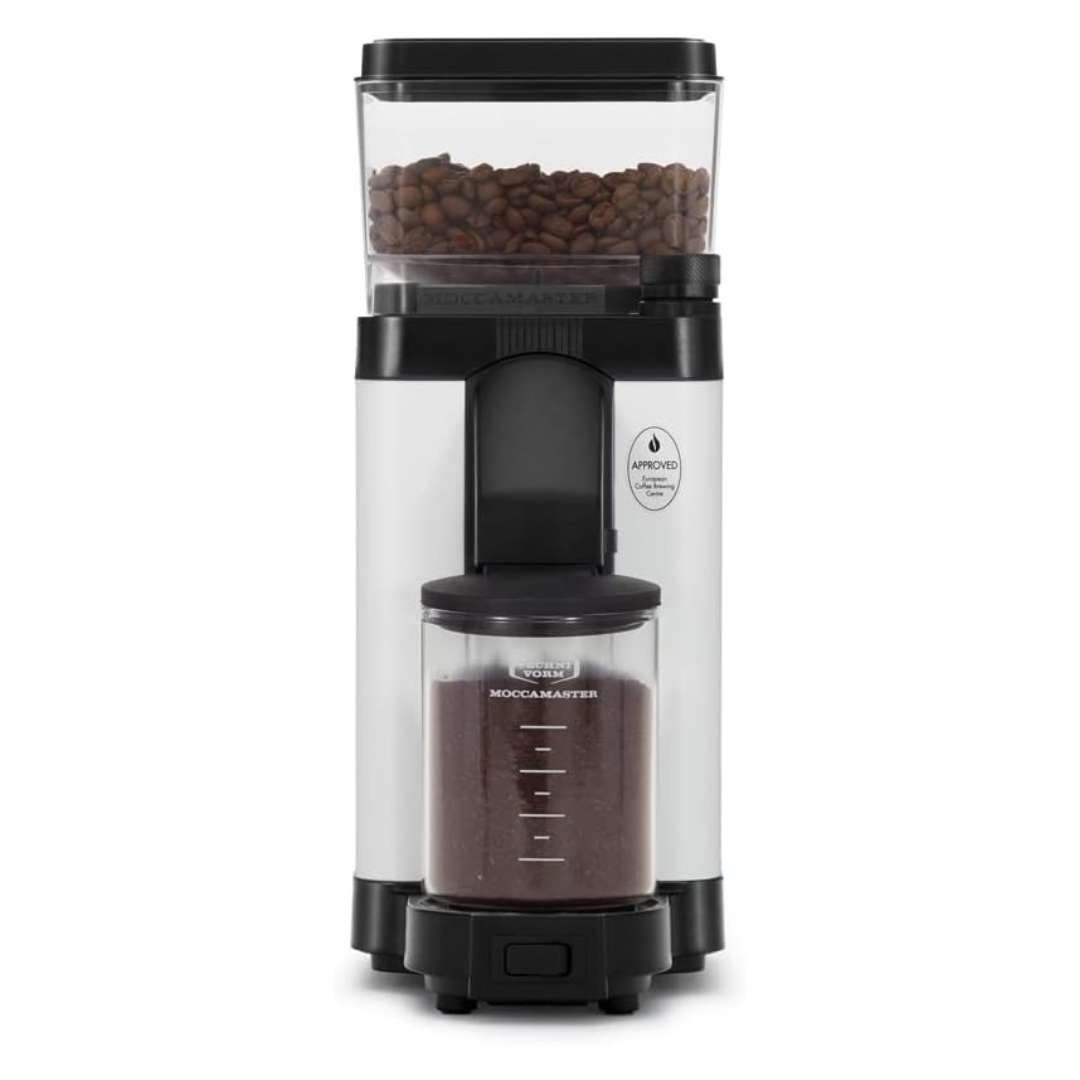
10 – Moccamaster KM5 Burr Grinder
There’s something about the Moccamaster KM5 that instantly tells you, “Yep, this thing was built by people who expect it to last longer than your mortgage.”
The first time you pick it up, you’ll feel that old-school Technivorm sturdiness. It’s solid, slightly overbuilt in the best way, and unapologetically functional.
What you don’t get is flash. Or convenience. Honestly, the first time you realize you have to hold the button the entire time it grinds, you might laugh out loud. Thirty seconds feels surprisingly long when your hand is hovering over a switch, waiting for the beans to finish rattling their way through those 50 mm flat burrs.

But once you pour the grounds into your brewer and the aroma punches up: sweet, clean and no muddy fines. You forgive it.
You’ve got a stepless dial, which is great if you’re the kind of person who enjoys nudging things “just a hair to the left.” The KM5 won’t go fine enough for espresso.
However, for V60, Moccamaster drip, French press, or cold brew? You’ll be right at home. And the motor… it grinds 60 g in under half a minute, which feels almost ridiculous for such a simple-looking machine.
The anti-static chute is supposed to keep mess down. But you’ll still get a bit of cling. Not catastrophic. Just “wipe-the-counter-with-your-sleeve” territory.
Overall, you’ll end up appreciating the Technivorm KM5 the same way you appreciate a cast-iron pan: not glam, not modern. But tough, consistent, and quietly brilliant once you get into its rhythm.
Strong value with consistent espresso
Rating:

11 – Dualit Burr Coffee Grinder
What stands out right away is how beginner-friendly it feels without making you feel like a beginner. You get 35 grind settings. Actual useful ones and not simply “fine/medium/coarse” dial that jumps from dust to gravel.
You just twist the hopper to choose your grind size, set how many cups you want, and the grinder stops on its own. No more standing there wondering, “Is this enough coffee or am I about to ruin another brew?” It’s honestly a relief.
But here’s the part that will probably surprise you: the espresso. You’ll expect it to perform “okay-ish,” somewhere between a blade grinder and a budget conical. Instead, using your espresso machine with a pressurized basket, you pull a shot with better crema than you get from store-ground beans.

If you lean toward filter methods, drip, pour-over, moka pot, the consistency gets even better. Your medium grinds land right where you want them, without that chalky dust that turns French press into mud.
And the lack of static is impressive. You’ve probably used grinders at triple the price that snow coffee all over your counter. This one gives you a clean bin and clean hands.
Now, it’s not perfect. It’s loud like, “did someone turn on the vacuum?” loud. And the build leans more plasticky than premium. But the grind quality for the money? Way above its weight class.
Plus, the removable burrs and included cleaning brush make cleaning doable rather than a chore you keep putting off.
If you’re stepping up from pre-ground or a blade grinder, the Dualit feels like the first “real” tool in your coffee setup. And… it might be all you need for a while.
Budget grinder that reaches espresso
Rating:

12 – Graef CM 800 Coffee Grinder
You look at the Graef CM 800 and immediately feel like you’ve beaten the system a little. It’s small, solid and not outrageously priced.
On paper, it ticks a lot of boxes: it can grind espresso-fine, it’s quieter than most cheap grinders, and it doesn’t eat half your counter space.
But once you start using it, you realize it isn’t a simple, plug-and-play kind of grinder. You can set it to the finest setting and still watch your espresso shoot through in 12 seconds.

To really get it into a usable espresso range, you may end up opening the grinder and adjusting the top burr internally with a screwdriver. Doable, but not exactly beginner-friendly.
Even then, the grind distribution isn’t as tight as you’d probably like. You get a mix of big chunks and dusty fines. This makes shots taste both a bit sharp and a bit bitter, even when your recipe and timing look “correct” on paper.
So the Graef CM 800 makes the most sense for you if you’re okay with tinkering. You get a grinder that can reach espresso territory and feels nicely built.
But you have to be patient, experiment a lot, and accept that it won’t be as forgiving as some of the slightly more expensive options.
Stylish, simple, beginner-friendly choice
Rating:
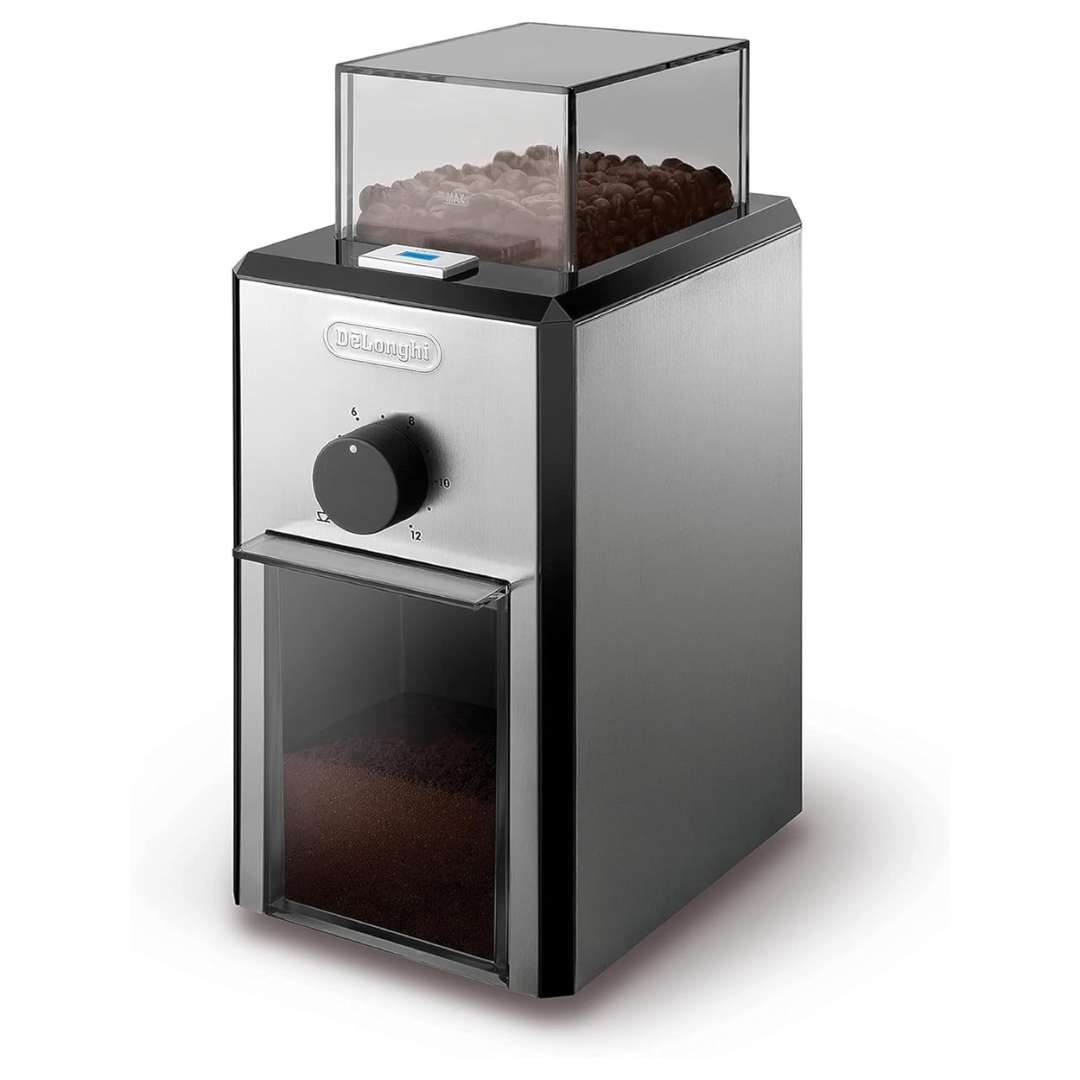
13 – DeLonghi KG89 Coffee Grinder
Looking at the DeLonghi KG89, you get the idea “this costs less than it looks”. The stainless-steel housing gives it a clean, modern design that most entry-level grinders lack. Even the big cup-selector dial looks more premium than it has any right to.
Using it is straightforward: set your grind size, choose between 2 and 12 cups, flip the switch, and let it run. No complicated timing modes, no guesswork. And for daily drip or pour-over, the KG89 performs better than you expect.

The grind is usable, the noise level is mild enough for early mornings, and the machine stays planted thanks to the rubber feet.
But the static? Yeah, you’ll notice it. Those fine grounds cling to the plastic container. And if you push the grinder too hard on the finer settings, it can jam, especially during back-to-back batches.
Still, for a beginner who wants something simple, stylish, and inexpensive, the KG89 hits the mark. It’s not a precision machine, but it’s far from the worst way to upgrade from pre-ground coffee or a blade grinder.
Affordable convenience with flexibility
Rating:
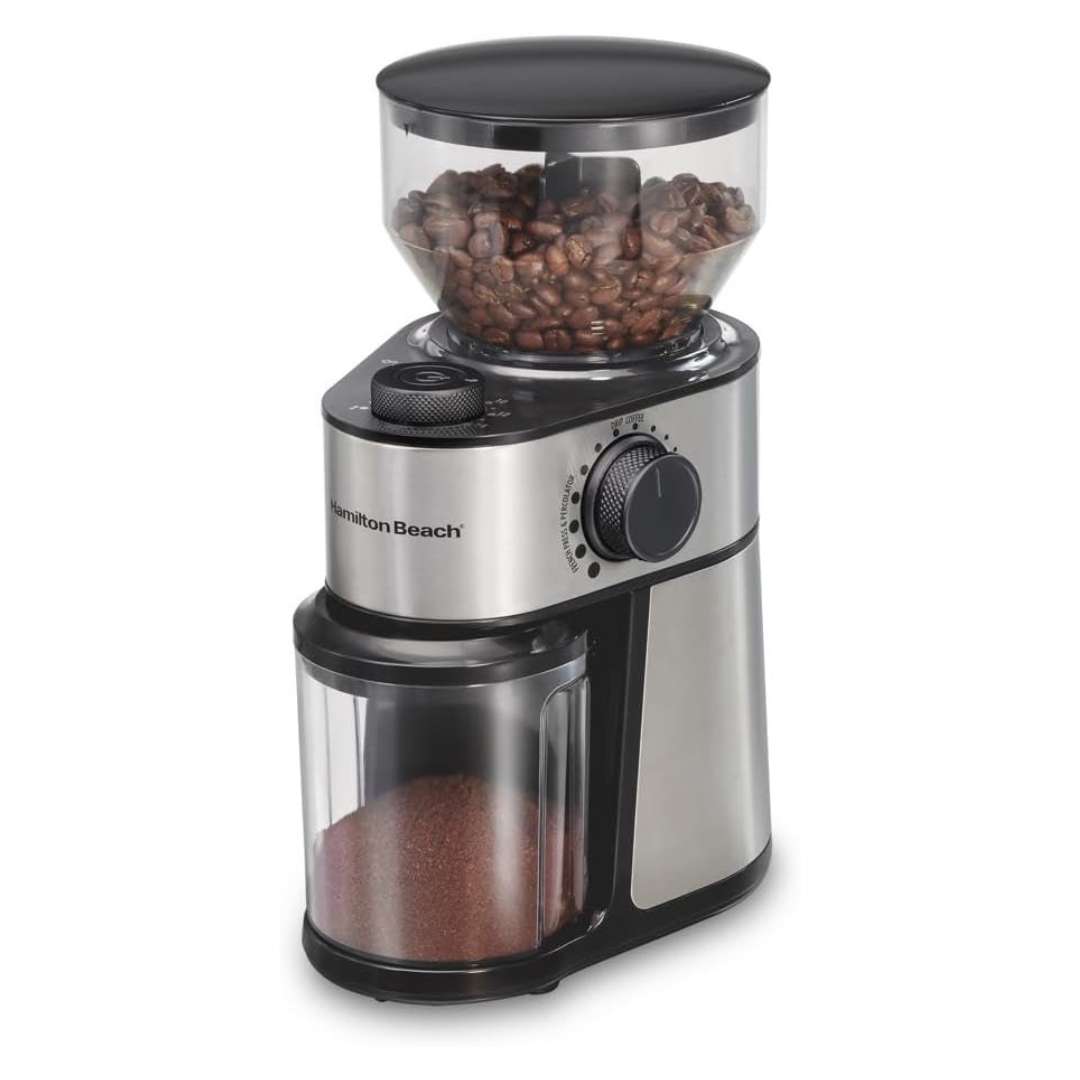
14 – Hamilton Beach Burr Coffee Grinder
You know that feeling when you want a grinder to be good because the price is so reasonable? That’s exactly how you end up looking at the Hamilton Beach Burr Grinder.
You pull it out of the box, notice the stainless steel housing, and think, “Wait… this actually looks nicer than it should.” And honestly, the first couple of mornings grinding with it, you appreciate the quiet hum. I mean, it’s not silent, but not the shriek some budget grinders unleash.
You’ll probably enjoy how straightforward it is. Twist for one of the 18 grind settings, pick the number of cups (2–14), press the button, walk away. The auto-shutoff is underrated.

And the hopper holds a good amount of beans, enough that you don’t have to constantly top it up. But then… the quirks show up. For instance, the consistency has mood swings. One batch looks perfect for pour-over, and the next one sneaks in some chunky boulders or dusty fines.
You’ll sometimes have beans get stuck, which forces you to shake the machine mid-grind. And the static, not catastrophic, but enough that you’ll end up tapping the bin and brushing stray grounds off the counter.
Still, for the price, it’s pretty capable. You get a grinder that’s easy to live with, easy to clean, and more versatile than many others in its range.
If you’re moving up from pre-ground coffee or a blade grinder, this will feel like jumping a couple of steps up the ladder… only with a few bumps along the way.
Last Thoughts
Alright, that’s a lot of grinders. If you take one thing from all this, let it be this: even a “small” upgrade in grind quality can make your coffee taste way better than a new mug or another flavored syrup ever will. Pick the burr grinder that actually matches how you brew most days, and you’ll feel the difference in the cup pretty fast.
What are you using right now and are you more tempted to upgrade for espresso, or just to make your daily drip taste less… meh?
Questions? We Have Answers.
Get answers to a list of the most Frequently Asked Questions.