9 Best Home Coffee Roasters of 2026 | Tried & Tested
At first, I thought coffee roasting was strictly a “leave it to the pros” thing. You walk into a roastery, see those huge machines spinning, smell that deep toasted aroma, and it feels expensive and way too technical to do at home.
Then one day, I watched someone roast beans in their kitchen with a basic popcorn popper. No fancy setup. Just beans, heat, and a little chaos.
And I remember thinking… wait. That’s actually possible?
So I tried it. It was fun, messy, and my kitchen smelled weird for hours… but it worked. I made real roasted coffee.
The problem is, I hit the limits fast. Popcorn poppers don’t give you much control, and roasting is one of those things where a small change matters. A few seconds too long and your “nice medium roast” turns into “why does this taste like campfire?”
So I started digging deeper, comparing machines, reading reviews, and testing different home roasters to see what makes sense for real people roasting at home.
That’s what this list is: 9 home coffee roasters that balance ease, consistency, and genuinely good results, whether you’re starting or already hooked.
Why Roast Coffee at Home?
The biggest reason? Freshness actually matters. Roasted coffee can start losing flavor in just a few days, especially after you open the bag. That amazing smell you get on day one? Yeah…that quickly disappears.
Green coffee beans stay fresh much longer (about 2 years when stored properly). So home roasting lets you “start the clock” only when you’re ready.
The flavor difference is way bigger than you expect
The first time you roast and brew your own beans, it’s honestly kind of shocking. The cup tastes more alive: brighter, sweeter, and more detailed. Suddenly, the coffee has layers instead of just “roasty and bitter.” Even with a simple setup, you’ll notice it.
You control the roast (not the brand)
Roasting at home means you pick the flavor direction:
- Light roast = more acidity, fruit, and “sparkle”
- Medium roast = balanced, sweet, more classic
- Dark roast = heavier body, smoky/chocolate vibes
And you can stop the roast exactly where you want it… not where a company decided “medium” should be.
It’s a hobby that teaches you fast
You’ll mess up a batch. Everyone does. Maybe you stop too early and it tastes grassy. Maybe you go too far and it gets smoky. But that’s the fun part. You start learning what first crack sounds like, how the smell changes, and what roast levels actually mean in real life.
It makes coffee feel personal again
Home roasting turns coffee into a little ritual.
You hear the popping, you smell the roast shifting, and suddenly you’re paying attention in a way you never did with store-bought beans. It’s enjoyable and slightly addictive.
How To Choose the Right Coffee Roaster?
Picking a coffee roaster is mostly about one thing: what style of roasting do you want to live with?
Because every roaster type feels different in real life: speed, smoke, batch size, and how “hands-on” it ge
Quick Roaster Types (with examples)
| Roaster Type | Best For | What It Feels Like | Examples |
|---|---|---|---|
| Air / Fluid-bed | Fast, even roasts | Loud-ish but efficient | Fresh Roast SR540, CAFEMASY, JAVASTARR |
| Drum (Gas/Electric) | Bigger batches + classic flavor | More control, more “real roasting” | Kaldi Fortis, DYVEE Gas Burner |
| Infrared / Glass | Quiet + easy to watch | Smooth + simple | BOCABOCA 250 |
| Manual / Ceramic | Small + portable + fun | You’re doing the work | Nuvo Eco Ceramic |
The 4 things that actually matter
1) Batch size
This is where people mess up first. If you hate roasting often, don’t buy tiny… because small batches sound cute until you’re grinding your teeth on roast day.
- 80–150g = perfect if you want daily freshness and you don’t mind roasting more often
(think: “I roast, I drink it tomorrow, life is good.”) - 200–300g = the sweet spot for most home setups
Great for espresso drinkers, couples, or anyone who doesn’t want to roast every other day. - 600g = roast once, chill for days (Kaldi Fortis style)
This is the “I want a real roasting session” option. Bigger batch, more commitment, but way more efficient.
Quick reality check: if you drink 2 coffees a day, those tiny roasters will have you roasting constantly.
2) Control level
Be honest… do you want easy, or do you want tweakable? Because the difference is huge.
Want push-button roasting → go with auto modes
You hit a button, it runs the cycle, and you’re basically just supervising.
(CAFEMASY / MAGO MAGA type vibe)
Want full control → heat + airflow adjustment matters
This is where roasting starts feeling like a skill you build over time.
You can push brightness, slow it down, stretch development… all that good nerdy stuff.
(SR540 / Kaldi / gas drum setups)
If you love experimenting, control matters. If you just want good coffee without thinking too hard… auto is your friend.
3) Smoke & where you’ll roast
Indoor roasting sounds romantic until your kitchen smells like burnt toast for 2 days.
Not even joking.
- Apartment / indoors: look for lower-smoke designs and roast near a strong vent
Even “low smoke” still smells like roasting coffee (which is nice)… but also kinda intense. - Garage / outdoors: you can go bigger, smokier, and more powerful
Gas drum roasters especially feel happier out there, where you’re not stressing about alarms and smell.
If you’re planning on roasting indoors, smoke management becomes part of your “setup,” whether you want it or not.
4) Cooling
Even a perfect roast can taste “off” if you cool too slowly.
The beans keep cooking from their own heat, and suddenly your “medium roast” turns into “oops.”
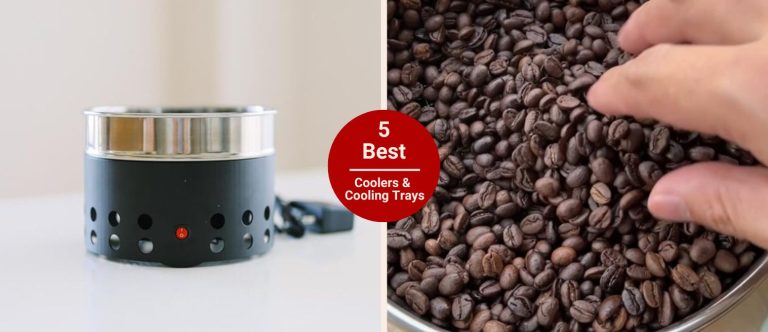
If your roaster doesn’t cool fast, pairing it with a cooler is a huge upgrade:
- Gene Cafe cooler
- DYVEE cooler
- Boicafe cooler
It’s one of those things you don’t think about… until you taste the difference.
My quick rule
If you want the easiest win: air roaster.
If you want the “serious hobby” route: drum roaster + proper cooling.
Top 9 Home Coffee Roasters of 2026
Here are 9 home coffee roasters that make roasting at home way more doable whether you want a quick push-button roast or a setup you can actually learn and grow with.
Feature-rich home roaster
Rating:

1 – MAGO MAGA Smart Roaster
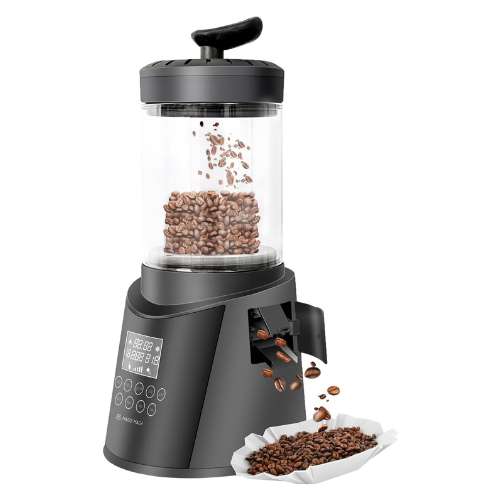
The MAGO MAGA Roma Pro is a home roaster that feels serious, without making you babysit every roast. It gives you smart control without turning coffee roasting into a science project.
You get a digital display + timer, plus automatic and manual modes. That’s the best combo if you’re still learning but want room to grow. Automatic mode makes it easy; you choose a profile and let it run. Manual mode is there for when you start getting curious and want to fine-tune the roast and chase specific flavors.

One thing I like a lot: it’s built for ultra-low smoke, and it has a chaff collector that keeps the mess from flying everywhere. If you roast indoors, that’s not a “nice extra”… that’s survival. And the double-layer glass viewing window is such a fun detail.
You can literally watch the beans change color in real time, and it makes the whole process feel more controlled.
It can roast up to 300g, but if you want the best results, most people seem to agree it shines closer to 250g. Full batches can still work, but the roast gets more reliable when you don’t push it to the limit.
Best beginner air roaster
Rating:
2 – Fresh Roast SR540 Automatic Roaster
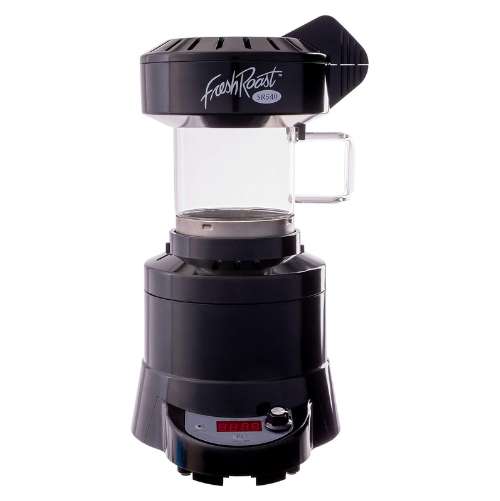
If you want a home coffee roaster that actually teaches you roasting, the Fresh Roast SR540 is one of those machines that makes a lot of sense.
It’s a fluid-bed style roaster, which means the beans are basically floating and tumbling in hot air while they roast. And that’s a big deal, because it gives you fast, even roasting without you having to constantly shake a pan or stir like your life depends on it.
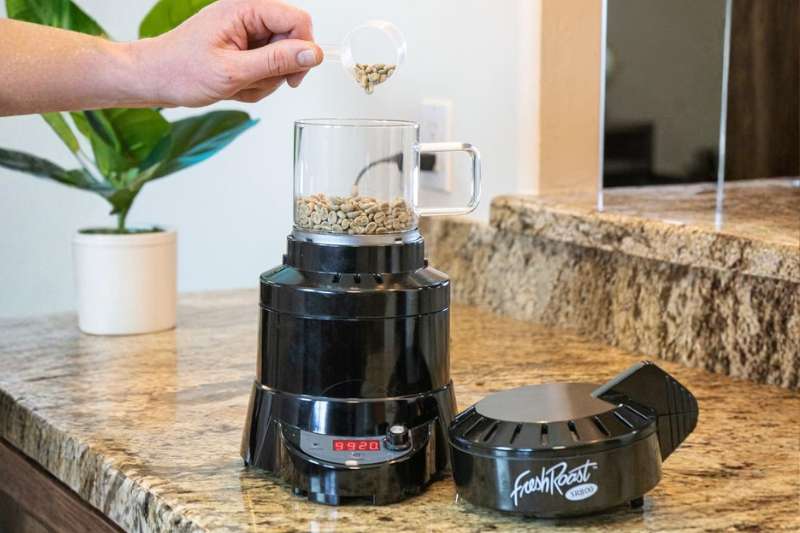
The SR540 is also flexible. You can roast light, medium, or espresso-style darker roasts, and it gives you real control over heat and airflow. The digital temperature display is one of my favorite parts. Roasting without temperature feedback feels like baking a cake without an oven dial.
It’s small enough to feel “home friendly.” But it still feels like real roasting and not a gadget that just warms beans and hopes for the best.
Robust outdoor roasting
Rating:
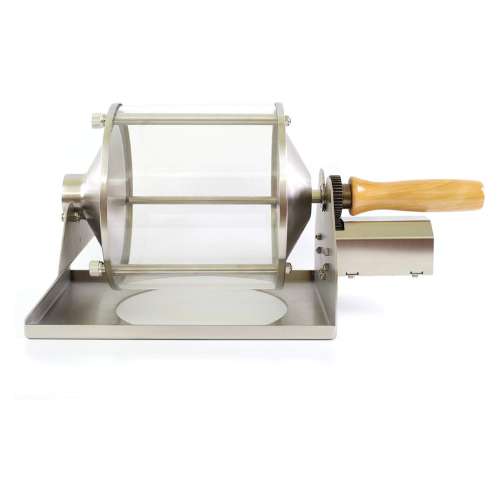
3 – DYVEE Coffee Gas Burner Roaster
This isn’t the “push a button and walk away” of a roaster. It’s more hands-on. You’re out on the porch with a propane burner, watching beans shift color through a quartz glass drum, fully involved in the process.
It’s advertised as a 400g roaster, but the sweet spot is closer to 200–300g per batch. That’s where it tends to roast more evenly and feel manageable. And that’s still plenty for most people, especially if you do a couple of batches back-to-back once a week and you’re set.
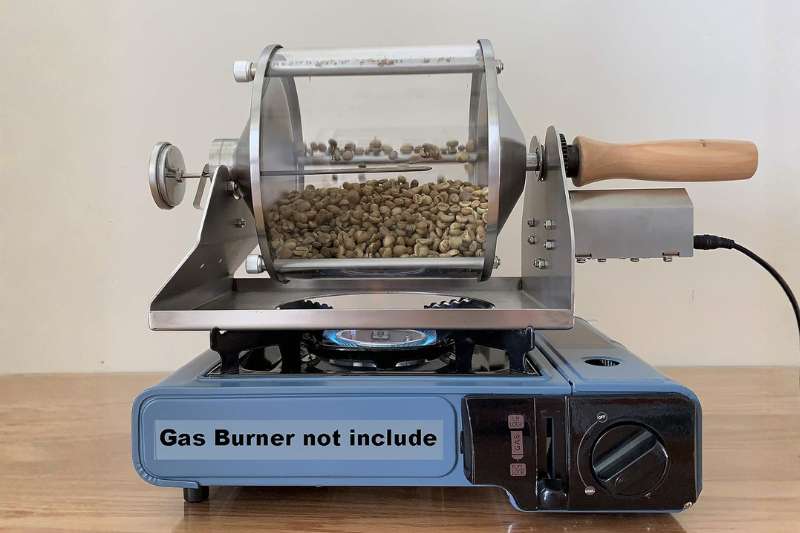
The best part is the visibility. You can see the beans clearly during the entire roast, which makes learning way easier.
You’ll notice the shift from pale to cinnamon to full brown, and once the beans start smoking over 400°F, you’ll probably instinctively back off the flame a bit (most people do). It’s the kind of roaster where you start paying attention to the feel of the roast, not just a timer.
It runs a 12V motor, which is a nice safety detail compared to some higher-voltage setups, and the frame is a solid 304 stainless steel, sturdy base, and wooden handle. It fits well over a standard propane burner.
Just don’t expect it to be clean and perfect. The chaff can blow around, and the glass will slowly get that brown patina/soot buildup. You can clean it, but you won’t want to do it after every roast unless you enjoy suffering for fun.
Easy beginner choice
Rating:

4 – JAVASTARR Electric Roaster
If you want a home coffee roaster that’s simple and “press the button, get coffee,” the JAVASTARR Electric Coffee Roaster Machine is perfect for you. It’s not pretending to be some pro-level machine with curves and profiles and ten knobs you’ll never touch.
You get two roasting modes (Medium and Dark), and the roast usually lands somewhere around 25–30 minutes, depending on the cycle. Medium tends to come out closer to a fuller city-style roast, while Dark pushes you into that Vienna-to-espresso-ish territory.

And the best part is the cooling cycle at the end, because dumping hot beans into a bowl and panic-shaking them is a phase I do not miss.
You’ll still want to crack a window, though. This thing doesn’t magically delete smoke. But for a small, affordable roaster that can turn out consistently solid batches, it does the job.
Affordable multi-purpose roaster
Rating:

5 – DIYAREA Roaster
The DIYAREA roaster is basically a little electric roasting pan with a timer, automatic stirring, and a 0°C–240°C temperature dial. It’s marketed as an 800g machine, but realistically you’ll get the best results around 300–500g per batch. Anything more and it starts feeling like you’re asking it to do too much… anything less and the beans don’t move right.
It’s also multi-purpose, so yes, you can roast coffee, but you can also throw in nuts or grains. It’s kind of the “one appliance, many uses” type of deal.
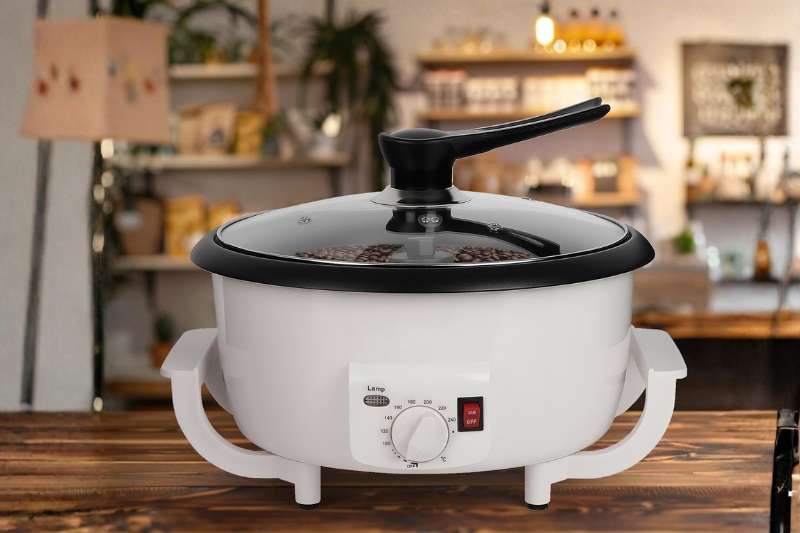
The biggest thing I’ll say is this: it doesn’t manage smoke for you. At all. The first time you try roasting inside, your kitchen can smell like toasted coffee oil. So, I suggest using it only near a window, under an extractor, or just outside… for your own peace of mind.
Portable manual roaster
Rating:

6 – Nuvo Eco Ceramic Handy Roaster
The Nuvo Eco Ceramic Handy Roaster is basically a 100% ceramic handheld roaster with a real leather grip, and it’s made for tiny batches (think 30g to 70g, but honestly, 30g is the sweet spot if you want an even roast).
And yes, you have to shake it the whole time. There’s no “set it and forget it.” It’s more like you’re standing there listening for the pops, smelling that warm toasty sweetness start to build, and going, “Okay… we’re close.”

The inside has this waffle-shaped texture that helps the beans roast more evenly, and there’s a rear hole so you can hear the first crack without guessing. And when you’re done? You just dump the beans fast into something cool and stop the roast immediately. Simple. Hands-on. A little messy sometimes. But you learn a lot.
Flexible manual + auto modes
Rating:
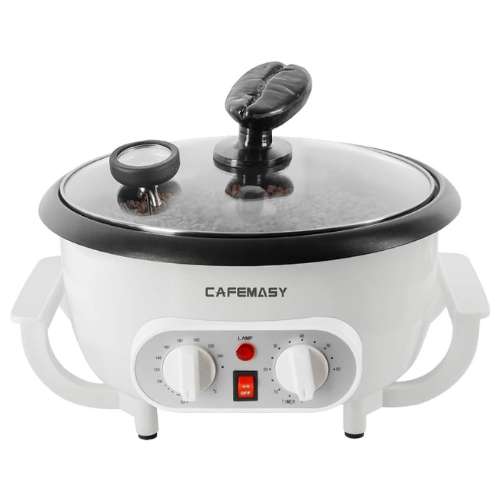
7 – CAFEMASY Roaster
The CAFEMASY Coffee Bean Roaster is an air roaster with Auto mode for low-effort coffee days, and Manual mode for when you want to tweak settings and pretend you’re running a tiny roasting lab on your counter.
The batch size is small, around 80g to 100g. But that’s kind of perfect if you roast often and want your coffee fresh without storing beans forever. And I like that it shows your settings on an LED screen, so you’re not guessing what you did last time.

You can adjust time (up to 15 minutes), heating level (1–8), and fan/cooling power, and it automatically kicks into cooling when it’s done, which saves you from that “oh no it’s still cooking” panic.
Just… don’t expect a silent, smoke-free experience. This thing moves air hard, and roasting still smells like roasting. You’ll probably end up cracking a window.
Heavy-duty drum roasting
Rating:
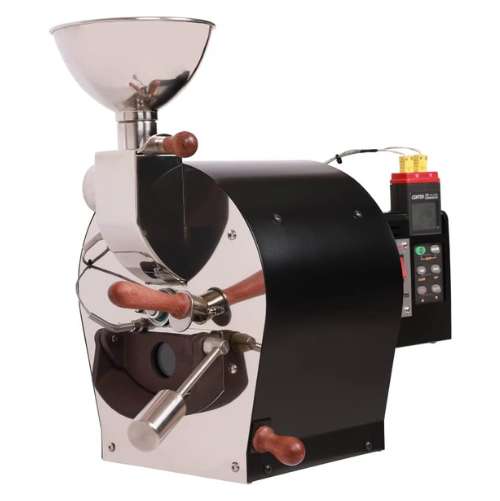
8 – KALDI Fortis Roaster
If you want a coffee roaster that feels serious with real control and consistency, the Kaldi Fortis is one of those machines.
It’s built like a tank (around 35 lbs for the body), runs smoothly and quietly, and is designed to handle big batches without struggling for air. People roast up to 600g at a time on it, and the roaster still feels stable and controllable.
You can dial in airflow and heat with real precision, and it rewards you for paying attention, especially when you start chasing those “wait… I taste blueberry?” moments.
One of the coolest things is how fast the workflow can be. The drop hatch opens, and the beans fall into the cooler in about 4 seconds.
If you’re using the cooler/chaff collector setup, you can cool a full batch in around 2–2.5 minutes. That means back-to-back roasting is realistic without turning your whole day into a project.
It’s not cheap, and it’s not “plug and play.” But if you want a true step up from hobby roasting, this is it.
Quiet visual roasting
Rating:
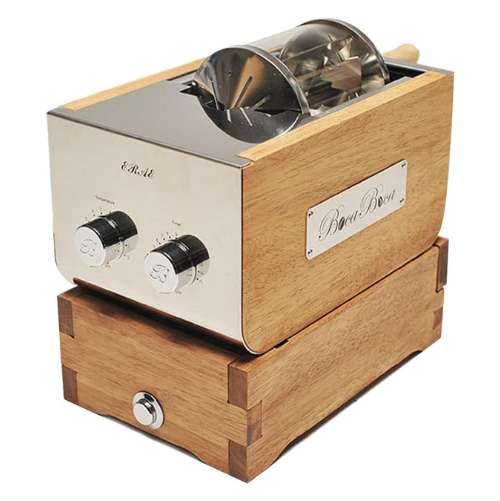
9 – BOCABOCA Roaster
The BOCABOCA 250 is an infrared roaster with a transparent glass drum, so you can actually watch the beans change color in real time without guessing. And honestly, that visibility alone makes you feel way more in control, even if you’re still learning.
It’s also quiet compared to most home roasters. No aggressive fan noise etc. Just the smell of coffee slowly building in the room and that moment when you realize you nailed the color you wanted.
It roasts evenly, cools fast, and it’s built to last (solid wood, metal, glass… the kind of machine that looks like it belongs on a shelf, not hidden in a cabinet.
Plus, the voltage can be customized (110V for US/Japan, 220V for Europe), which is a big deal if you’ve ever bought a random roaster online and had that “wait… will this even work here?” panic. If you want a quality home roaster under $500, this one hits that sweet spot.
Last Thoughts
Have questions or tried any of these roasters? Share your thoughts in the comments below. I’m here to help you find the perfect roaster for your coffee adventures. Happy roasting!
Questions? We Have Answers.
Get answers to a list of the most Frequently Asked Questions.