8 Best Moka Pots of 2026 | Tried & Tested
Moka pots were one of the first ways I ever started brewing coffee at home. Back then, I didn’t care about design or materials. I had something close to the classic Bialetti model. It made good coffee, was easy to use, and simple to clean. That was enough.
Over time, especially while working on Coffee Voilà, I started noticing just how many moka pots there are. Aluminum, stainless steel, induction-ready, glass tops, electric versions. It adds up quickly. No wonder so many people feel confused about which one to buy.
That’s where the frustration usually starts. A moka pot should be straightforward, yet it’s easy to end up with one that brews unevenly, tastes bitter, or doesn’t even work on your stovetop. When that happens, the ritual loses its appeal fast.
So I went back and tested a wide range of models in real kitchen conditions. I focused on what actually matters day to day: ease of use, cleanup, heat control, and, most importantly, how the coffee tastes. The goal wasn’t hype, but clarity.
In this guide, you’ll discover the 8 best moka pots based on how they fit into everyday routines, not just how they look on a shelf.
How to Choose the Right Moka Pot
When picking a moka pot, it’s easy to get distracted by looks or small design details. What actually matters is how it behaves day to day, how it heats, pours, and fits into the way you make coffee. These are the three things worth paying attention to.
1 – Material makes a difference
Aluminum moka pots heat quickly and deliver that familiar, classic moka flavor. Over time, though, they can darken, wear down, or lose that tight seal if they’re used hard.
Stainless steel is different. It’s heavier, heats more steadily, and tends to hold up better long term. No coatings, no reaction with coffee, and fewer changes over the years.
If you enjoy the traditional moka experience and don’t mind patina, an aluminum pot still does the job well. If you want something that feels more durable and stays consistent over time, stainless steel is usually the safer bet.
2 – Heat control and stove compatibility
Not every moka pot plays nicely with every stove. Induction in particular exposes weak designs fast. Uneven heating leads to sputtering, rushed brews, or burnt flavors before you can react.
Pots designed for induction heat more evenly and predictably. That steadiness gives you better control, especially if you prefer pulling the pot at a specific moment instead of relying on sound alone. Once you’ve brewed a few times with even heat, guessing feels unnecessary.
3 – Capacity and how you actually drink coffee
A “6-cup” moka pot doesn’t mean six mugs. It means six small espresso-style servings. That can be perfect for one strong cup, or barely enough when you’re brewing for more than yourself.
Think about your usual routine. Solo mornings? A smaller pot keeps things fresh. Weekend breakfasts or guests around? A larger one saves you from brewing twice.
Smaller pots suit quiet, personal routines. Larger ones work better when coffee is being shared. Neither is better. They just fit different habits.
8 Best Moka Pots of 2026

The Bialetti Moka Express is as simple as it can get. Water goes in the bottom chamber, right up to the safety valve. Coffee into the basket, loose, no tamping. Screw it together, set it on the stove, and wait. No buttons, lights, or beeps. Just sound and timing.
That gurgle at the end? That’s your signal. Miss it once and you won’t forget it again. The cup it makes is bold and concentrated. Stronger than drip, not quite café espresso. Somewhere in that middle ground, moka pots do so well.
The smell hits fast, filling the kitchen with that deep, roasted aroma that makes you hover nearby even though you know it’s not done yet.

You also learn pretty quickly that this pot rewards attention. Push the heat too hard and it turns sharp. Walk away and it sputters. But once you learn it: medium heat, lid open, off the stove as soon as it finishes —it becomes automatic.
What I like most is how practical it is. If you only want a small amount of coffee, you make a small amount. One or two espresso-style cups, fresh, and you’re done. No leftovers sitting around. No extra cleanup for no reason.
Cleaning couldn’t be simpler. Rinse it with water and let it dry. That’s it. No soap or dishwasher needed. The aluminum darkens with time, sure. But that’s part of the appeal. It looks used because it is used.
This isn’t a gadget you experiment with once and forget. It’s a routine. And once it finds a place in your mornings, it tends to stick.
Easy-use everyday stovetop choice
Rating:


2 – GROSCHE Milano Moka Pot
When you pick up a GROSCHE pot, what stands out is its steadiness. It has the kind of weight that makes you trust it won’t warp, tip, or start feeling flimsy after a few months. The aluminum feels thicker, smoother inside, and less gritty than some cheaper pots I’ve used.
What surprised me more was the brew itself. Same size basket and coffee. Yet the cup came out fuller, slightly bolder. The reason is subtle: the Milano’s water chamber and coffee basket run a bit larger than many moka pots in the same size range.
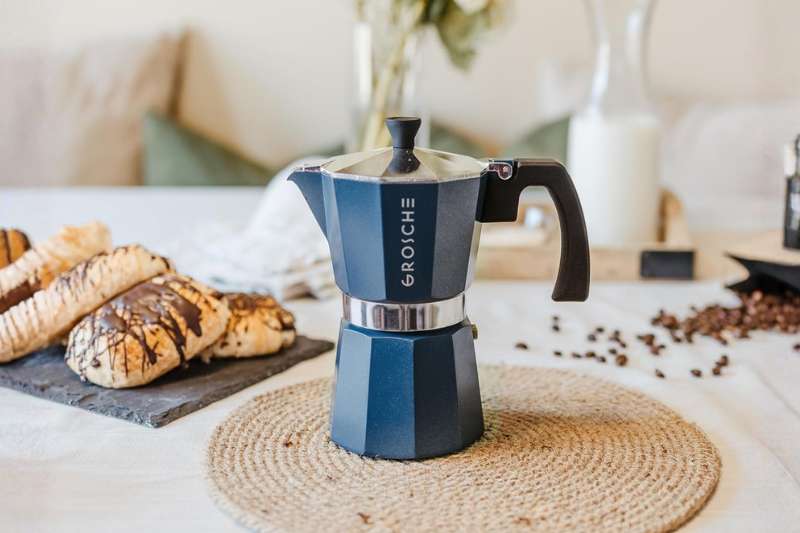
The handle is another piece I like. If you’ve ever burned your fingers grabbing a moka pot (who hasn’t?), this one feels thoughtfully designed. It stays cool, has a good grip, and lets you pour without rushing.
Of course, it still behaves like a moka pot. Push the heat too high and it’ll sputter. The fix is simple: low heat and some patience. Pre-heated water helps too, especially around 200°F if you want to be precise. Screw it together snug, don’t tamp the coffee, and let it run.
I also appreciate the silicone gasket. It seals better and feels more durable than the standard rubber ones that tend to harden and crack over time.
This isn’t the romantic classic in the way the Bialetti is. It’s more practical. The company seems to have paid attention to what annoys people and fixed it.
If you want something more refined with a bolder cup and fewer annoyances, this does it well.
Induction-ready classic with rich flavor
Rating:

3 – Bialetti New Moka Induction Coffee Pot (6 Cups)
The Bialetti New Moka Induction is basically Bialetti admitting the kitchen has changed and meeting it halfway. The clever part is the bi-layer boiler. Stainless steel on the outside so induction burners recognize it, aluminum on the inside so the coffee still tastes like a proper moka and not something metallic.
Induction heats fast and evenly, and you half-expect the brew to rush. It doesn’t. The coffee rises smoothly without sputtering. Just that familiar smell creeping out of the spout: toasted, rich, and slightly nutty.
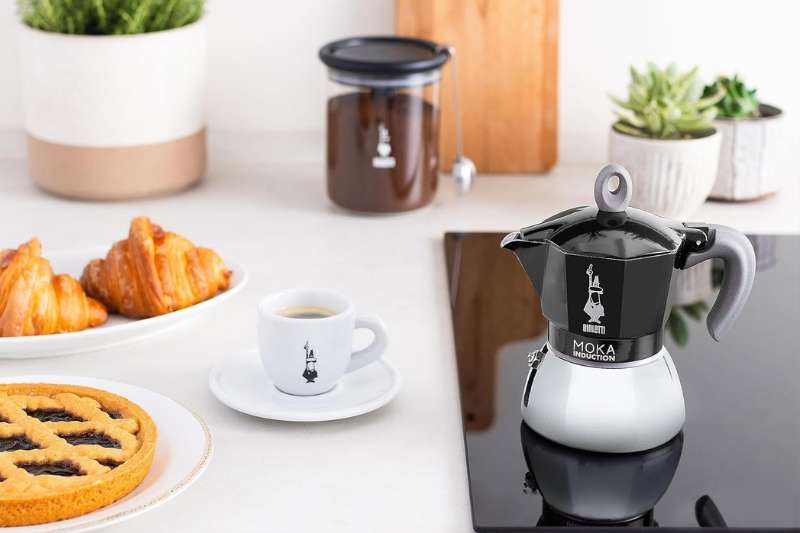
You still fill the water to the valve. Grounds go in loose without needing to tamp. You still listen for the gurgle and pull it off right away. In other words, you don’t have to relearn anything. It’s the same method, but adapted to a modern stovetop.
The 6-cup size is interesting. On paper it sounds generous, but in real life it’s closer to two strong mugs or a few espresso-style cups. That’s actually a good thing. It keeps things fresh. No leftover coffee sitting around.
Induction does change the pacing a bit. The heat is even, so the brew feels controlled (less fiddling, fewer scorched notes). You might start with hot water to speed things up, set the burner to medium-high, and stick nearby anyway.
Cleaning follows classic moka rules. Rinse with warm water and wipe dry. That’s it. The handle stays cool, something you don’t appreciate until you’ve burned your fingers on a cheaper pot.
This isn’t a reinvention. Same flavor and same method. But built for the kitchens most of us use now.
Convenient electric moka-style brewer
Rating:

4 – IMUSA Electric Espresso Maker
The IMUSA Electric Espresso Maker skips the whole stovetop routine. No burner settings to juggle. No hovering nearby. No wondering if the heat is too high. You add water to the bottom, coffee to the basket, set it on the base, press the button, and it carries on while you move on with your morning.
The coffee comes out strong. Hotter than drip, fuller-bodied, and closer to moka-style intensity than most electric machines in this range. It’s not pump espresso, but it has enough weight and punch to feel satisfying. The smell shows up quickly too: deep and toasty, more café than appliance.
You can watch the brew through the indicator window, but there’s no need to stand over it. The handle stays cool when it’s time to pour, and cleanup is straightforward. Everything rinses clean, no scrubbing or special care.
The capacity sounds bigger than it feels. Three or six small espresso-style cups, not full mugs. For everyday use, that’s usually enough. Especially when you’re brewing for yourself or one other person. The only real adjustment is learning the water level. Filling to the vent takes a couple of tries before it becomes automatic.
This machine is about convenience. It’s built for people who want simplicity, and it does that job well.
Unique glass top view + induction heat
Rating:
5 – SIXAQUAE Moka Induction Stovetop Pot
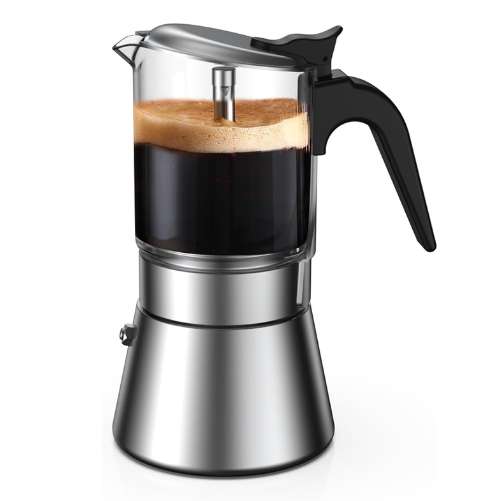
The first thing that throws you is the glass top. With the SIXAQUAE, you can actually watch the coffee brew. You see the dark stream rise, the foam form, the exact moment the pace changes.
On induction, it’s fast. The first brew took under a minute. The heat is even, the rise is clean, and there’s none of that sputtering you sometimes get when things run too hot.
The design is doing real work here. A stainless steel base makes it induction-ready, while the borosilicate glass keeps everything visible. That combination changes the process. Instead of waiting and reacting, you’re paying attention and stopping the brew at the right moment.
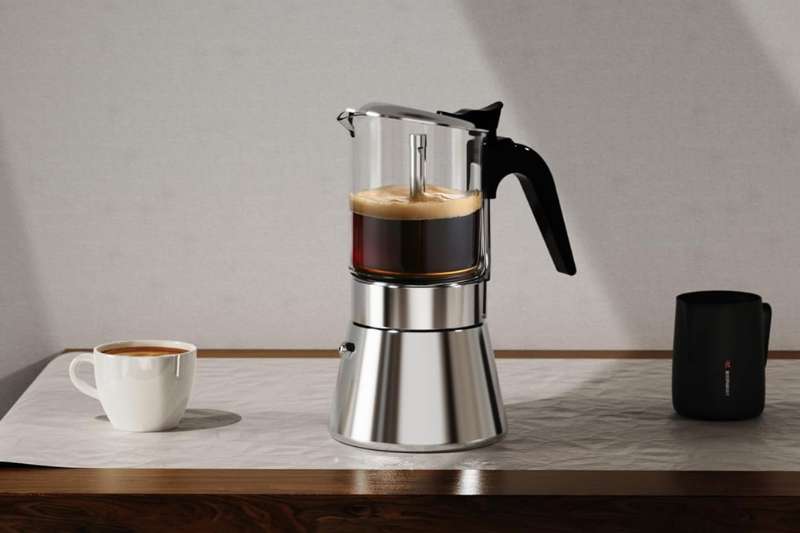
In the cup, it delivers more than you’d expect for the price. Bold, concentrated, and especially good for Cuban-style coffee. The aroma fills the kitchen quickly, and because you can stop the brew early, bitterness doesn’t creep in at the end.
It’s also lighter than most aluminum pots. Not fragile, just easier to handle. The handle stays cool, the safety valve does its job, and cleanup is simple.
There are some limits. The threads aren’t overbuilt, and rushing the assembly or overfilling the basket will cause problems. Tighten it properly, respect the fill lines, and it seals fine. The glass top also means you treat it with more care.
But once you get used to seeing the brew happen in real time, going back to guessing feels a little… blind.
Stainless build with longtime durability
Rating:

6 – Cuisinox Roma Stovetop Moka Pot
Once you pick Cuisinox up, you notice the difference immediately. It’s solid but not bulky. Thick stainless steel, smooth threads, no flex or grit when you screw it together. If you’ve ever had an aluminum pot loosen up or start to show its age after a year or two, this feels like the opposite path.
Brewing with it is familiar, but more controlled. Medium-low heat is the sweet spot. Leave the lid open and you can watch the coffee rise slowly: dark, glossy, with a light foam forming at the top. Let it go too far and it’ll bite back. Pull it at the right moment and the cup is bold, clean, and smoother than you’d expect from a stovetop pot.
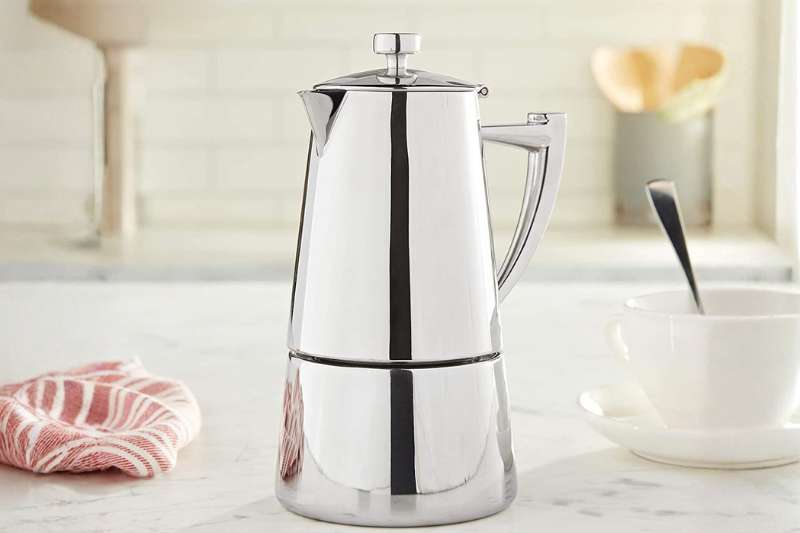
The gasket seals reliably every time, and there’s a spare included. No coating means no off flavors and no worries about acidic coffee reacting with the pot. And unlike pump machines, there’s nowhere for old smells to hide. Rinse it out, sometimes toss it in the dishwasher, and that’s the end of it.
The only thing that slows you down is cooling time. Stainless steel holds heat, so you do need to give it a minute before taking it apart.
This isn’t a moka pot that tries to impress you with clever features. It just does its job consistently and it’s built for the long haul.
Design icon with premium performance
Rating:
7 – Alessi Espresso Coffee Maker 9090
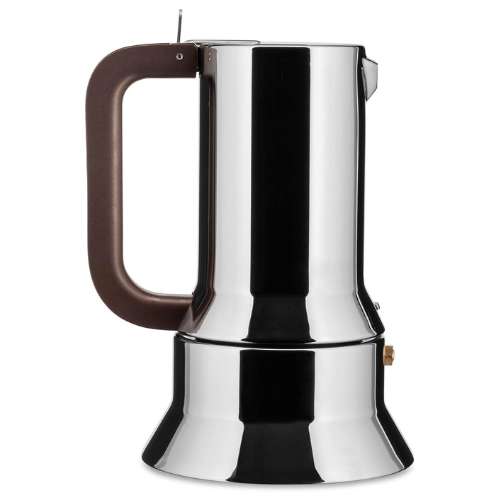
This is the moka pot you buy once you already know you like moka pots. You notice it right away: polished steel and sculpted shape. It looks intentional on the counter, and it’s clearly meant to be used, not just admired.
You notice the first real difference when you close it. There’s no twisting or guessing. The top locks on with a firm click, and that’s it. Brewing feels familiar, but more relaxed. You start with very hot water, set it on the stove, and keep an eye on it.
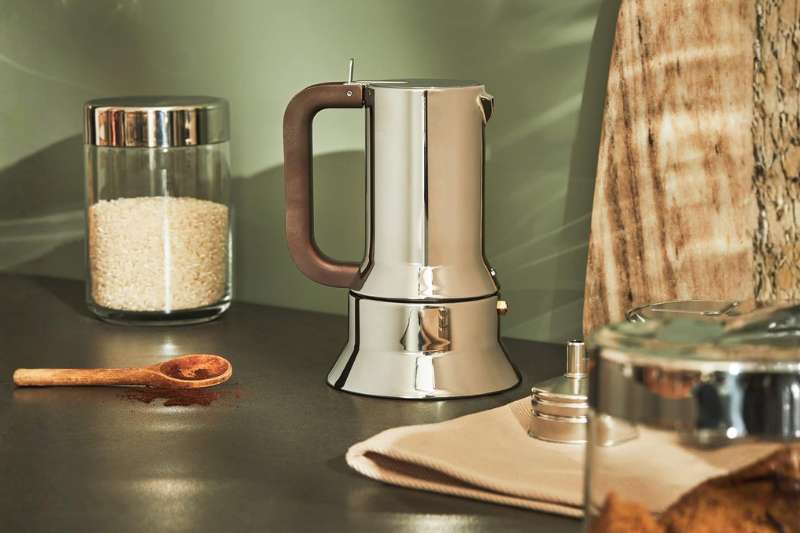
After a few minutes, the coffee rises slowly, dark, glossy, controlled. The smell is rich and clean, without that sharp edge you get when a cheaper pot runs too hot. What you end up with isn’t pump espresso, but a strong, well-structured coffee that works beautifully as an Americano base.
There is a short learning curve. You can’t overfill the basket. You don’t pack the grounds tight. And a slightly coarser grind helps.
The stainless steel construction is a big part of the appeal. No threads slowly wearing down over time. You do need to dry it properly, especially around the inner seam, but that’s a small habit, not maintenance.
If you just want the fastest, cheapest way to strong coffee, this isn’t it. But if you care about well-made tools that last for years, the 9090 earns its place.
Large capacity, robust and stylish
Rating:
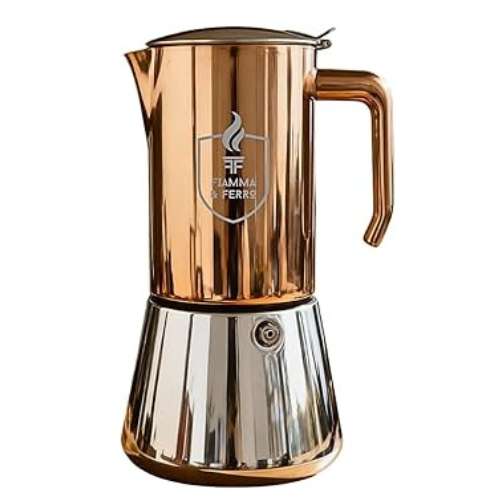
8 – Fiamma & Ferro 12-Cup Premium
Everything is stainless steel. Inside and out. It feels dense and purposeful. Brewing is simple, but it asks for some patience. Water in, basket filled, onto the stove.
The wide base sits steady (especially on induction), and the heat comes on evenly. When the coffee starts to flow, it doesn’t sputter or rush. It rolls out thick and dark, and the smell fills the room fast.
This pot makes a lot of coffee. Realistically, you’re looking at ten to twelve espresso-style cups. You can brew less, but it’s best used for what it was built for: serving more than one person. Weekend breakfasts, friends staying over, slow mornings where someone inevitably asks for another cup.

The flavor matches the scale. It’s bold and unapologetic. If you’re sloppy with your dose, it will let you know. You only need to learn that once. Dial it in, though, and it’s rich without turning harsh, with a surprising amount of crema for a pot this size.
Daily use details are solid, too. The handle stays cool. The spout pours cleanly. Cleanup is quick: dump, rinse, and dry. No trapped smells, no awkward corners to scrub. It was built to be used often.
For one person, it’s probably more than necessary. But if you enjoy the ritual and often brew for others, it makes sense in a way smaller pots don’t.
Last Thoughts
Still unsure which moka pot is right for you? Ask yourself a few simple questions. What kind of stove do you use? Do you usually brew for yourself, or for other people too? Do you care more about tradition, materials, or convenience?
If you’re stuck between a couple of options, that’s normal. I’ve been there. Take another look at the picks above, and if you’re still not sure, I’ll help you narrow it down so you end up with a moka pot that works for you.
Questions? We Have Answers.
Get answers to a list of the most Frequently Asked Questions.