6 Best Budget Coffee Grinders Under $100 in 2026
Last updated on May 21st, 2026 at 03:12 pm
For the longest time, my morning coffee felt like a gamble. Some days it was rich and comforting, the kind of cup that makes you slow down for a second. Other days? I’d take one sip, squint a little, and think, why does this taste like that? Same beans and brewer. But a completely different result.
The problem turned out to be sitting right there on the counter: my old blade grinder. I trusted that thing for years. Press a button, hope for the best.
But what it was really doing was smashing beans into a chaotic mix of dust and boulders. Over-extracted bitterness from the powder, sour emptiness from the chunks. No wonder my coffee couldn’t make up its mind.
So I did what everyone does: “I started looking for an upgrade”. And immediately ran into reviews telling me I needed to spend hundreds to get “real” results. Precision burrs. Pro-level motors. Price tags that made me close the tab and sigh. I just wanted better coffee, not a new financial commitment.
I didn’t want to keep drinking bad coffee… but I also didn’t want to go broke fixing it. So I started digging. Testing. Returning a few mistakes. Learning what actually matters and what’s just noise.
Turns out, you can get a genuinely good coffee grinder under $100 if you know what to look for.
That’s why this guide exists. To save you the trial-and-error, the wasted beans, and the bad mornings. These are the budget grinders that make a difference, without asking too much of your wallet.
What to Look for in a Budget Coffee Grinder?
Choosing a budget coffee grinder can feel harder than it should. You simply want decent coffee, not a lesson in burr geometry. After trying more grinders than I’d like to admit, a few things matter and a lot don’t.
1 – Grind consistency
This is the big one, even on a budget. You don’t need perfection, but you do need predictability. If your grinder spits out dust and boulders at the same time, your coffee will taste flat one day and bitter the next. Burr grinders usually win here, even cheaper ones. That’s why a basic burr grinder is a big upgrade over a blade grinder: cleaner, more consistent coffee.
2 – What you actually brew at home.
If you’re making drip or French press every morning, you don’t need espresso-level fineness. Chasing that on a budget leads to frustration. A simple grinder that handles medium to coarse well can still make excellent coffee.
3 – Noise and timing.
This sounds trivial until it’s 6:30 a.m. and your grinder sounds like it’s chewing gravel. Manual grinders shine here, especially if you’re only making one or two cups. They’re slower but quieter. On the flip side, electric grinders are faster and more convenient, but cheap motors can be loud and harsh. So choose wisely.
4 – Mess and cleanup.
Budget grinders love static. Grounds sticking to lids, bowls, fingers… everywhere. Stainless steel catch cups help. So does learning little habits such as tapping, shaking, and wiping with a damp cloth. If you hate mess, that should factor into your choice more than you think. A grinder you avoid using because it’s annoying is worse than a “technically inferior” one you use daily.
4 – How much coffee do you grind?
If you’re grinding 18–20 grams at a time, capacity barely matters. If you brew a full pot every morning, suddenly it does. Some small grinders top out fast, and reloading mid-grind gets old quickly. Think in grams, not “cups,” even if the box says otherwise.
5 – Don’t overbuy features.
Timers, dozens of settings, fancy claims most of that won’t improve your coffee if the grind itself isn’t solid. A simple grinder that does one or two things well is often the better buy.
Top 6 Budget Coffee Grinders Under $100
Here are six solid budget coffee grinders that balance price, performance, and everyday usability.
Best entry-level electric burr
Rating:

1 – Cuisinart Coffee Burr Grinder
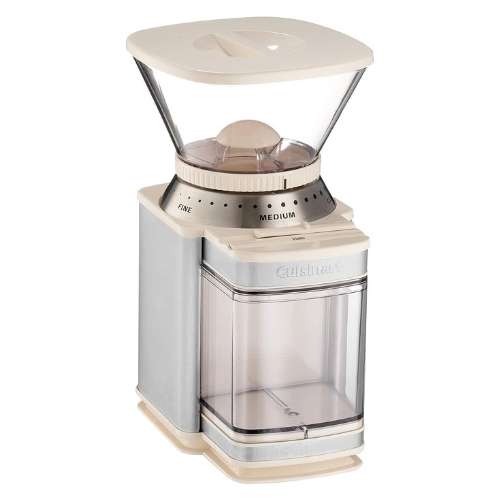
The Cuisinart Coffee Burr Grinder shines in everyday brewing. If you’re making drip coffee, pour-over, or French press, it does its job well. You’ll probably end up in the middle grind settings, and once you find your number, it stays consistent.
The hopper holds plenty of beans, the grounds bin is roomy, and you can grind enough for a few days without having to think about it.

But here’s the honest part. If espresso is your main goal, you’re going to hit a wall. Even at the finest setting, it doesn’t quite get there. You can pull shots, but dialing them in is frustrating. You’ll adjust the dose, tweak your tamp, try again… and still feel like something’s missing. It’s more espresso-adjacent than espresso-ready.
It’s also loud. When you turn it on, it makes its presence known, especially in a small kitchen. And while cleaning isn’t terrible, it’s not effortless either. You’ll want to brush it out occasionally to keep things fresh.
If you mostly brew coffee and only dabble in espresso now and then, this grinder fits nicely into real life. Just know what it’s good at and where it draws the line before you expect it to be something it isn’t.
Best overall budget electric grinder
Rating:
2 – OXO Brew Conical Burr Coffee Grinder
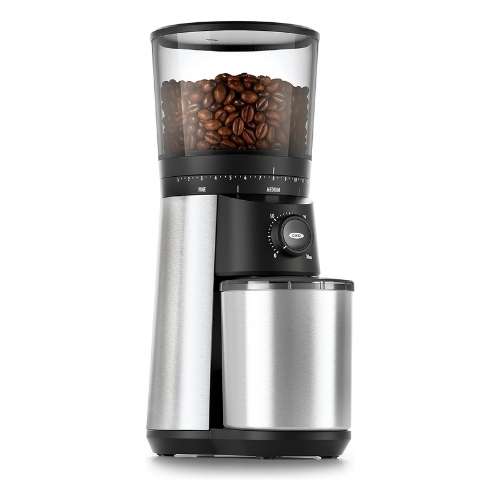
What stands out with OXO is how calm it feels to use. It’s noticeably quieter than many grinders in this category, and the stainless steel catch cup helps keep grounds from clinging everywhere. You’ll still give it a quick tap at the end (almost everyone does), but cleanup is easy and fast.
If you’re wondering about espresso: yes, you can make it, especially with darker roasts and manual machines, but it takes patience.

Dialing in shots isn’t effortless here, and if espresso is your main focus, you’ll eventually want something more specialized. Where the OXO excels is everywhere else.
For drip coffee, pour-over, AeroPress, or French press, this grinder delivers rich, balanced cups without drama. It’s reliable, intuitive, and built for real-life coffee routines. Rather than gear obsessives chasing perfect microns.
If you want one grinder that handles almost everything well and doesn’t drive you crazy in the process, the OXO Brew is easy to live with. And honestly, that’s why so many people stick with it for years.
Reliable classic hand grinder
Rating:
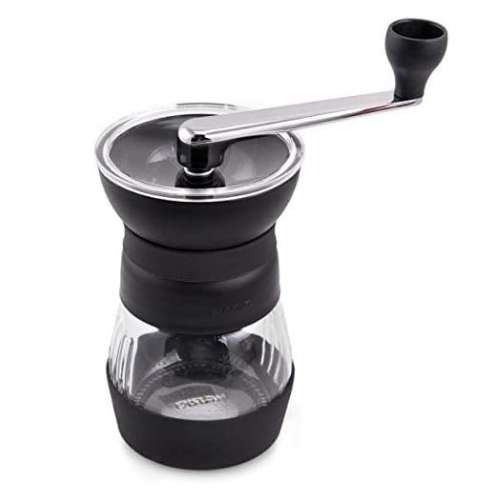
3 – Hario Skerton Pro Manual Coffee Grinder
If you’re used to electric grinders screaming like a vacuum cleaner first thing in the morning, this is a total shift. You grip the handle, start cranking, and instead of noise, you get that soft, crunchy sound of beans breaking apart.
The first morning you use it, you might expect to be annoyed. Hand grinding sounds like work in your head. But grinding about 18 grams for a press pot takes maybe a minute. There’s something grounding about doing it yourself.

And the smell of freshly cracked beans smells noticeably better when they’re ground slowly, right there on your counter.
What sets the Skerton Pro apart from the original Skerton (and a lot of cheap hand grinders) is stability. The reinforced shaft and improved burr support make the grind far more even, especially for French press or cold brew.
If you’re used to seeing fine sludge at the bottom of your cup, you’ll notice it’s barely there now. The coffee tastes cleaner. Smoother.
Adjustment still isn’t perfect. You do have to remove the bottom to tweak the grind size, which can get annoying if you’re switching back and forth all the time. But if you mostly stick to one or two brew methods, it becomes second nature quickly.
It’s not fast or effortless, but for one or two cups, slowing down with the Skerton Pro feels worth it.
Portable travel-friendly hand grinder
Rating:
4 – JavaPresse Manual Coffee Grinder
The first thing you notice is the silence. The JavaPresse has no motor or plastic rattle. Just the soft, steady crunch of beans breaking down under your hand.
If you’re coming from an electric grinder, it feels almost strange. Grinding about 18–20 grams for a single cup takes a couple of minutes. You feel it in your arm, but it’s not annoying.

Once you dial in the adjustment, the consistency is better than you’d expect at this size. The ceramic burr stays cool, so the aroma stays intact. You actually smell the difference as you grind, brighter notes feel clearer, darker roasts smell deeper and rounder.
This grinder works best as a single-serve companion, not a family workhorse. One or two cups? Perfect. Grinding for a group? That’s pushing it. It’s great for pour-over, AeroPress, French press, and even manual espresso. Though espresso takes patience, especially with lighter roasts.
Adjustment takes some fiddling, and switching grind sizes often can get old. But if you stick to one or two brew methods, it becomes second nature.
It’s compact, tough, easy to clean, and travel-friendly. Camping, power outages, quiet mornings, it doesn’t care.
Ultra-budget blade grinder
Rating:
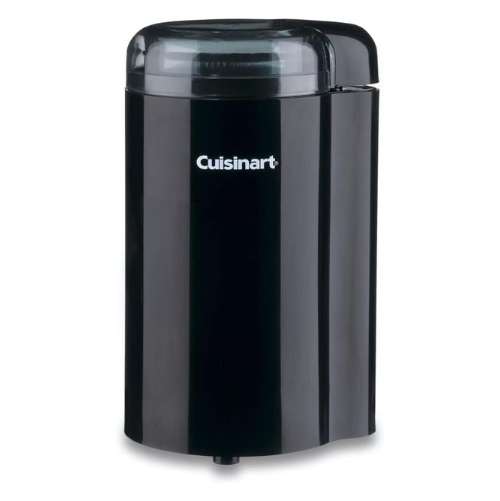
5 – Cuisinart DCG-20BKN Coffee Grinder
What this grinder offers is fast, hassle-free grinding. Beans go in, lid goes on, button gets pressed. The motor kicks up, the beans bounce, and in less than a minute, the kitchen smells alive again.
But you do figure out pretty fast that how you use it matters more than how it’s built. Treat it like a hold-and-forget machine and the grind will punish you with dust and boulders. Pulse instead in short bursts. Shake the bowl between presses.
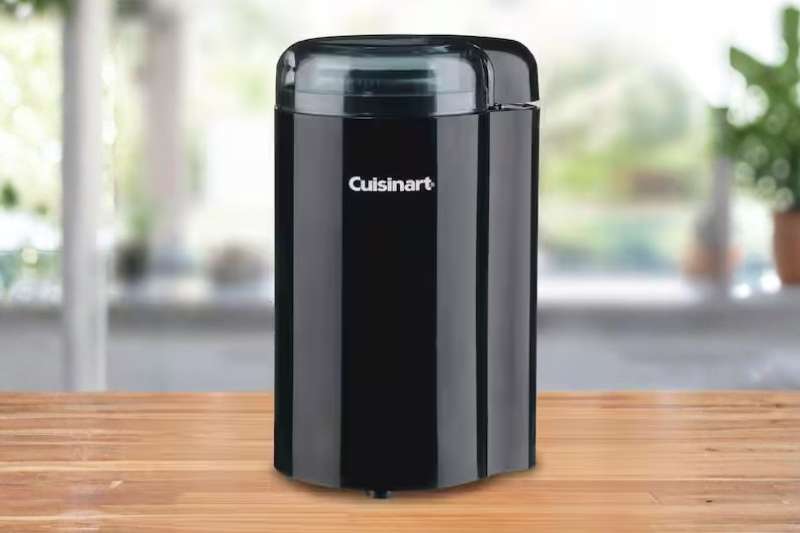
You usually need somewhere around 15–20 quick taps for a medium grind, and that’s enough to keep drip and pour-over tasting solid. French press too, if you’re patient.
The stainless steel bowl is one of those details you don’t appreciate until you’ve owned a plastic one. It wipes clean, doesn’t cling to old smells, and feels sturdier than the rest of the body suggests. Capacity-wise, you’re looking at roughly 35 to 70 grams. It’s fine for a pot, not ideal for bulk grinding.
Static? Yeah. Grounds stick to the lid. You’ll tap it. Maybe swear once and move on.
This isn’t a grinder for chasing perfection. It’s for people who want fresh coffee without turning the morning into a project. The Cuisinart is simple, fast and a little messy. But effective and sometimes that’s all you need.
Best value premium hand grinder
Rating:
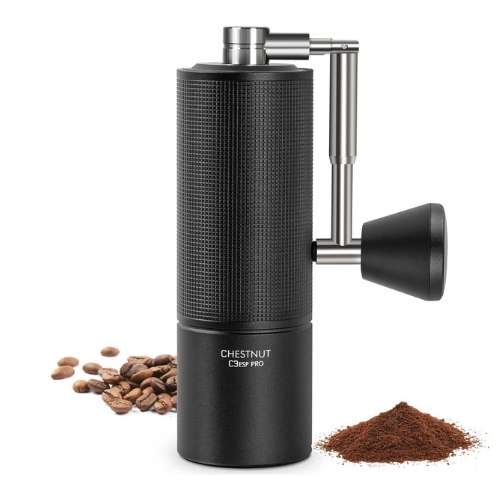
6 – Timemore Chestnut C3 Pro Manual Coffee Grinder
This is the grinder you reach for if you want consistent results without a bulky machine taking over your counter or your mornings.
What stands out right away is how easy it is to grind. The action is smooth, almost buttery, and noticeably faster than older hand grinders. Grinding enough beans for a single cup takes maybe 20 seconds, and it never feels like a workout.

The burr alignment is solid. So the grind comes out clean and even, especially for pour-over, AeroPress, or French press.
You also notice the build. It feels dense, well-machined, and confidence-inspiring in the hand. The folding handle is genuinely useful for travel, even if the included pouch is just a bit too small. Annoying, but not a dealbreaker.
Espresso is possible, but it’s not effortless, especially with lighter roasts. For medium to dark beans and manual espresso, you can make it work with patience. Still, this grinder shines as an all-around daily companion rather than a dedicated espresso tool.
If you want a manual grinder that feels refined, fast, and consistent and you’re willing to pay a little extra for that experience, the C3 Pro earns its place.
Last Thoughts
Before choosing a grinder, take a moment to think about how you make coffee daily. One cup or a full pot? At home, on the go, or both? Do you want speed and convenience, or do you enjoy slowing down and being part of the process?
There’s no single “best” grinder. Just the one that fits your routine.
If this guide helped you avoid a bad buy, share it with someone still battling inconsistent coffee. A better cup is closer than most people realize.
Questions? We Have Answers.
Get answers to a list of the most Frequently Asked Questions.