Why Your Super Automatic Espresso Tastes Watery (7 Easy Fixes)
Last updated on February 25th, 2026 at 04:43 pm
When I first had my Jura, I’ll be honest, I was in love with it. The design, the smooth screen, the quiet grind in the morning… it felt premium in every way. And sometimes the espresso was incredible. Thick crema. Warm, nutty aroma. Exactly what I imagined from a high-end machine.
But not always.
Some days I’d take a sip and think, Why does my super automatic espresso taste watery? It looked fine in the cup, but the flavor felt thin. Slightly sour. Or just flat. Not what I wanted. Not what I knew it could do.
That’s the frustrating part. You buy a super automatic for convenience and consistency. You press a button expecting café-quality results. When the shot runs too fast or disappears in milk, you start wondering what went wrong.
In this guide, we’ll talk about the real reasons this happens and the simple adjustments that can bring your espresso back to rich, bold, and enjoyable.
Quick Fix Overview
If you just want the fast version here’s a simple breakdown of the most common reasons your super automatic espresso tastes watery and what to do about it.
| Problem | What’s Happening | Quick Fix |
|---|---|---|
| #1 Grind too coarse | Water flows too fast → under-extraction | Adjust one step finer (while grinder is running) |
| #2 Dose too low | Not enough coffee in brew chamber | Increase strength / aroma setting |
| #3 Cup size too large | Too much water diluting the shot | Reprogram espresso to ~25–40 ml |
| #4 Beans too old | Lost oils & CO₂ → weak crema | Use fresh beans (2–4 weeks from roast) |
| #5 Brew temp too low | Incomplete extraction | Turn off eco mode, preheat machine & cup |
| #6 Needs cleaning/descaling | Restricted flow & pressure | Clean brew group, descale properly |
| #7 Grinder wear | Inconsistent grind → channeling | Deep clean grinder or replace burrs |
Notes: Most watery espresso issues are solved by adjusting just one of these. Start at the top and work your way down. Keep reading if you want to learn more details.
What Does “Watery Espresso” Actually Mean?
Before we start twisting grind knobs and blaming the machine… what do we actually mean when we say a super automatic espresso tastes watery? Because I’ve learned it’s not just about “too much water.” It’s more subtle than that.
The first time it happened to me, I stared at the cup for a few seconds thinking, That doesn’t look right. The crema was thin. Barely there. It broke apart almost immediately. No thick golden layer. No tiger-striping. Just a fragile little foam that faded fast. That’s usually the first clue.
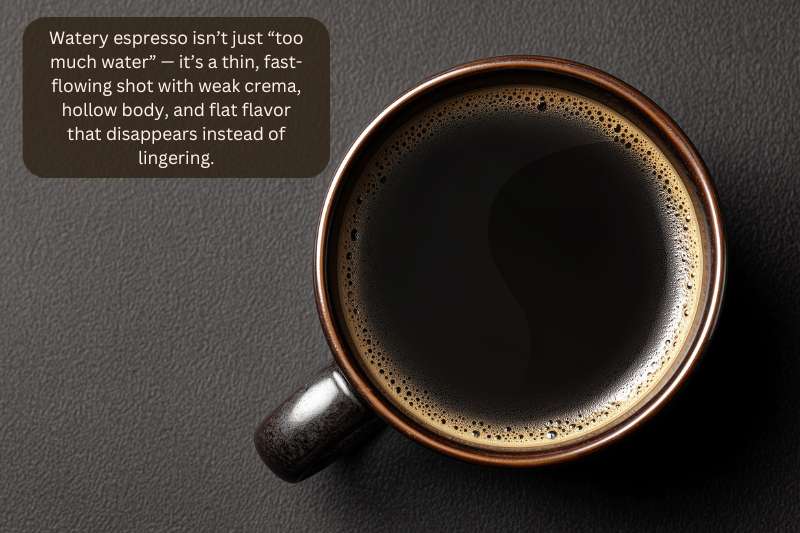
Thin body. Weak crema.
Good espresso has weight. Not syrup-thick, but it has presence. It coats your tongue a little. It lingers. Watery espresso just lands and disappears. No grip and texture. It feels hollow, like something’s missing.
And the taste is where it really shows.
Sometimes it’s sour. Sharp, underdeveloped, kind of edgy in a way that makes you squint. Not bright and lively. Just… unfinished. Other times it’s bitter, but weirdly thin at the same time. Like over-steeped tea that somehow still lacks strength. It’s hard to describe until you’ve had it. Then you immediately know.
Another thing I notice? The speed.
If the shot finishes in under 15–18 seconds, I already get suspicious. I’ve actually timed it before. Yes, with my phone out. When it gushes out pale and fast, almost watery from the very first second, that’s rarely a good sign. Instead of that slow, honey-like stream, it looks more like diluted coffee running through too easily.
And the aroma shifts too.
Espresso should smell warm, nutty, maybe a little sweet. When I lean in and mostly get steam. In other words, just heat and air. I know something’s off. It’s subtle, but once you’ve smelled a proper shot, the difference stands out.
Here’s something practical: Test it in milk.
If you pour the shot into steamed milk and the coffee completely disappears, that tells you everything. A solid espresso should still cut through milk. It should show up.
Now, one honest thing about super automatics.
They handle grinding, dosing, tamping, timing, and all the mechanics. That’s the whole appeal. Press a button, get espresso. But they don’t know your beans are old. They don’t know you switched to a lighter roast. They don’t notice when a setting got nudged slightly during cleaning.
They run the program you give them. So when espresso tastes watery, it’s usually not a big deal. It’s usually one small tweak away from being right again.
Want better espresso at home? A reliable machine makes all the difference.
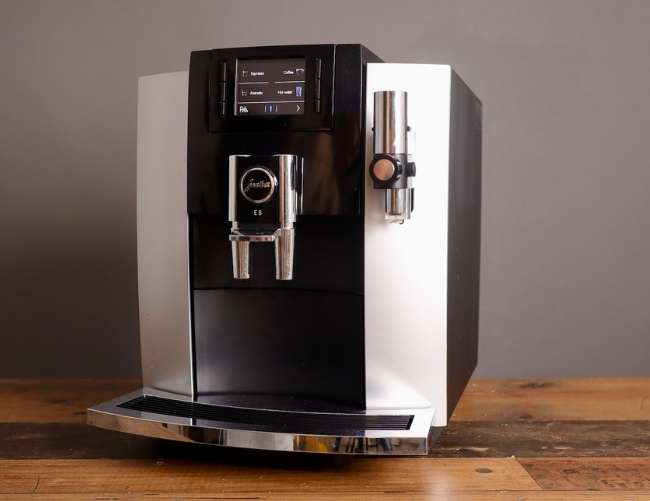
8 Best Super Auto Espresso Machines (2026)
Want café-quality espresso at the push of a button? We break down the top super automatic machines — comparing espresso taste, milk systems, ease of use, and long-term value.
Fix #1 – Your Grind Is Too Coarse
First things first, start with the grind before anything else. Here’s what’s happening.
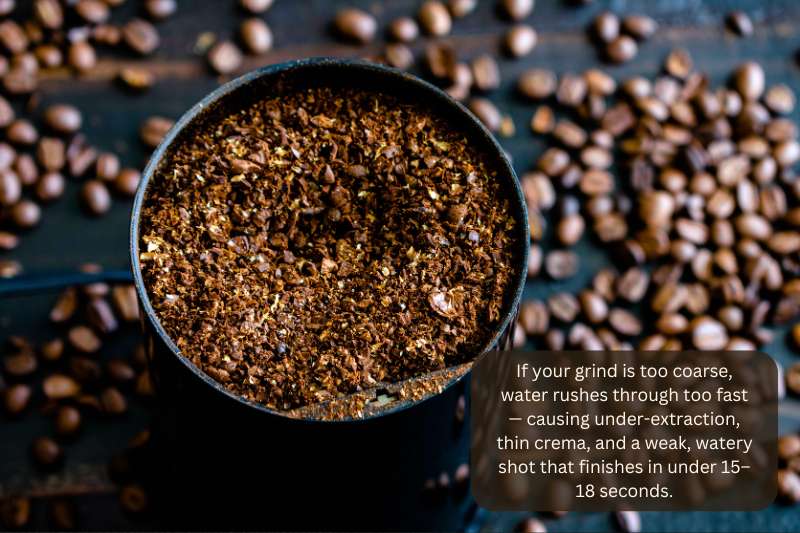
When the grind is too coarse, water flows through the coffee too easily. There’s barely any resistance. So instead of extracting those rich oils and deeper flavors, the water simply rushes through. Fast extraction equals under-extraction. And under-extraction is what gives you that watery and hollow shot.
If your espresso is finishing in under 15–18 seconds, that’s usually the giveaway. A healthier range is around 20–30 seconds. It doesn’t need to be exact. But if it’s gushing out quickly and looking pale from the start, the grind is probably too coarse.
Why does this even happen?
Sometimes you switch beans and forget that different roasts behave differently. Lighter roasts especially can require a finer grind in super automatics. Other times, the grinder setting gets bumped accidentally. Or the burrs slowly drift out of calibration over time.
Now, when you adjust it, go slow. One step finer at a time. That’s it.
And if your machine allows it (most do), adjust the grind while the grinder is running. It feels weird at first, but that’s how these machines are designed. Don’t crank the dial five clicks and hope for magic.
Also, pull at least two shots before judging. The first one after adjusting might still reflect the previous grind size because there’s leftover coffee inside the system. I’ve over-adjusted before because I didn’t wait.
When you hit the sweet spot, you’ll see the difference. The flow slows slightly. The crema looks thicker. The body feels fuller on your tongue.
Fix #2 – Coffee Dose Is Too Low
After adjusting the grind as we talked about, I was sure that would fix it. The flow slowed down. The shot looked better. Crema improved a little. But sometimes the espresso still tasted thin.
That’s when I realized it wasn’t the grind anymore. It was something smaller. And honestly, easier to miss. The strength setting was on “mild.”
I don’t even remember changing it. It might’ve reset after cleaning. A lot of super-automatics quietly default back to lower-strength profiles after a cycle, which is pretty annoying. You wake up expecting bold espresso and get… polite coffee.
Here’s what’s actually happening.
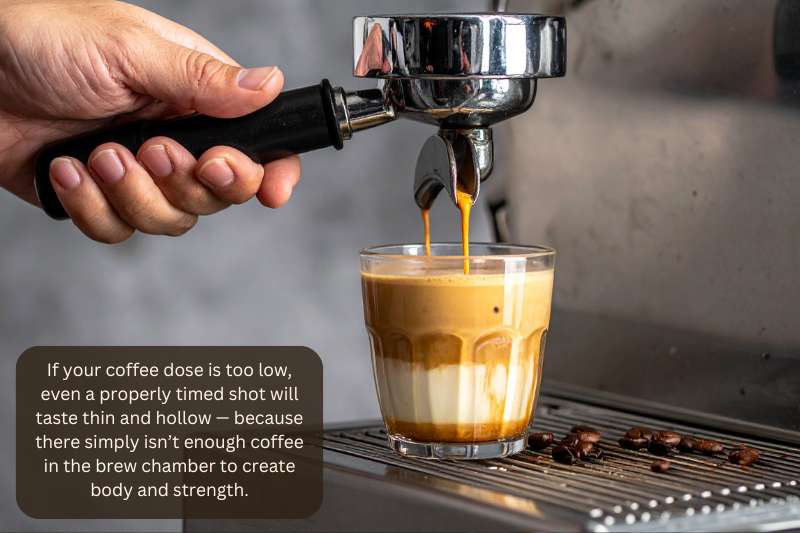
If the dose is too low, there isn’t enough coffee in the brew chamber. The machine can grind perfectly and extract at the right time, but if the puck is small, the flavor will be small too. Less coffee equals weaker extraction. Simple math.
I tested this once out of curiosity. Same beans, same grind, same cup. I brewed one shot on the lowest strength and one on the highest. The “mild” one looked fine, with decent crema, but it tasted hollow. The stronger setting had more weight, more aroma, more presence.
You really feel it in milk drinks.
If you add milk and the espresso disappears completely, that’s often a dose issue. A proper shot should still push through 120–150 ml of milk without vanishing.
So here’s what you do
Increase the “coffee strength” or “aroma” one step. Just one. Brew again. Some machines let you adjust the grams directly; if yours does, small changes matter. Even half a gram can shift the body noticeably. Before tearing everything apart, just check how much coffee the machine is using.
Fix #3 – Too Much Water (Cup Size Setting Is Too High)
After tweaking grind and strength, I once had a shot that looked decent (good crema and decent timing), but it still tasted watery. Then I looked at the cup and
It was nearly half full.
Somewhere along the way, I had programmed the espresso button to fill a bigger cup. Probably 4 or 5 ounces. I enjoy using larger mugs sometimes, and I must’ve held the button down too long when setting it.
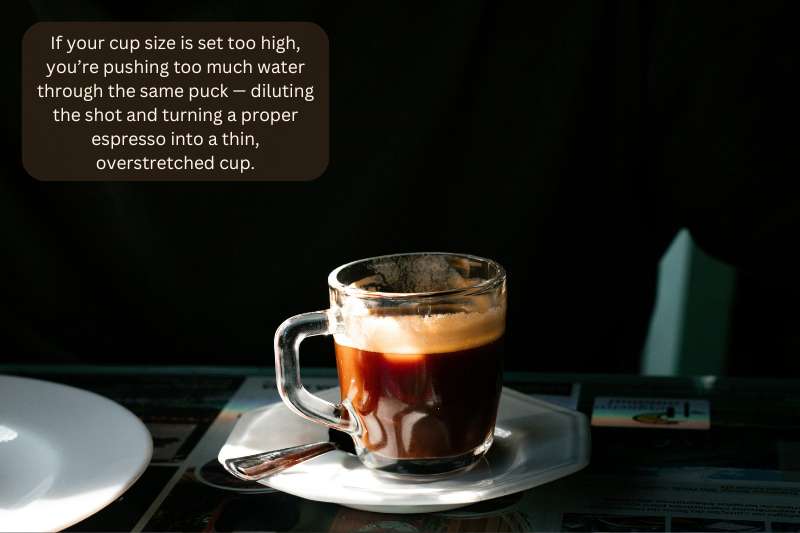
Here’s the thing most people don’t think about: true espresso is only about 25–40 ml. Roughly 1 to 1.5 ounces. That’s it. It’s small on purpose. It’s concentrated.
So, what should you do?
When you push 5 or 6 ounces of water through the same dose of coffee, you’re not getting “more espresso.” You’re diluting it. More water in the same puck just stretches the flavor thinner and thinner until it tastes hollow.
I’ve also accidentally hit the Americano button instead of espresso before. Easy mistake. The machine adds extra hot water after the shot, and suddenly you’re wondering why it tastes weak.
It’s not broken. It’s just doing what you asked. If your shot fills most of the cup, start there.
Reprogram the espresso button to stop sooner. Or reset it to factory volume if your machine allows that. Many super automatics make this simple: press and hold, release at the volume you want.
Another trick I use sometimes? Switch to ristretto mode. It pulls a shorter, more concentrated shot using less water. The flavor tightens up immediately. You get a thicker body and stronger aroma.
Fix #4 – Beans Are Too Old or Too Lightly Roasted
Sometimes your espresso tastes watery… and it’s not the machine at all. It’s the beans.
I learned this the hard way. I once kept a bag in the hopper for, I don’t know, maybe three weeks? I’d brew one or two cups a day, nothing crazy. The shots slowly started losing crema. The aroma faded. The flavor felt flat.
I kept adjusting grind and strength. Didn’t fix it.
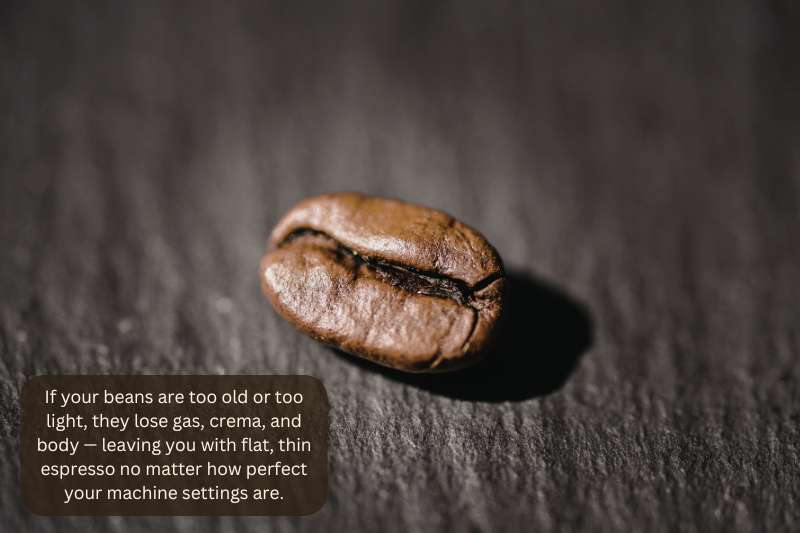
Old beans lose gas and surface oils over time. That gas, the CO₂ trapped inside fresh coffee, is what helps create crema and that rich and lively aroma. When it’s gone, the shot looks dull and tastes weaker, even if your settings are perfect.
You’ll notice it in small ways first. The crema forms thin and disappears quickly. The smell isn’t warm and nutty anymore. The body feels lighter. Almost papery sometimes.
And then there’s the roast level.
Super light roasts can be tricky in super automatics. I love light roasts for pour-over, but in these machines? They often come out sharp or under-extracted unless everything is dialed perfectly. The grinder inside most super autos isn’t as aggressive as a standalone espresso grinder.
On the other hand and this is my opinion, super dark, oily beans aren’t great either. They can clog the grinder over time. I’ve seen it happen. Sticky buildup. Not fun.
The sweet spot?
Fresh beans. Ideally, within about 2–4 weeks of the roast date. Stored airtight. Medium to medium-dark roast tends to work beautifully in super automatics. They’re balanced, forgiving and consistent.
If your espresso suddenly tastes weak and you haven’t changed anything else, check the bag. Sometimes watery espresso isn’t technical.
Fix #5 – Brew Temperature Is Too Low
You’ve already adjusted the grind. Upped the dose. Switched beans. And yet your espresso tastes watery. One factor that people often forget is temperature.
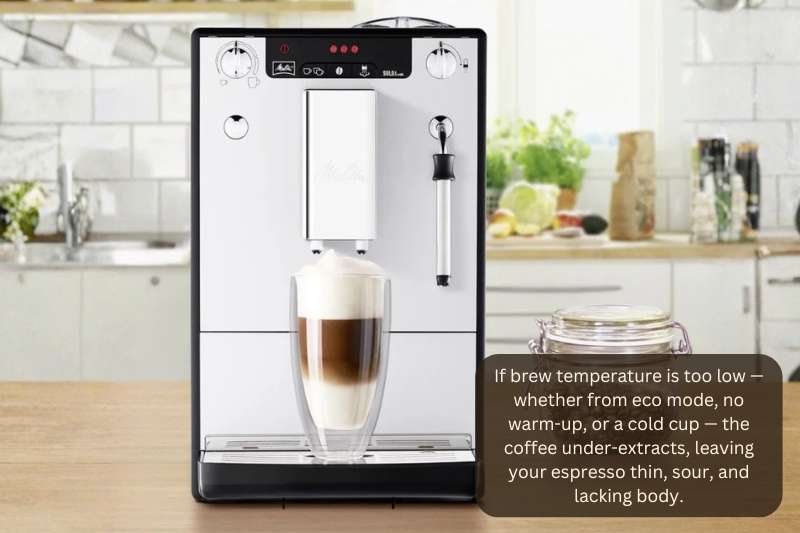
If the brew water isn’t hot enough, it can’t fully extract the sugars and heavier compounds that give espresso body. Instead, you’re left with that sharp and slightly sour taste. Thin. A little unfinished.
Sometimes it’s as simple as eco mode being turned on. A lot of super automatics lower brew temperature to save energy. Great for efficiency. Not so great for flavor.
Other times, it’s impatience.
You turn the machine on and brew immediately. No warm-up. No blank shot. Just press the button and go. But these machines need a few minutes to heat everything internally. If you rush it, that first shot often runs cooler than it should.
You can test this. Brew a shot right after powering on. Then wait five minutes and brew another. Pay attention. The second one often has thicker crema, fuller body, and a warmer aroma.
And here’s another small detail: your cup.
If you’re pouring espresso into a cold ceramic cup, the temperature drops fast. You don’t always notice it, but your tongue does.
Try running a blank shot first. Just hot water through the group and into the cup. It preheats the system and the cup at the same time.
So check a few simple things. Turn off eco mode. Set brew temperature to medium-high if your machine allows it. Let the machine warm up fully before brewing. That should solve things.
Fix #6 – Machine Needs Cleaning or Descaling
I ignored this for longer than I should have. Cleaning is boring. Who actually enjoys it, right? But then the shots started tasting weird. Some days thin, other days slightly better. The crema looked patchy. The flavor felt muted.
Then I pulled out the brew group and looked at it. There was a thin layer of coffee oil buildup (sticky, dark, slightly shiny). And when you think about it, that oil runs through the system every single day.
Coffee leaves residue. It just does.
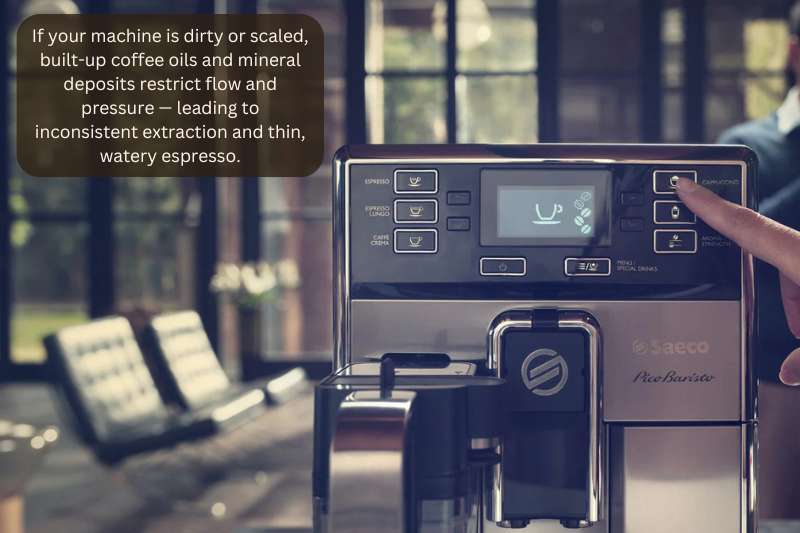
Over time, those oils build up in the brew group. Inside pathways. Around seals. And if you live somewhere with hard water? Scale can form inside the boiler too. You won’t see it, but it affects water flow and temperature.
Restricted flow means inconsistent pressure. And inconsistent pressure means inconsistent extraction. Which often shows up as watery espresso.
How do you fix this?
If your machine has a removable brew group, rinse it weekly. I try to do it every 5–7 days. Just warm water. Let it dry fully before putting it back.
Use proper espresso cleaning tablets when the machine prompts you. Don’t skip it. I used to hit “remind me later.” Bad idea.
And descale according to the manufacturer’s schedule, especially if your water is hard. It’s not optional maintenance. It’s part of owning the machine.
One more thing: rinse thoroughly after any cleaning cycle. Residue from cleaning agents can affect taste too. If your espresso suddenly tastes flat or weak and nothing else explains it, don’t overlook maintenance. Sometimes watery espresso isn’t about settings. It’s building up quietly, interfering with everything.
Fix #7 – Internal Grinder Wear or Calibration Issues
If your espresso tastes watery and you’ve already checked grind size, dose, temperature, beans, cleaning… and it’s still inconsistent? It might be the grinder itself.
I didn’t believe this at first. I thought grinders either worked or didn’t. On or off. Simple.
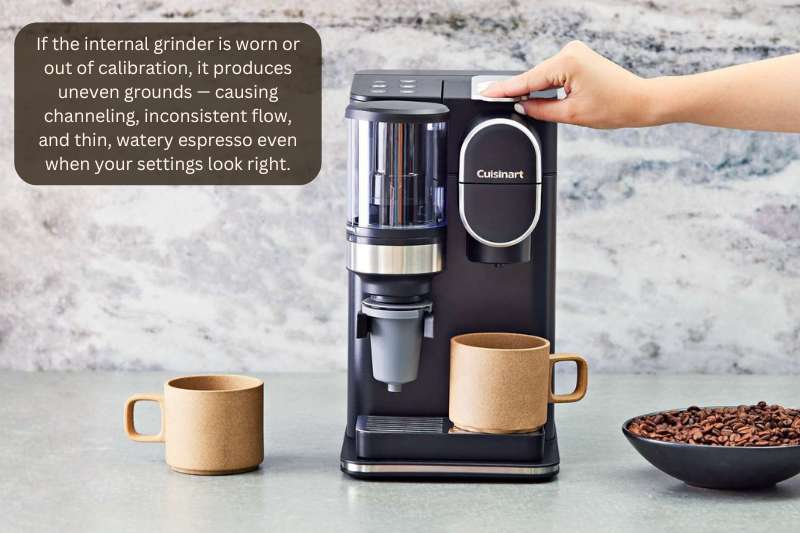
But burrs wear down slowly. You don’t wake up one morning and think, “Ah yes, my burr edges are 12% duller.” It happens gradually. The grind starts becoming less uniform. One day, your shot looks fine. The next it runs oddly fast.
Inconsistent grind leads to channeling.
Some particles are too coarse. Some too fine. Water finds the easiest path and rushes through part of the puck instead of extracting evenly. The result? Thin body and weak flavor. That familiar watery espresso feeling. You might notice it visually.
The stream looks uneven. It pulses. Or the crema forms patchy and breaks apart quickly. I once had a machine that produced a shot that looked thick for the first five seconds, then suddenly thinned out like it hit a weak spot.
That’s often grind distribution.
So what should you do?
Deep clean the grinder. Old grounds and oil buildup inside can affect consistency. Some super automatics let you access the grinder area carefully. Follow the manual, don’t go poking around blindly.
If the machine is older and heavily used, say a few thousand shots in, burr wear becomes more realistic. Some models allow burr replacement. Others require service.
Also, avoid flavored beans. I know they smell amazing. But those added syrups coat the burrs over time, creating a sticky buildup. If everything else checks out and your espresso still tastes weak or unpredictable, don’t ignore the grinder.
Bonus – Quick Troubleshooting Checklist
Before you decide your machine is broken… pause. Most of the time, the fix is something simple. So here’s the quick reset you run through. You can copy this, print it, stick it inside a cabinet door if you want.
| ✔ Quick Check | What to Do |
|---|---|
| ☑ Grind finer | Adjust one step finer while grinder is running |
| ☑ Increase strength | Move from mild to medium or high aroma setting |
| ☑ Reduce cup size | Aim for ~25–40 ml (1–1.5 oz) for espresso |
| ☑ Use fresh beans | Ideally within 2–4 weeks of roast date |
| ☑ Raise temperature | Turn off eco mode, set to medium-high |
| ☑ Clean & descale | Rinse brew group, run cleaning or descaling cycle |
It takes about 8 minutes: adjust the grind, bump the strength, pull two test shots. And honestly? Most watery espresso gets fixed right there.
One small tweak can change the whole cup. If you’re frustrated, go step by step. Don’t change everything at once. That’s how you get lost. I’ve done it. Five tweaks in five minutes, and suddenly you don’t know what helped… or hurt.
Last Thoughts
If you’ve gone through all of this: adjusted the grind, bumped the strength, checked your beans, cleaned the machine and your espresso still tastes watery, don’t just sit there frustrated. Leave a comment below and tell me what’s happening.
What machine are you using? What beans? What does the shot look like? Sometimes one small detail makes all the difference, and I’m happy to help you figure it out.