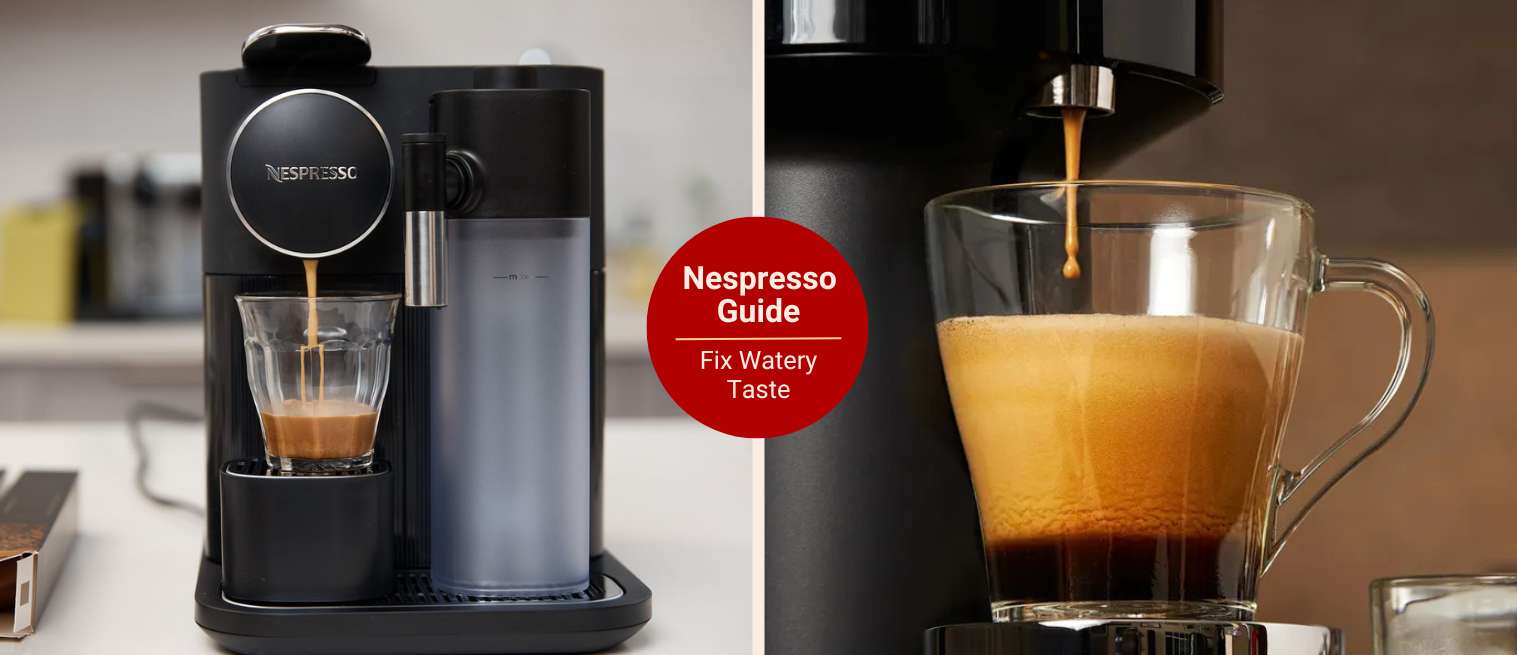
Why Nespresso Tastes Watery (And How to Fix It)
Last summer, after months of pulling shots on my Barista Express, I looked over at my Nespresso sitting there… untouched, almost forgotten. It made sense at the time. It was hot, I didn’t feel like dialing in grind size or standing there steaming milk. I just wanted something quick. Press a button, pour it over ice, move on.
So I gave it another shot.
The coffee came out fast and looked fine, at least for a second. Then I took a sip and paused. It wasn’t bad exactly, but thin. A little hollow. The kind of cup that makes you wonder if something’s off, or if that’s how it’s supposed to taste.
If your Nespresso tastes watery, you’ve probably had that same moment. It’s one of the most common complaints, especially if you’re coming from fresh espresso or stronger coffee.
The frustrating part is not knowing why. Is it the machine? The capsule? Something you’re doing wrong without realizing it?
Most of the time, it’s not a defect. It’s a small mismatch somewhere in the setup and once you spot it, the difference is immediate. So, let’s go through what’s going on.
Quick Fix Checklist (Fast Troubleshooting)
Before you start blaming the machine, it’s worth running through a few small things first.
| Problem | What’s Happening | Quick Fix |
| 1 – Wrong cup size | Too much water for the capsule | Use espresso (40 ml) or lungo (110 ml) correctly |
| 2 – Low capsule strength | Mild blend, not enough intensity | Switch to intensity 8–12 or ristretto pods |
| 3 – Wrong system (Vertuo) | Larger, lighter extraction style | Use smaller cup sizes or consider OriginalLine |
| 4 – Needs descaling | Mineral buildup affecting pressure | Run a descaling cycle every 2–3 months |
| 5 – Low-quality capsules | Inconsistent grind or weak fill | Use original or high-quality compatible pods |
| 6 – Poor water quality | Hard or off-tasting water | Use filtered or bottled water |
| 7 – Not fully heated | Low brewing temperature | Let machine warm up or run a blank shot |
Quick tip: If you’re not sure where to start, try switching to a smaller cup size first. It’s the fastest fix and often makes the biggest difference.
What “Watery Nespresso” Actually Means
“Watery” gets thrown around a lot, and it doesn’t always mean the same thing. Sometimes it’s obvious: pale coffee, barely any crema, that hollow taste where you expect something thicker.
Other times it’s more subtle. The cup looks fine at first, then falls apart after a few sips. I’ve had that happen. You take a sip, pause, and realize it just… disappears.
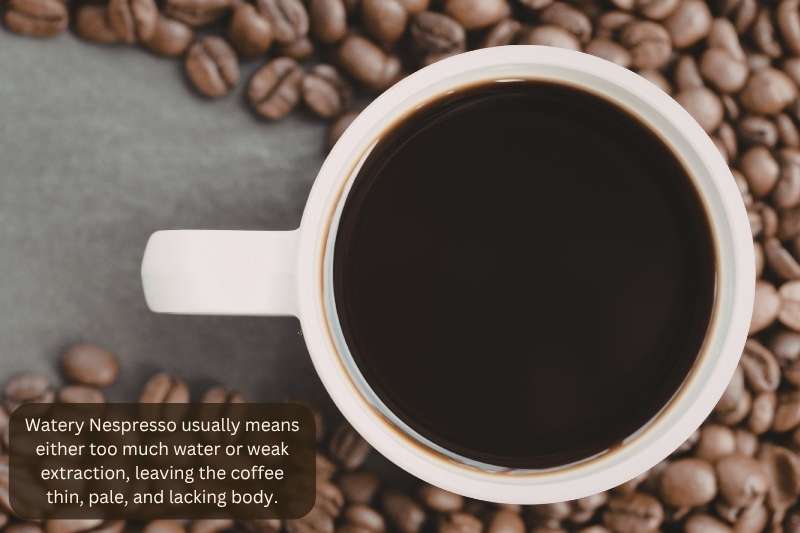
No weight to it. Most of the time, what you’re dealing with is either too much water passing through the capsule or not enough extraction happening in the first place. Different causes but same result: a cup that feels weaker than it should.
7 Reasons Your Nespresso Tastes Watery
It’s rarely one big failure. More often, it’s a small mismatch somewhere, either with water, capsule, or settings. And the machine does exactly what you told it to do.
1 – You’re Using the Wrong Cup Size
Capsules are pre-dosed. Fixed amount of coffee, no flexibility there. So when you run a lungo using a capsule meant for espresso, you’re not getting more coffee. Instead, more water pushed through the same grounds.
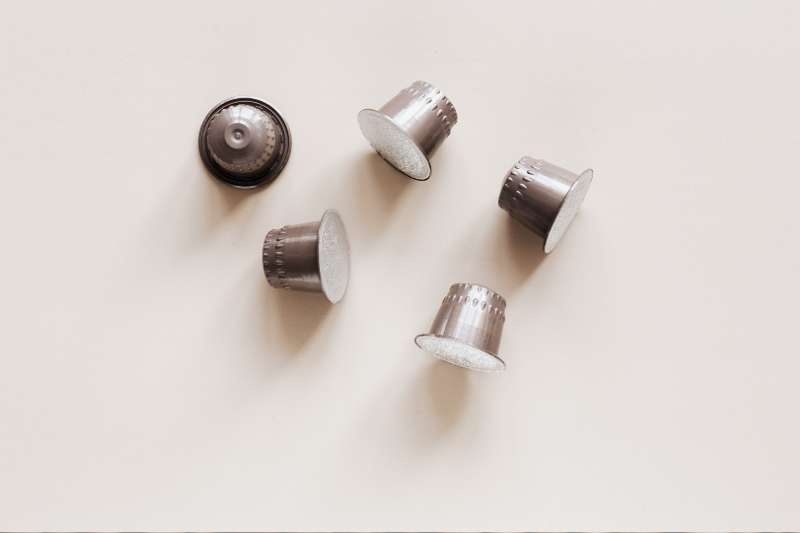
The cup looks normal. The first sip doesn’t even seem that bad. Then it thins out fast… a kind of diluted bitterness that fades almost immediately.
Stick to the recommended sizes:
- Espresso (~40 ml)
- Lungo (~110 ml)
Stretching a small capsule into a big cup almost always leads to that thin, washed-out result.
2 – Capsule Strength Is Too Low
Not all capsules are trying to be bold. Some are built to be softer, lighter… almost polite.
If you’re using intensity 4, 5, maybe 6 and expecting something punchy, it won’t land. The machine isn’t doing anything wrong; the capsule simply isn’t designed that way.
Switching to higher intensity options (8–12) changes things quickly. So, look for labels like ristretto or intenso. Those usually hold up better, especially in smaller shots.
3 – You’re Using the Wrong System (Original vs Vertuo)
This one confuses people more than it should.
OriginalLine machines lean toward traditional espresso. Higher pressure, smaller shots, a bit more concentrated.
Vertuo machines go in a different direction. They spin the capsule during brewing and aim for larger, smoother coffees. Easier to drink and to dilute.
If you’re after stronger espresso, OriginalLine makes more sense. If you’re on Vertuo, staying with smaller cup sizes helps keep things from drifting too far into “coffee-flavored water.”
4 – Machine Needs Descaling
Mineral buildup doesn’t show up all at once. It creeps in slowly. Often affecting pressure, flow, and sometimes temperature. And then one day the coffee tastes off.
Signs are subtle at first:
- Slower flow
- Uneven extraction
- Less intensity
Running a proper descaling cycle every couple of months keeps things consistent. If you skip it long enough, your machine will start giving you problems.
5 – Capsule Quality (or Off-Brand Pods)
Capsules look identical on the outside. Inside, not always.
Lower-quality pods can have inconsistent grind size, uneven fill, or coffee that’s lost some of its character. The machine can’t compensate for that.
If your coffee suddenly tastes weaker than usual, switching back to original Nespresso capsules (even temporarily) is an easy way to check. Sometimes the difference is immediate. Other times, it’s enough to notice.
6 – Water Quality Issues
Often, people don’t pay attention to the water they use for their coffee. But hard water can interfere with extraction and tap water can give off flavors.
It’s not always huge, but it shifts the taste slightly and when the coffee is already light, those small shifts matter more. Using filtered or bottled water helps. Plus, cleaning the tank every so often doesn’t hurt either.
7 – Machine Not Fully Heated
If you brew immediately after turning the machine on, the water might not be at the right temperature yet. Lower temperature means weaker extraction, and that shows up as thinner coffee.
So, let it warm up properly. Or run a quick blank shot first. For this, water only and no capsule. It takes a few seconds and steadies things more than you’d expect.
Last Thoughts
Sometimes you fix it on the first try. Other times… not really. If you’ve gone through these adjustments and your Nespresso still tastes off, what does it actually taste like now? Thinner, bitter, just flat? Drop your setup or the capsule you’re using in the comments below. I can take a look with you.