Cold Brew Ratio Chart + Calculator: Coffee-to-Water Guide
Last updated on July 27th, 2026 at 03:50 pm
Summer arrives, and cold brew becomes the name of the game. At least for me. Hot coffee still has its place, but when the day is already too warm, cold brew just makes more sense.
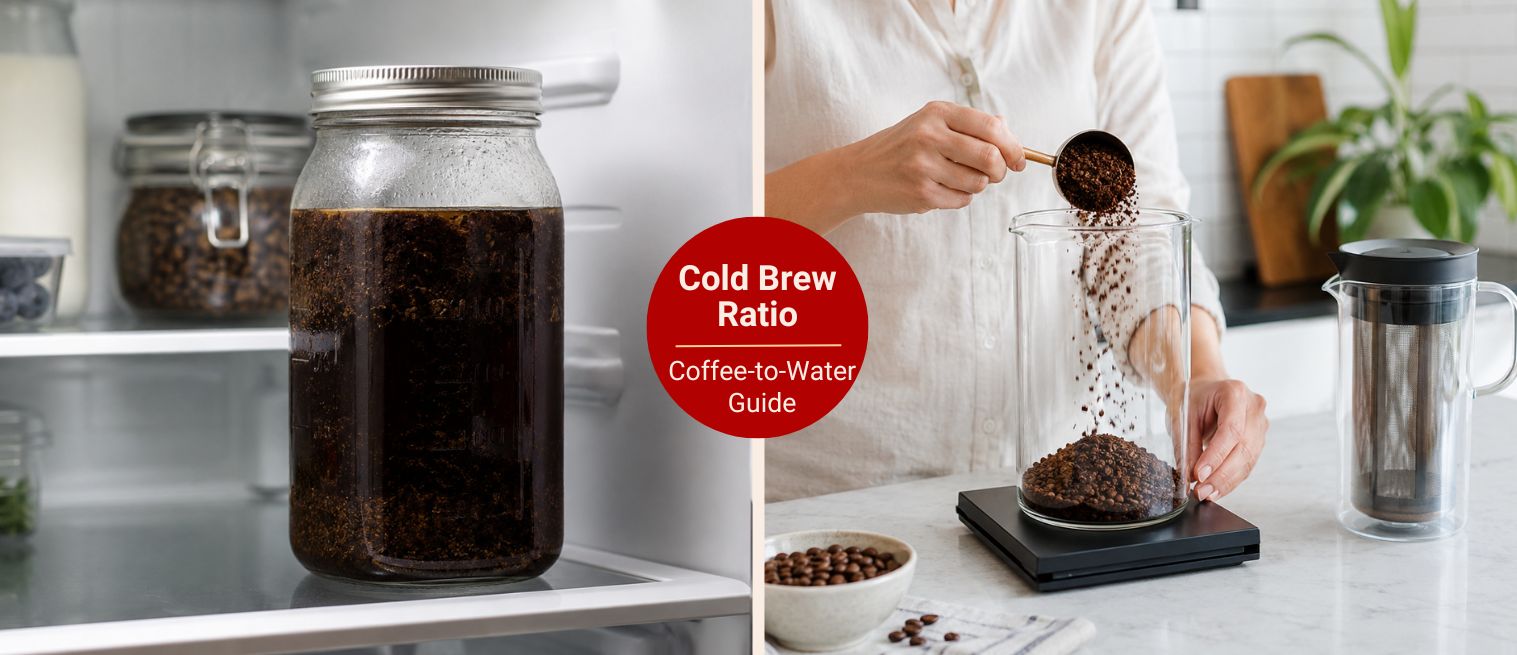
I think most people begin the same way. You grind some extra-coarse coffee, throw it into a glass jar, add water, put the lid on, and act like you know exactly what you’re doing. I did that too. No real measuring. Just coffee, water, and confidence that probably wasn’t earned.
The first batch may even turn out decent. You take a few sips and think, okay, this works. Then you make another one and suddenly it tastes weak, or too strong, or muddy.
That’s when the Cold Brew Ratio starts to matter.
Not because cold brew needs to become complicated. It doesn’t. But once you know how much coffee and water to use, the whole thing gets easier to repeat.
Cold Brew Ratio Calculator
If you just want the numbers without doing coffee math in your head, use the calculator below. Pick how much cold brew you want to make, choose the style, and it will show you a simple starting amount for coffee and water. I’d still taste and adjust after your first batch. But this will help you get closer to what you want faster.
Cold Brew Ratio Calculator
Choose your batch size and brew style. This calculator treats your amount as the water you add before steeping.
Quick Cold Brew Ratio Chart
If you want the fast version, start here. This chart gives you a simple cold brew ratio to work from before you start adjusting for milk, ice, or how strong you like your coffee.
| Cold Brew Style | Coffee-to-Water Ratio | Best For |
|---|---|---|
| Light ready-to-drink | 1:15 | Smooth, mild cold brew |
| Standard ready-to-drink | 1:12 | Everyday cold brew over ice |
| Strong ready-to-drink | 1:10 | Milk or cream |
| Cold brew concentrate | 1:8 | Diluting with water or milk |
| Strong concentrate | 1:4–1:6 | Small servings, café-style concentrate |
A lower second number means stronger cold brew. A 1:4 ratio is much stronger than a 1:12 ratio, because you’re using more coffee for the same amount of water.
This is where people get confused with concentrate. A cold brew concentrate is not usually meant to be drunk straight. You brew it stronger, then dilute it later with water, milk, oat milk, or ice. So the “best” ratio depends on what you want at the end: a finished drink or a concentrate you can mix later.
What Does Cold Brew Ratio Mean?
A cold brew ratio is the relationship between coffee and water. The useful one is this: it tells you how strong the batch is going to be before you waste half a jar of coffee grounds finding out.
So if you see 1:8, that means 1 part coffee to 8 parts water. For example, 100g of coffee and 800g of water gives you a 1:8 ratio. If you use 100g of coffee and 1200g of water, now you’re closer to 1:12.
I’d use a scale if you have one. Scoops can work, but coffee grounds are annoying that way. A cup of coarse coffee and a cup of finer coffee do not always weigh the same, which is how people end up making one batch they love and another one that tastes as if it came from a different house.
Best Cold Brew Ratio for Beginners
If you’re new, I’d start with 1:8 if you want cold brew concentrate. That gives you a good balance between strength and flexibility. It’s strong enough to dilute with water, milk, or oat milk. But not so intense that you feel like you made coffee syrup by accident. I like this ratio for iced lattes because milk softens coffee fast.
I recommend 1:12 if you want ready-to-drink cold brew. This one is easier if you drink cold brew black or pour it straight over ice. It’s less intense, smoother, and doesn’t need much thinking after brewing. Just pour, taste, maybe add ice, and go on with the day.
Cold Brew Ratio by Batch Size
Sometimes you don’t want to use the calculator. You just want to know what to put in the jar and move on.
I get that. I’ve had mornings where the scale is on the counter, the jar is ready, and somehow the part that slows me down is deciding whether I’m making “a small batch” or “enough cold brew to survive the next few hot days.” So here are a few easy starting points.
| Batch Goal | Coffee | Water | Ratio |
|---|---|---|---|
| Small concentrate batch | 50g | 400g | 1:8 |
| Small ready-to-drink batch | 50g | 600g | 1:12 AM |
| Medium concentrate batch | 100g | 800g | 1:8 |
| Medium ready-to-drink batch | 100g | 1200g | 1:12 AM |
| Large concentrate batch | 150g | 1200g | 1:8 |
| Large ready-to-drink batch | 150g | 1800g | 1:12 AM |
I’d keep grams as the main measurement if you can. If you’re making it for the first time, I’d probably start with the medium concentrate batch. It gives you enough cold brew for a few drinks, but not so much that you feel annoyed if you want to adjust the next one.
How to Adjust Your Cold Brew Ratio Based on Taste?
The first batch gives you numbers. The second batch tells you what the numbers actually did. That’s how I’d treat cold brew. Don’t change five things at once because then you won’t know what fixed it. Instead, one thing at a time, like change the ratio, or the grind, or the steep time.
| If It Tastes… | What Happened | What to Try Next |
|---|---|---|
| Too weak | Too much water or too little coffee | Use 1:10 or 1:8 |
| Too strong | Too concentrated | Dilute after brewing |
| Too bitter | Steeped too long or grind too fine | Use a coarser grind or shorter steep |
| Too flat | Coffee too old or ratio too weak | Use fresher coffee or a stronger ratio |
| Too heavy | Ratio too strong for black coffee | Use 1:12 or 1:15 |
If the cold brew tastes bitter, I’d look at the grind and steep time before blaming the ratio. If it tastes weak, then yes, the ratio probably needs adjusting.
How Long Should Cold Brew Steep?
I’d keep the steep time simple. Ratio is the main thing we’re working with here, but time can still push the drink in a different direction.
Most cold brew sits somewhere around 12–24 hours before you strain it. I usually think of 16 hours as the safe middle. Not too light nor too heavy. The kind of number you can start with and then change after you taste the first batch.
| Steep Time | What to Expect |
|---|---|
| 12 hours | Lighter, smoother cold brew |
| 16 hours | Balanced starting point |
| 18–24 hours | Stronger, deeper flavor |
| Too long | Can taste heavy, bitter, or a little muddy |
Fridge steeping may take longer than room-temperature steeping because everything slows down in the cold. I normally prefer the fridge because it feels cleaner to me, and also because I don’t love leaving a jar of wet coffee grounds sitting out all night next to the bananas.
Use coarse grounds, let it steep, then filter it before serving or diluting. If your cold brew tastes bitter even with the right ratio, the steep time may be the next thing to change.
Last Thoughts
What cold brew ratio do you usually use at home? Do you prefer cold brew concentrate, or do you enjoy making it ready-to-drink from the start?
And if you’ve tried a ratio that worked better with milk or oat milk, let me know in the comments below. I’d like to test a few more.
Questions? We Have Answers.
Get answers to a list of the most Frequently Asked Questions.