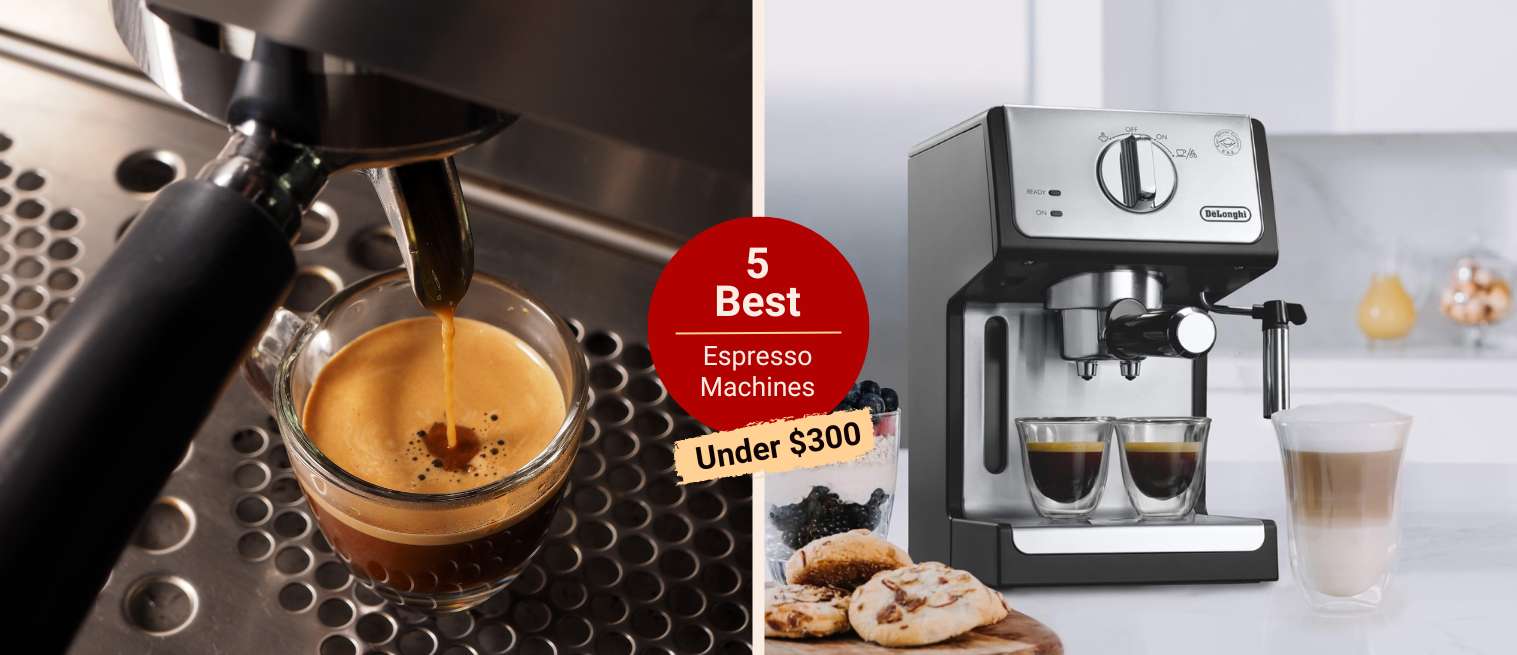
5 Best Espresso Machines Under $300 (What Actually Works)
A few years ago, getting into espresso felt… expensive. Machines like the Jura E8 were everywhere, polished, automatic, doing everything short of drinking the coffee for you. Some of them look like they might start talking back if you press the wrong button. Joking. Probably.
Then you check what they cost and pause for a second.
Because what you actually want is simpler than all that. A shot with some weight to it. Crema that holds for more than a few seconds, rather than vanishing as you pick up the cup. Not something thin that tastes like it passed through the coffee on the way down.
This is where things get uneven. Some machines get close. Others… don’t. And it’s not always obvious which side you’re landing on until you’ve already made the purchase.
So instead of trying to make sense of every spec and feature, it helps to focus on the ones that tend to hold up once you start using them. The small group that doesn’t fall apart after the first week. Here are the best espresso machines under $300.
What to Expect from an Espresso Machine Under $300?
This price range works, just not in the way most people expect.
The machines can make real espresso (crema, pressure, the whole thing) but they don’t smooth over mistakes. If something’s off, you’ll taste it. Not huge every time, but often enough that you start paying attention to things you didn’t think mattered.
Some models keep things straightforward. The De’Longhi ECP3420 is a good example of that kind of approach. You have fewer variables, more consistency from one shot to the next, even if the ceiling isn’t especially high. It does what you tell it to do.
Then you move slightly up, into something like the Gevi 20 Bar Espresso Machine, and the machine starts exposing more of the process. Pressure, temperature, and a larger portafilter are all helpful until they aren’t. Because now the result depends more on what you’re doing, not what the machine is doing.
So expectations shift a bit.
You’re not getting something that works like a café machine out of the box. Steam power is limited, grinders (when included) are basic, and consistency takes a little time to settle in. Some mornings feel easy. Others don’t quite land.
But the trade-off is there.
These machines can produce proper espresso. Milk drinks are very doable once you get comfortable with the wand. And small adjustments like grind, dose, and even slowing down tend to show up immediately in the cup.
It’s less about perfection and more about understanding what’s happening. Which, depending on how you look at it, is either the frustrating part
What to Look for Before Buying?
Specs are everywhere. The parts that actually matter show up later, usually when something doesn’t behave the way you expected.
Pump Pressure (Don’t Overthink “20 Bar”)
You’ll see 15, 19, sometimes 20 bar printed on the box like it’s the main event. It isn’t.
Espresso happens around 9 bar. That’s the range you’re aiming for. Anything above that is just the machine’s capacity, not what it should be using during extraction. Some machines handle that well. Others push too hard and call it power.
So the number itself doesn’t say much. How the machine controls it matters more, even if that part is rarely explained clearly.
Built-in Grinder vs Separate Grinder
Built-in grinders simplify things. Beans go in, coffee comes out. Less setup, fewer decisions.
But they’re usually… fine. Not terrible, not precise either. You’ll get drinkable espresso, sometimes better than that, but there’s a ceiling you start to notice after a while.
A separate grinder changes things. More control, more consistency — and more effort. It’s not always the right move at the beginning, even if it is the better one long-term.
Steam Wand vs Automatic Frother
Steam wands take some patience. Angle, timing, and how long you stretch the milk. Small things, but they add up. When it works, the texture is noticeably better. When it doesn’t, it’s hot milk with bubbles that don’t really belong there.
Automatic frothers skip all that. Press a button, milk shows up. Cleaner, faster, predictable. Also a bit limited. It depends how much that part of the drink matters to you. Some people stop caring after the second cup.
Ease of Use
Some machines feel straightforward right away. You press a button, maybe adjust a dial, and the result is close enough.
Others ask more from you. Grind size, dose and timing. Not complicated individually, but together they slow things down. You start paying attention in a different way.
That difference doesn’t show up on spec sheets. You only notice it when you’re half awake, waiting for coffee.
Build Quality
Materials matter, but not always how you’d expect.
Plastic machines can still perform well. Metal ones tend to feel better over time. Neither guarantees good espresso. Still, weight and sturdiness change how the machine feels in daily use.
Portafilter size is one of those details people overlook at first. A 51mm basket works, but it’s more limited. A 58mm setup is less common at this price. But it gives you more room to work with, more even extraction when everything lines up.
5 Best Espresso Machines Under $300
Here are five that make sense depending on how much effort you’re willing to put in.
Best Reliable Beginner Machine
Rating:
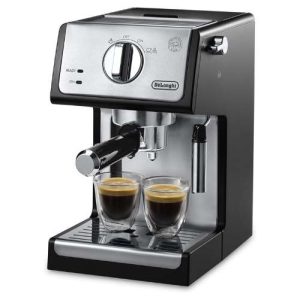


1 – De’Longhi 15-Bar Pump Espresso Machine
Some machines at this price try to impress you with numbers. This one doesn’t really bother. It just sits there and works.
The first thing you notice isn’t a feature. It’s the lack of friction. The controls are simple, the layout makes sense, and after a couple of uses you stop thinking about the machine and start thinking about the coffee. That’s rare under $300.
It uses a 15-bar pump, which sounds like marketing, and it is, a bit. But paired with a manual system that lets you control the shot, it gets you closer to real espresso than most beginner machines. Not perfect, but close enough that the difference shows up in the cup.
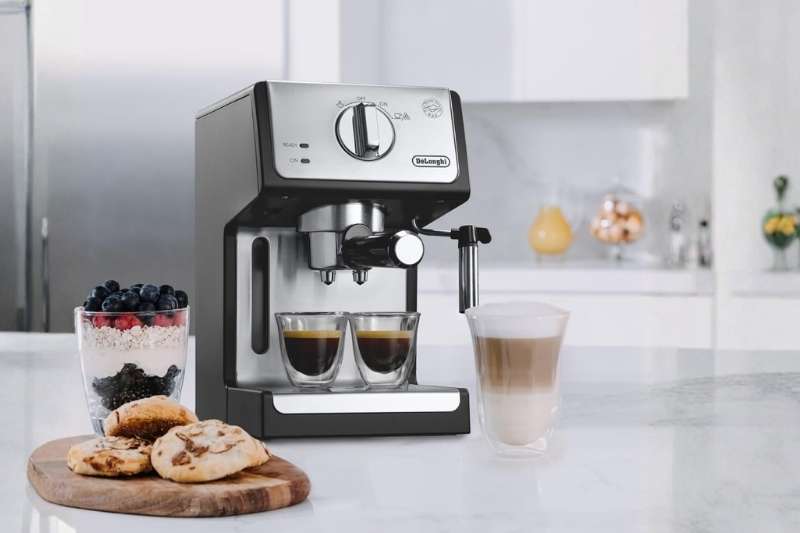
The steam wand is another part that matters. It’s manual, not automatic. That means you’ll mess it up at first. Everyone does. Then something clicks. The foam starts coming out smoother and a little thicker.
It’s not a push-button machine. And that’s both the good and the bad. You’ll need a grinder. You’ll need to pay attention to your grind and tamp. Some days it feels great. Other days you wonder why the shot looks slightly off and end up adjusting things you thought were already set.
Still, this is one of the few machines in this range that can grow with you rather than be replaced after a month. It’s simple, a little stubborn, and consistent once you meet it halfway.
And that’s really the point here. It doesn’t pretend to do everything. It just gives you a solid place to start.
Best All-in-One
Rating:
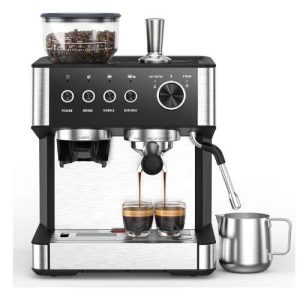
2 – Electactic Espresso Machine with Grinder
There’s a certain appeal to not having to think about extra gear. No separate grinder sitting next to the machine. No guessing what to buy first. This one comes with the complete setup.
Grinder built in, beans go in the top, coffee comes out the front. Simple on paper. In practice, that simplicity is the whole reason people end up choosing it.
The grinder is better than you’d expect. I mean, not great, but not frustrating either. It handles most beans without much complaint, and the wider grind path seems to help with the usual clogging issues cheaper machines struggle with. Dark roasts still get a little messy sometimes.
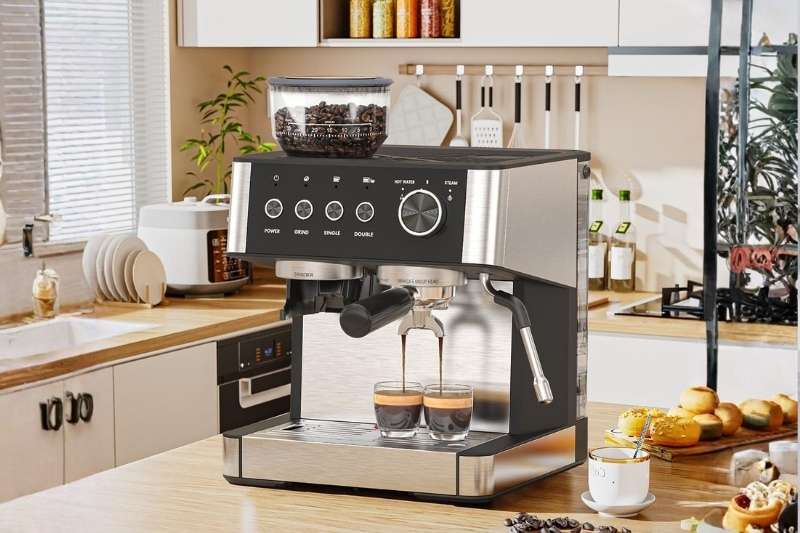
They always do. But it doesn’t choke as easily as you’d think.
Brewing is fairly straightforward once you get used to it. The controls aren’t complicated, though the first couple of days feel slightly off like the machine is doing what you asked, just not exactly how you imagined. Then you adjust something small, grind, dose, timing, and it starts to come together.
The steam wand is there, fully manual. It works but demands some patience. First attempts are usually too airy or too thin, and then, gradually, you get something closer to actual microfoam. Not perfect, but enough to make milk drinks feel intentional instead of automatic.
It’s not a precision setup. And it doesn’t pretend to be. What it does well is remove the barrier to entry. You have fewer things to buy and fewer ways to get stuck before your first decent shot. Everything in one place and that’s the advantage.
Best Budget Pick
Rating:
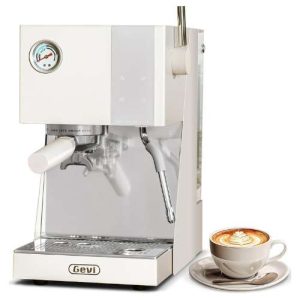
3 – Gevi 20 Bar Espresso Machine
This one feels different. You notice it when you start looking closer. The 58mm portafilter is the kind of thing you usually don’t see at this price, and it changes how the coffee behaves. You get something more even, a bit less cramped. It doesn’t magically fix bad shots, but it gives you a better shot at getting them right.
Then there’s the pressure setup. Instead of pushing as hard as possible and hoping for the best, it stays closer to that 9-bar range espresso actually needs. That alone avoids much of the bitterness that cheaper machines fall into. Add pre-infusion on top and the extraction feels calmer.
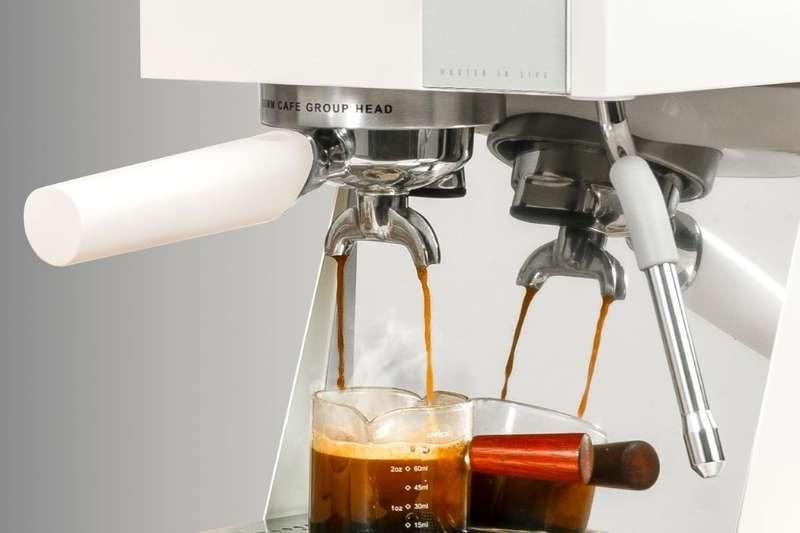
The machine also shows you more than most. Pressure gauge, temperature settings, and a small digital display. Because here’s the part that doesn’t get mentioned enough: all that feedback only matters if the grind is right. Otherwise, you’re just watching numbers move.
Milk steaming is decent. Not slow enough to frustrate you, not fast enough to feel impressive. The three-hole tip helps, though. You can get a proper texture if you stay with it for a bit instead of rushing through it.
It sits somewhere in between categories. Not as forgiving as the simpler machines, not as precise as higher-end ones. You get more control, but it asks for something back. A better grinder helps. Paying attention helps more.
It’s one of the few machines here that doesn’t try to hide what espresso actually involves. It just brings you a little closer to it, whether you wanted that or not.
Best Espresso Quality (Manual)
Rating:
4 – Flair Pro 3
This is where the list shifts a bit.
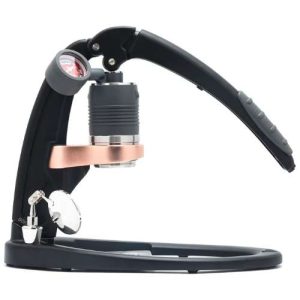
Up to this point, most machines are trying to make espresso easier. The Flair does the opposite. It removes almost everything. You don’t have pump, no electronics, or shortcuts. You’re left with pressure, water, and coffee. That’s it.
The control is the whole point. You’re applying pressure yourself, watching the gauge, adjusting in real time. Stay in that 6–9 bar range and the shot can come out surprisingly clean, thick, and properly structured. Miss it slightly and things fall apart just as quickly. It doesn’t correct you.
There’s something slightly unforgiving about it. The kind of machine where small mistakes show up immediately, uneven tamp, off-center pressure, water not quite hot enough. You can sometimes feel it through the lever. Or at least think you can. Hard to tell.
The design helps more than you’d expect. The pressure gauge gives you feedback, the shot mirror lets you see what’s happening, and the detachable brew head makes cleaning simple. It’s all very intentional. Still, the workflow isn’t quick.
You’ll need to preheat parts, boil water separately, and move through the steps in order. Skip one, and the shot reminds you. There’s no milk system here. Just espresso.
It sits in a strange place. Cheaper than many machines, but more demanding than most. Capable of better shots, but only when everything lines up (grinder, prep, pressure, timing). Not often at the beginning.
It doesn’t try to make espresso easier. But gives you access to it more directly than the others.
Best Portable Espresso Machine
Rating:
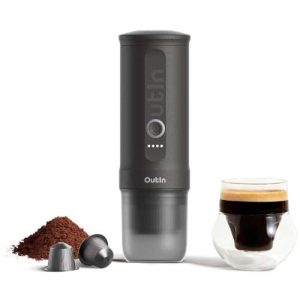
5 – OutIn Nano
Most espresso machines assume you’re standing in a kitchen, near a plug, with time to spare. The OutIn Nano doesn’t. It’s built around movement —travel, offices, hotel rooms. Places where espresso usually turns into something forgettable.
The core idea is simple: battery-powered, self-heating, press a button and wait a few minutes. It heats water, builds pressure, and pulls a shot without needing anything else. No outlet, no kettle, no setup beyond filling it and clicking once.
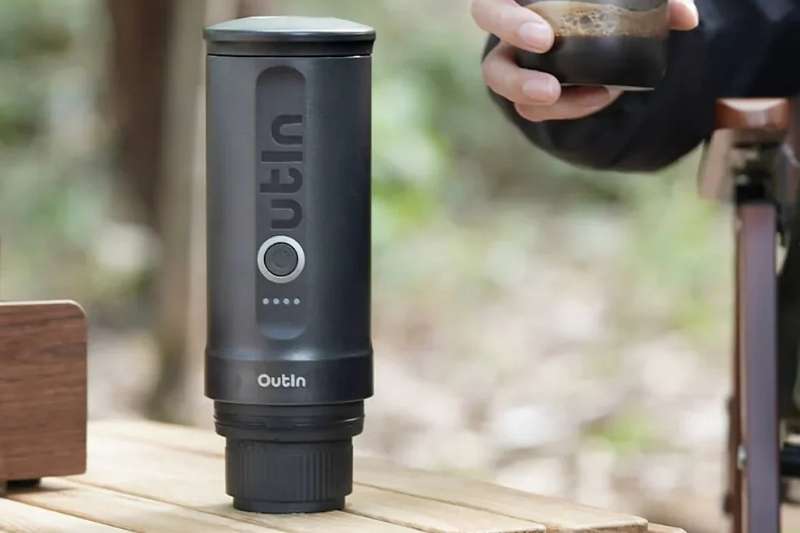
It works with both ground coffee and Nespresso-style capsules. In practice, capsules tend to be more consistent here. The dose is fixed, the workflow is easier, and you’re not dealing with grind size in a situation that probably doesn’t allow for much adjustment anyway. Grounds work too, but they ask a bit more from you and the machine.
There are limits, though. The shot size is small, and if you try to stretch it into something larger, it thins out quickly. That’s not really a flaw, just physics. You’re working with a compact system and a small dose. Keep it short, and it holds up better.
It’s also not as light as it looks. Portable, yes. Minimal, not exactly. More “carry it with you” than “forget it’s there.”Still, the value shows up in the gap it fills. Not replacing a home setup. Just giving you a decent espresso in places where you’d normally settle for something worse or nothing at all.
Last Thoughts
Still unsure which one fits your setup?
It usually comes down to how involved you want to be. Simple and quick, or something you can grow into over time. If you’re stuck between a couple of options or aren’t sure which matches your routine, drop a comment and let me know what you’re looking for.