
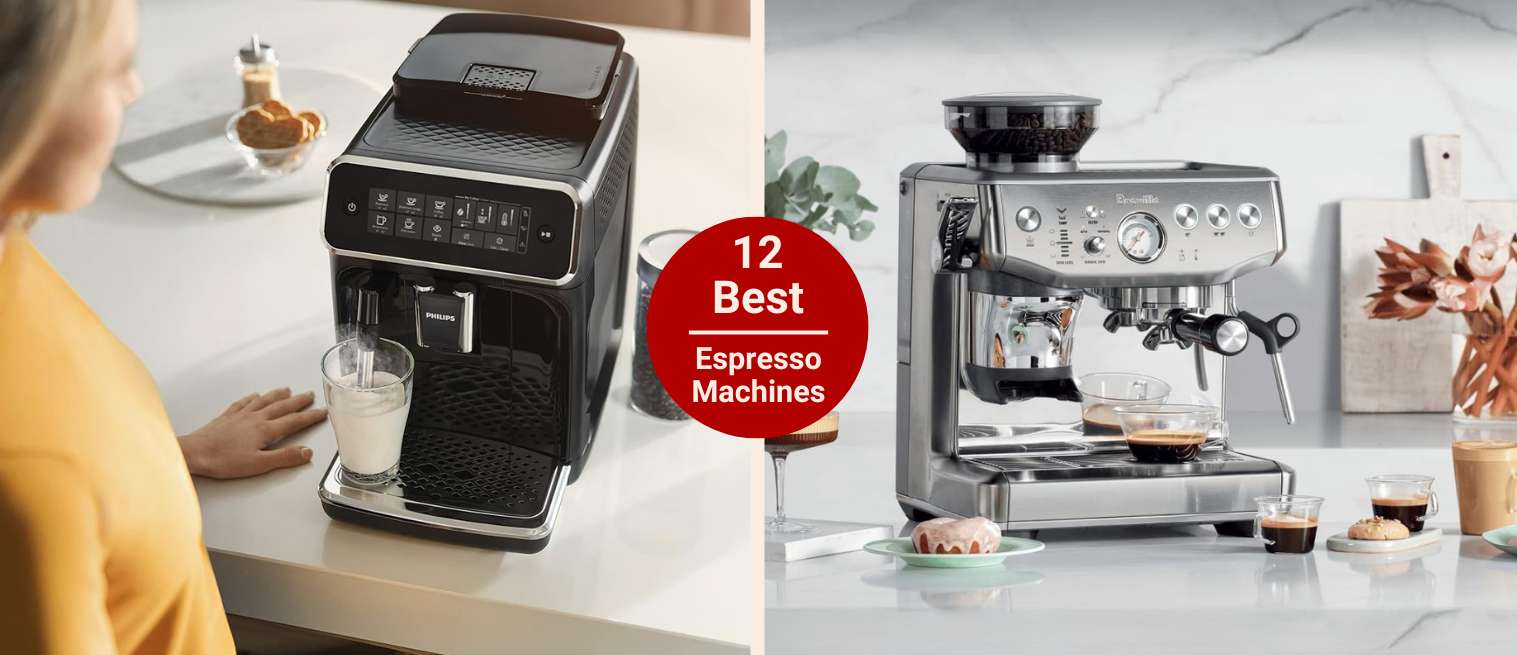
12 Best Home Espresso Machines (2026 Tested Picks)
Last updated on April 20th, 2026 at 03:54 pm
Have you ever stood in the coffee aisle, staring at rows of shiny espresso machine and thinking, I have absolutely no idea what I’m doing… but this is about to cost a lot of money?
Well, picking a home espresso machine is pretty stressful. One minute you’re convinced you need a “proper” semi-automatic because real baristas use those, and the next minute you’re watching a super-automatic spit out a latte with one button and thinking, Okay but… I also like sleep.
I once spent almost three weeks going back and forth between two machines, both way above my budget. I even dragged a friend into a store to watch me push buttons and sniff steam like some confused coffee raccoon.
She looked at me and said:
- “Jordan… you’re not just buying a coffee maker. You’re trying to buy who you’ll be at 8am.”
- Ouch. But also, fair.
Because it’s not just which machine. No, it’s what kind of coffee person you want to be: do you prefer a manual setup, or the “press one button and don’t talk to me yet” person with a fully automatic.
So, let’s break down the 12 best home espresso machines in 2026. I’m going to break this down in real-world terms: how much effort you want to put in, how much space and patience you actually have, and what kind of coffee experience you’ll enjoy long-term.
Our Top Espresso Machine Picks

Best Overall for Most Homes
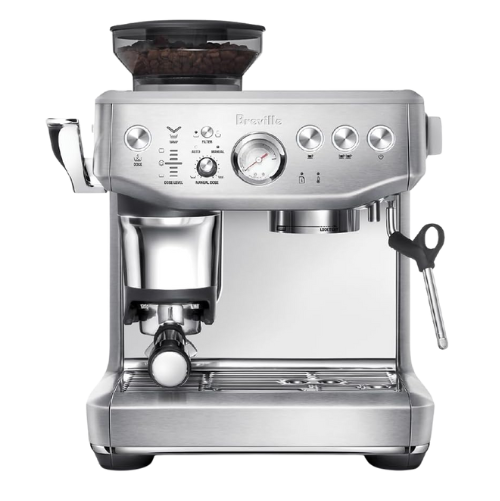
Breville Barista Express Impress


Best Budget Espresso Machine
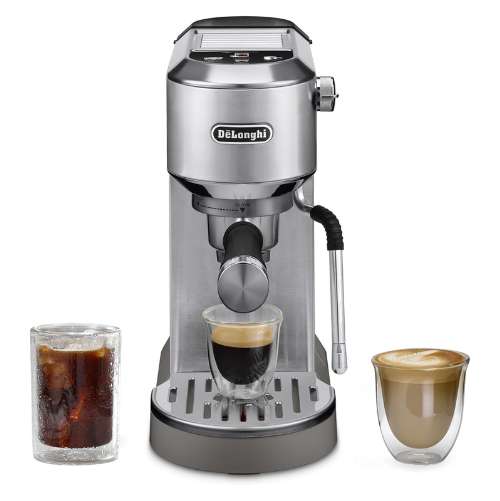
De’Longhi Dedica Duo

Best Manual, Purist Choice
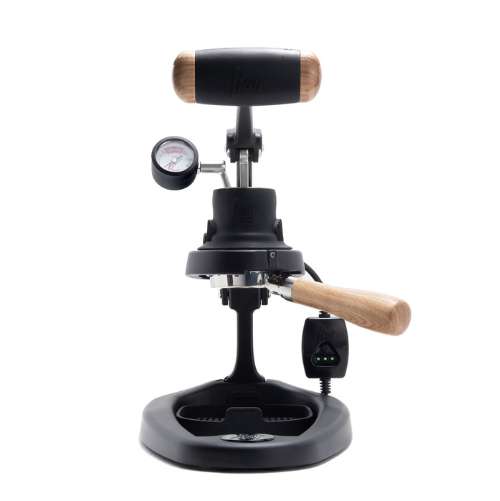
Flair 58 Manual Espresso Maker


Best Super-Automatic (Hands-Off Brewing)
Jura E8


Best Hybrid Machine (Semi-Auto + Built-In Grinder)
De’Longhi La Specialista Prestigio
Looking for Something Different?
If none of the machines above feel like the right fit, here are quicker paths based on what matters most:
Tight Budget?
Affordable machines that still pull real espresso.
Want Simplicity?
One-touch brewing with minimal effort.
Love Milk Drinks?
Strong steam performance for creamy cappuccinos.
Home Espresso Machines (Comparison Table)
Here’s a quick side-by-side comparison of the top home espresso machines, so you can see the differences at a glance.
| Machine | Type | Key Features | Best For |
|---|---|---|---|
| Philips 2200 Series | Super-Automatic | Touch panel, ceramic grinder, LatteGo system | Best Value Super-Automatic |
| De’Longhi Dedica Duo | Compact Semi-Auto | Slim design, fast heat-up, pods/ground | Best Compact Espresso Machine |
| Breville Barista Express | Semi-Automatic | Built-in grinder, PID control | Best All-In-One Daily Espresso |
| Sage Oracle Dual Boiler | Dual Boiler | Dual boilers, built-in grinder, auto micro-foam | Best for Home Baristas & Families |
| De’Longhi Dinamica Plus | Super-Automatic | One-touch drinks, customizable | Best User-Friendly All-Rounder |
| Jura E8 | Super-Automatic | One-touch drinks, AromaG3 grinder | Best Hands-Off Espresso Machine |
| Breville Barista Express Impress | Semi-Automatic | Assisted tamping, consistent temp | Best Overall for Most Homes |
| Gaggia Classic Pro | Semi-Automatic | Commercial style, manual control | Best Starter Craft Espresso Machine |
| Melitta Caffeo Solo | Super-Automatic | Straightforward interface, compact | Best Small Footprint Super-Auto |
| Philips 3200 LatteGo | Super-Automatic | LatteGo milk system, easy clean | Best Easy Latte Machine |
| Flair 58 Manual Espresso Maker | Manual | Lever pressure profiling | Best Manual Espresso Experience |
| De’Longhi La Specialista Prestigio | Semi-Automatic | Smart tamp, conical burr grinder | Best Hybrid Semi-Auto with Grinder |
Quick notes:
- Super-Automatics (Philips 2200, Dinamica Plus, Jura E8, Melitta Caffeo Solo, Philips 3200) are quickest for daily use with minimal fuss.
- Semi-Automatics (Breville variants, Gaggia Classic Pro, La Specialista) give you more control and room to grow.
- Manual & Hybrid (Flair 58, La Specialista) are for people who really enjoy the craft and tactile side of espresso.
12 Top Espresso Machines In 2026
I’ve compiled a selection of the top espresso machines that excel in quality, precision, and ease of use. Each machine shines in particular aspects, making it ideal for specific situations.
For instance, the Breville Barista Express is known for its precise temperature control and sleek design. Making it perfect if you want a professional touch at home.
On the other hand, the De’Longhi Magnifica ESAM4200 is excellent if you prefer functionality and a straightforward, user-friendly experience.
So, picking the right espresso machine depends on your coffee-making preferences. Also, whether you need precise control over brewing parameters or a machine that offers convenience and reliability.
Best Super-Automatic for Beginners
Rating:
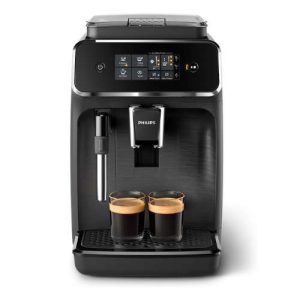


1 – Philips 2200 Series
The Philips 2200 is one of those espresso machines that reminds you coffee doesn’t have to be complicated to be good. It’s stripped down to the essentials: a few illuminated buttons, a ceramic grinder, and a small steam wand.
No app pairing, no fancy screen, simply a press and brew. I like that. The espresso comes out surprisingly hot and smooth for a machine under $400. Richer than capsule machines and far less temperamental than most entry-level semis.
The ceramic grinder is a nice touch too; it runs through beans evenly and doesn’t overheat them, which keeps the flavor clean and balanced.
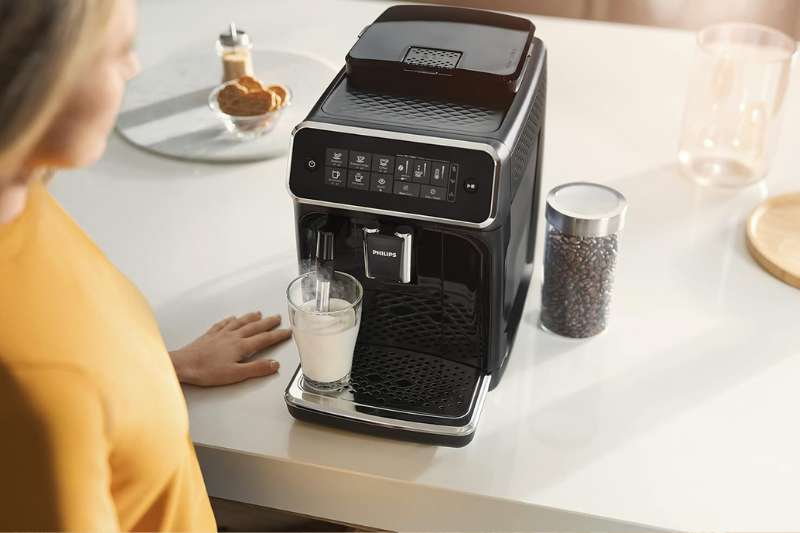
Of course, you’ll notice some trade-offs. The pump has a bit of a roar, and the all-plastic shell doesn’t exactly scream luxury. But it’s light, easy to move, and cleaning takes seconds.
You pull out the brew group, rinse, and you’re done. The manual steam wand takes a few tries to master, yet once you get the rhythm right, you can whip up a decent foam for cappuccinos or lattes.
For beginners, this machine strikes that perfect balance between simplicity and genuine espresso flavor. It’s not trying to impress; it’s trying to make your mornings smoother and it does.
Best Compact Espresso Machine
Rating:
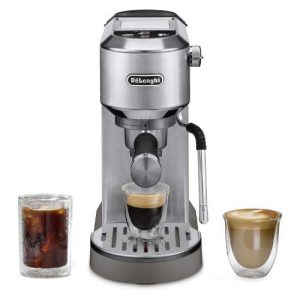
2 – De’Longhi Dedica Duo
The De’Longhi Dedica Duo is one of those machines that makes you think, “Wait, that tiny thing can pull an espresso?” It’s impressively slim. Barely wider than a mug. Still, it manages to brew a strong, crema-topped shot in less than a minute.
The thermoblock system heats up fast. So you can go from sleepy-eyed to sipping in about thirty seconds. I love how De’Longhi kept the same clean lines from the older Dedica but added modern touches: a soft-touch digital panel, a new dial for steam and water, and a quirky little feature I didn’t expect (a cold-brew mode).
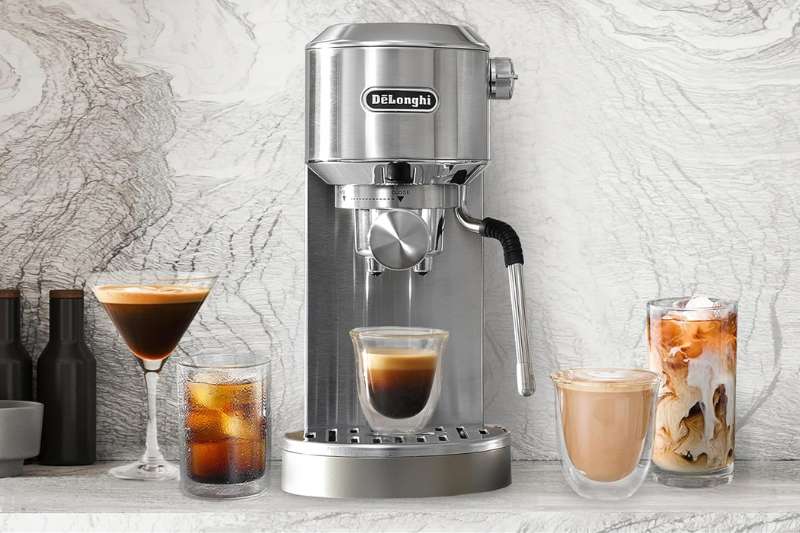
It’s not a gimmick either. It actually works, producing a light, chilled coffee concentrate in five or six minutes without the overnight wait.
That said, the Dedica Duo isn’t flawless. The steam wand struggles to build microfoam. I mean, it’s great for heating milk, not so great if you’re chasing silky latte art.
And the machine comes with all the essentials (even a decent tamper and pitcher).
This machine takes up less space than a toaster and looks this good sitting on a counter. It’s perfect if you want real espresso without the bulk or complication. You have enough control to feel like a barista. But it’s easy enough for a quick morning brew.
Best All-in-One for Daily Espresso
Rating:
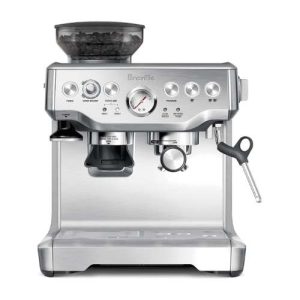
3 – Breville Barista Express
This is the machine that quietly turns “I’ll just try espresso at home” into your morning ritual. You lock in the portafilter, tap to grind, and the kitchen fills with that warm chocolate-nut smell.
The gauge rises, the stream thickens, and when the PID and pre-infusion do their thing, you get that syrupy shot that makes you nod. Yep. That.
It’s forgiving, which you’ll appreciate.
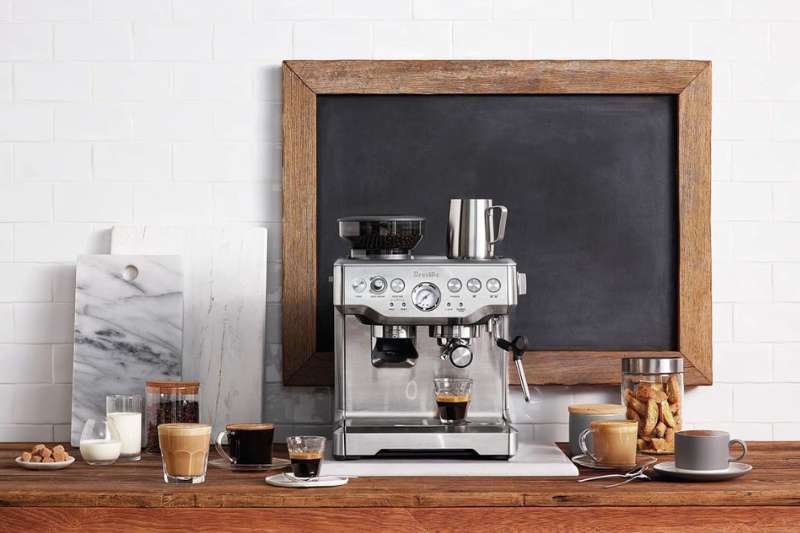
Give the grind dial two or three tweaks and you’re pulling drinkable doubles around 25–30 seconds. The steam wand isn’t a fire hose. But once you find your angle, you’ll get real microfoam. Your first latte art “heart” might look like a potato. Still counts.
Keep maintenance simple and you’ll be golden: purge after milk, run a tablet clean now and then, descale every few months. Do that and it… keeps going. Plenty of people use this daily for years without problems.
If you want one box that grinds, pulls, and teaches without overwhelming you, the Breville Barista Express hits the mark (approachable on day one, satisfying on day 300).
Best for Effortless Café-Level Control
Rating:
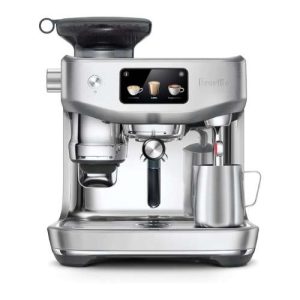
4 – Breville Oracle Dual Boiler Espresso Machine
The first time you use you add beans, slide in the portafilter, and it grinds and tamps automatically. No measuring or awkward wrist push. It even leaves that clean, polished puck finish.
Then the Auto Dial-In kicks in. If your shot runs off too fast or too slow, it adjusts the grind electronically. Dose, time, volume.
The dual boiler setup makes a real difference. Brew and steam at the same time. No waiting around. The heated group keeps temps steady. So the espresso comes out thick and sweet-smelling, with dense crema and syrupy texture.

Milk almost feels unfair. The MilQ wand auto-adjusts for whole, oat, and almond. You pick texture and temperature, and it just delivers.
The 5.7″ touchscreen is fast and simple. Fourteen preset drinks, plus custom slots. But swipe up and you’re in manual mode, adjusting grind and shot time yourself. You’re not locked into automation.
It even reminds you when to clean it. Backflush, steam purge, boiler drain. There’s auto on/off scheduling, a front-fill tank, even a little wheel underneath so you can roll it forward to wipe behind it.
It’s big. Over 12 inches wide. Heavy and expensive.
But if you want a machine that removes the guesswork while still letting you step in and take control when you’re ready… this one doesn’t box you in.
Best Super-Automatic for Home Café
Rating:
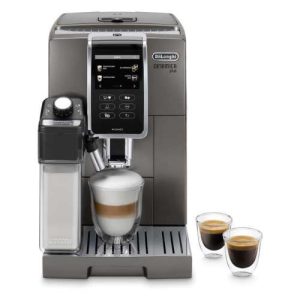
5 – De’Longhi Dinamica Plus
If you’ve ever wished your machine could memorize “your” drink, the De’Longhi Dinamica Plus gets you. You tap the bright 3.5″ screen, pick Espresso, Doppio+, or Cappuccino Mix, and it grinds, tamps, and pours while you’re still blinking awake. Nudge strength, temp, and volume, save it to a profile (up to three), and next time it’s one tap and done.
You’ll smell the difference right away. The integrated conical burr grinder (stainless steel, 13 settings) goes fine enough to actually choke the machine if you push it. Good news for real espresso pressure. In Doppio+ it doses roughly 14–15 g, which means a proper puck and syrupy, crema-heavy shots instead of thin “espresso-ish” coffee.
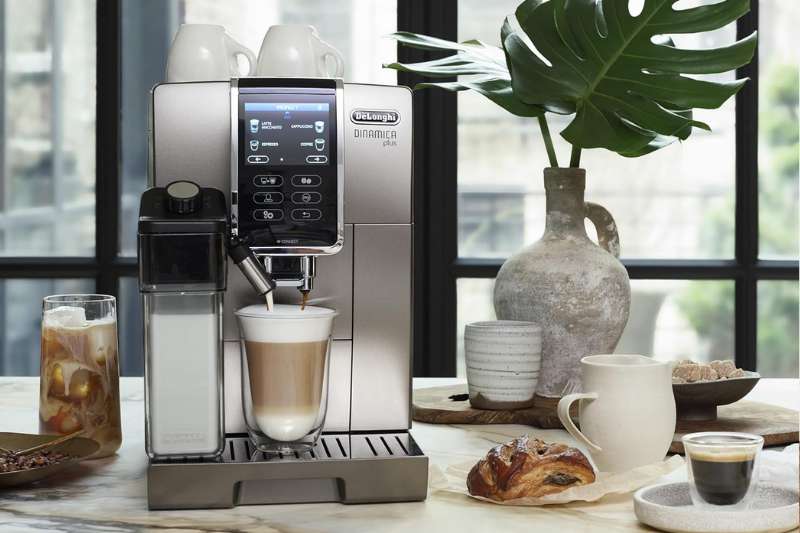
Milk drinks are the party trick. Clip on the LatteCrema carafe, hit Cappuccino or Latte Macchiato, and it layers glossy foam right into the cup. When you’re finished, the carafe parks in the fridge; a quick “Clean” purge keeps the lines fresh. Daily care’s simple too: removable brew unit, easy-to-rinse tray, and the milk bits are dishwasher-safe.
The app? Fun, a little moody. Bluetooth lets you tweak recipes and even wake the machine, but it can lag on some mornings. No big deal—the front panel is faster anyway. Start your grind around 4–5 for a medium roast, adjust a click or two, and you’re cruising.
If you want café-style espresso and milk drinks at the tap of a screen—with minimal cleanup—the Dinamica Plus nails it.
Best Premium Super-Automatic
Rating:
6 – Jura E8
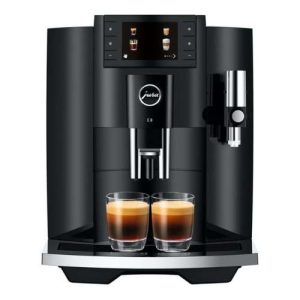
Check Price on AIf you’ve ever wished a machine could make truly good espresso without asking you to learn tamping, dosing, or pressure profiling, the Jura E8 is exactly that kind of machine.
Just tap the bright TFT display, choose your drink, maybe an espresso, flat white, or cortado, and the machine takes over. Grinding, brewing, milk, everything. It feels almost unfair how easy it is. You still get quality results without lifting anything heavier than a cup.
You’ll notice the difference the first time it starts grinding. The Aroma G3 burr set is fast and quiet and unlike many super-automatics.
It grinds fine enough to build real pressure. Paired with Jura’s Pulse Extraction Process, it pulls a rich, syrupy shot with proper crema. Not that thin, foamy stuff some automatics produce.

And the milk system? The Fine Foam frother creates silky, glossy foam and pours milk and espresso into your cup.
Cleaning is easy too. The E8 rinses itself constantly, reminds you to flush the milk system, and handles most of the hygiene in the background.
Simply swap filters and run cleaning tablets when it tells you. Yes, the upkeep products add up. But the trade-off is never dealing with a grimy brew group or sour milk lines.
A couple quirks to expect: oily beans sometimes hang in the hopper unless you give it a shake, and the milk spout sits far enough left that fast foaming can splash a bit.
But with some practice, it becomes one of the smoothest daily machines you’ll ever use. If you want great espresso and milk drinks at the touch of a button with a machine that looks clean, modern and premium, the Jura E8 nails it.
Best Beginner Barista Mode
Rating:
7 – Breville Barista Express Impress
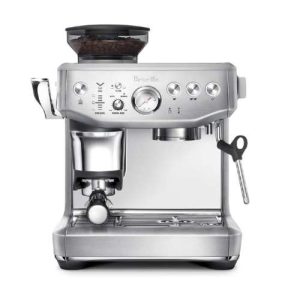
If the regular Barista Express is “you learn by doing,” the Breville Barista Express Impress is more “you learn with training wheels.” You still grind, lock in the portafilter, and steam your own milk.
But the machine helps with two of the hardest parts: dosing and tamping. You press Dose, pull the tamp lever, and the little LED scale tells you if you’re under, over, or smack in the smiley-face sweet spot.
Compared to the standard Barista Express, you get more grind steps (25 instead of the more limited range on the original) and that guided puck system that remembers and auto-corrects the next dose.
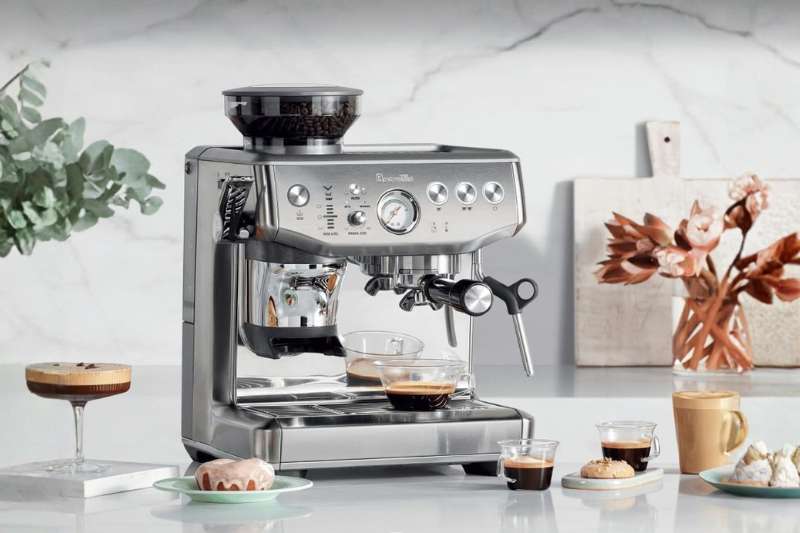
With the regular model, you’re weighing, tamping, and tweaking everything yourself. Here, the machine quietly handles a lot of that in the background while you focus on taste and shot time.
Day to day, you’ll notice it most when you’re half awake. You grind straight into the 54 mm portafilter, pull the tamp lever, and you’re halfway to a decent shot.
If your first extractions are running a bit fast (say 20 seconds for a double), nudge the grind finer a couple clicks, watch it creep into the 25–30 second range, and suddenly your espresso starts tasting round, sweet, and layered instead of thin.
It isn’t completely hands-off. You still need to purge the wand, backflush, and descale. And you’ll probably learn, like a lot of owners, to give the hopper a quick tap if you hear the grinder “spin free” because the beans have bridged.
But as a bridge between “push-button machine” and full manual setup, the Barista Express Impress hits that nice middle ground. This machine is more forgiving than a traditional setup, less restrictive than a super-automatic.
Best for Home Baristas Seeking Real Espresso
Rating:
8 – Gaggia Classic Pro
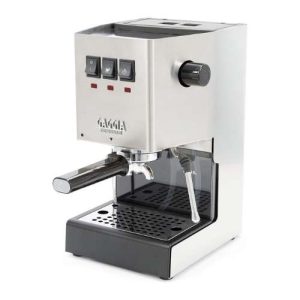
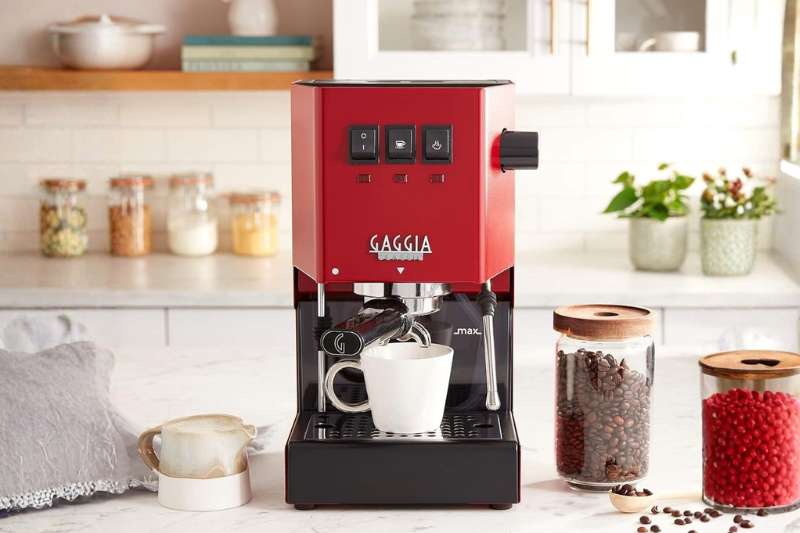
The Gaggia Classic Pro is the grumpy but brilliant old-school mentor who hands you the tools and waits to see what you’ll do with them.
You lock in that 58 mm portafilter; it’s stiff at first, and the machine hums with this compact and commercial feel.
The Evo and E24 versions add a brass group and a proper 9-bar OPV. So you’re getting real espresso mechanics, not a dressed-up consumer toy. Add the 3-way solenoid and commercial steam wand, and it honestly feels like a shrunk-down café machine.
Your first week might feel chaotic. Shots run fast, then too slow, you watch steam technique videos at midnight, and you swear the machine is judging you.
You’ll learn about temp surfing, grind changes, tamp pressure… all the stuff cheaper machines hide from you. But then you pull that one syrupy double where the crema sits thick and the bitterness you tasted on budget machines suddenly disappears. That’s the Classic Pro moment.
Compared to the Barista Express, you lose the convenience stuff. For instance, a built-in grinder, dosing help, visible PID control. But you gain a machine that can realistically last decades, is easy to repair, and loves to be modded.
Add a PID later, swap the shower screen, drop in a lower-pressure OPV spring, maybe even change the dispersion plate. It becomes your machine in a way few others do.
If you like learning by doing, and you want honest, café-level espresso instead of shortcuts, the Gaggia Classic Pro hits that itch beautifully.
Best Super-Auto for Small Kitchens
Rating:
9 – Melitta Caffeo Solo
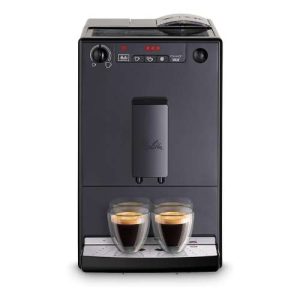
The Melitta Caffeo Solo is the tiny apartment barista that just wants to keep life simple. You switch it on, hear that loud-but-not-awful stainless-steel grinder spin up, and the kitchen gets that first burst of warm coffee smell.
You only get the essentials: grinder, brew group, pump, water tank. No milk system wizardry, no fancy displays, no built-in grinder tampering or temperature readouts like the Barista Express.
But that’s sort of the charm: everything comes in threes (three strengths, three temps, three grind settings). The display is tiny but clear, and you’ll dial it in with a couple of button presses.
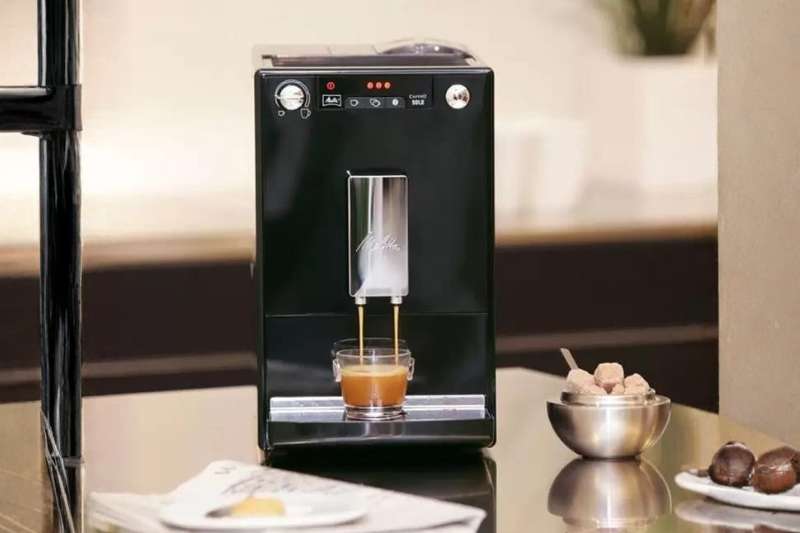
Just be ready for its… compact personality. The 1.2 L tank runs out fast, the drip tray fills constantly, and the bean hopper only fits about 125 g of beans.
Oddly, these “limitations” push you into good habits: fresher beans, frequent cleaning, and keeping the brew group spotless. The espresso quality definitely rewards it.
Once you set the grinder to its finest, it produces a fuller-bodied shot than you’d expect from such a small machine.
The steam wand is the weakest link. It works, but if you’re serious about milk drinks, you’ll probably want something more capable. Think of this more as a great espresso-and-Americano machine rather than a latte workhorse.
If you want an affordable, compact super-automatic that focuses on flavor instead of features and you don’t mind refilling things a bit more often, the Melitta Caffeo Solo fits beautifully into a small kitchen and a simple routine.
Best for Simple Cappuccinos
Rating:

10 – Philips 3200 LatteGo
If the Barista Express is the machine that teaches you to play barista, the Philips 3200 LatteGo is more like the friend who says, “Relax, I’ll handle it.”
You walk up, tap the drink you want, and it simply… does the whole thing. Espresso, cappuccino, latte macchiato( the whole menu without complications).
And, you’ll appreciate how little thinking is required when it’s 7 AM and you’re trying to remember your own name. The first thing you’ll notice is how simple the Philips 3200 is. No display you need a manual for.
Just touch icons and three little illuminated scales that feel almost… retro in a good way. And the LatteGo milk system? It’s just two pieces, with no long tubes running inside the machine.

That means there aren’t any hidden spots where old milk can sit and turn gross. You rinse it under the tap and you’re done. It really does take around 15 seconds.
The ceramic burr grinder surprised me the most. It’s louder than you’d expect, but the grind quality is genuinely solid. I kept mine around the finer settings (you adjust it inside the hopper), and even then, shots were bold with that chocolatey thickness you only get from a manual setup.
If you drink oat milk or almond milk, it handles alternatives pretty well, too. Oat milk just froths a bit heavier.
Compared to the Barista Express, you lose the “craft” part of espresso. No pre-infusion timing or grind experiments. No dialing in with a scale.
You’re trading tinkering for convenience. You get decent espresso, great milk drinks, and almost no cleanup. If you want café-level results without learning espresso theory, the Philips 3200 LatteGo feels like cheating.
Best for hands-on espresso nerds
Rating:
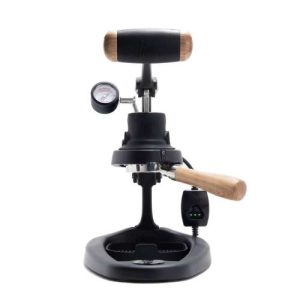
11 – Flair 58 Manual Espresso Maker
If you ever wanted to feel every part of an espresso shot: the pressure, the grind, the temperature. The Flair 58 is the machine that finally hands you the wheel. You’re not pressing buttons here.
You’re literally pulling the shot with a huge lever that feels like it belongs on some old industrial machine. And honestly? It’s kind of thrilling.
You get a full 58 mm portafilter (bottomless, of course), a die-cast frame that weighs more than it looks, and a preheat controller that keeps the brew chamber hot so you don’t juggle kettles like you do with the cheaper Flair models. The first time you see that thick stream drop through the basket, slow and syrupy, you’ll grin like an idiot.
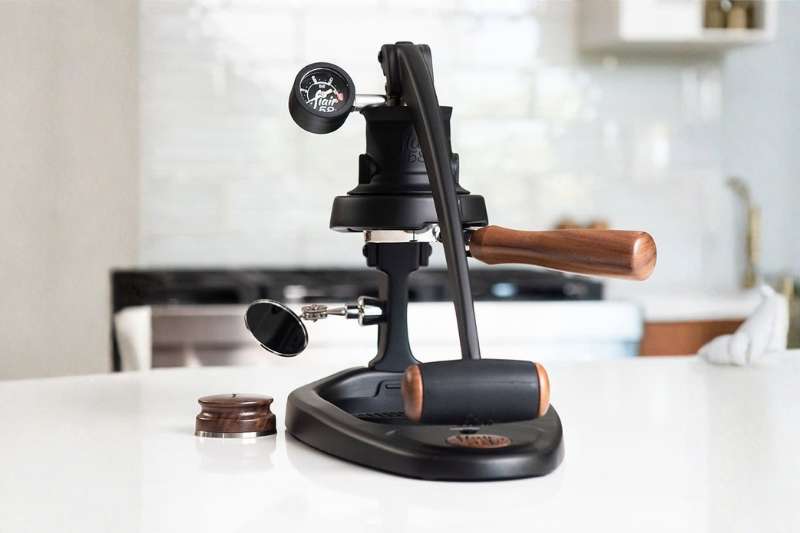
But let’s be real. This isn’t anything similar to using the Barista Express. There’s no grinder built in, no PID screen giving you hand-holding feedback, no steam wand.
Instead, you’re doing the heating, the timing, the pressure profiling. If the Barista Express makes espresso feel accessible, the Flair 58 makes it feel personal.
It’s a machine that rewards patience and good beans. And a good grinder. And a good kettle. Basically: if you’re willing to build a little ritual around your espresso, the Flair 58 will give you some of the best shots you can pull at home.
Seattle Coffee Gear — Check Price & Specs →
Hybrid & Hands-On Machine
Rating:
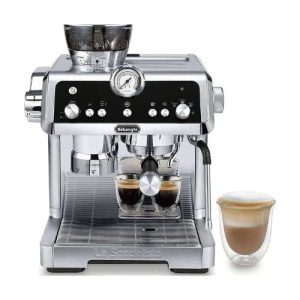
12 – De’Longhi La Specialista Prestigio
The La Specialista Prestigio is one of those machines that makes you feel like you’re stepping behind the bar at a café. From the moment you see that big center pressure gauge staring at you, it’s clear this thing expects you to participate.
You grind, you tamp, you pull the shot. There’s a whole little ritual here, and the machine leans into it.
The workflow is quirky at first. The built-in tamping lever looks foolproof. But once you figure out the timing of that lever, you start getting these neat, clean, almost café-perfect pucks that pop right out.
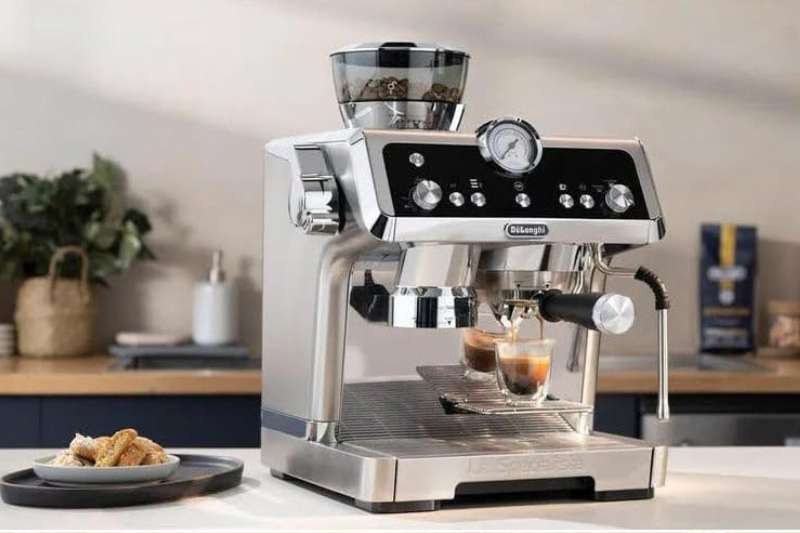
And the milk system? Probably the most fun part. The steam wand kicks out silky microfoam with enough power to handle dairy and oat milk without turning everything into hot bubbles.
You can work on real latte art with it, not blobs. The machine itself also runs pretty quiet, which you appreciate in the morning when your brain is still booting up.
It’s not a “push one button and drink” kind of espresso maker. You’ll tweak the grind, adjust the dose, and learn its personality. But that’s also why it grows on you. It feels like a machine that wants you involved in the process, not just the result.
If you enjoy the hands-on part of making espresso and you want something sturdy, stylish, and capable without being intimidating, you’ll have a great time with the Prestigio.
Amazon— See Today’s Price & Reviews →
What’s Different in 2026?
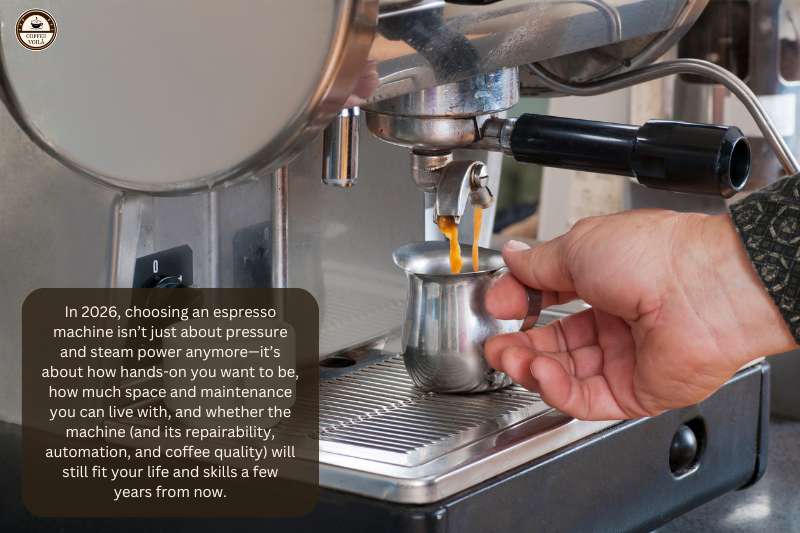
You might think choosing an espresso machine is always about “pump pressure” and “steam wand strength,” and yes, those still matter. But in 2026, there are some new wrinkles.
For one: home baristas are more educated. They expect more than “just a shot.” According to recent analysis, the next wave of machines is leaning into improved usability, automation without losing manual control, and smaller footprints.
Another shift: designers and manufacturers are getting more serious about sustainability, modular repair, and ease of maintenance. Tiny spaces (studio flats, shared kitchens) matter more than ever; sleek still counts.
So, when you’re shopping in 2026 you’ll still care about boiler type and brew group, but also ask: “How much space does this take? Is maintenance a pain? Will I still feel engaged with coffee, or just press buttons?
1 – Usability & Workflow
First, ask yourself: How hands-on do you really want to be?
If you love the ritual of grinding, tamping, and watching crema bloom, a semi-automatic machine like the Breville Barista Express fits. But if you’re often rushing, want one-tap lattes, then a super-automatic like the Jura E8 makes more sense.
Machines now come with smarter interfaces, app connectivity, and faster heat-up times. But if you go fully automatic you may lose the “making” part of espresso that many of us enjoy (and wrote about in my posts on machines such as the Flair 58 and Gaggia Classic Pro).
2 – Space, Maintenance & Longevity
Your kitchen isn’t a café. Counter space, noise, clean-up time — all matter more than they used to. In 2026 the trend is toward compact machines with modular parts, easier cleaning, fewer hidden hoses, and less plastic inside.
Maintenance is huge too. A machine might look stunning. However, if you dread descaling or cleaning the milk system, you’ll abandon it. Look for machines with good serviceability, replaceable parts, and straightforward routines.
Ask yourself: How many minutes am I willing to spend cleaning each week? How much space do I actually have?
For example: the Melitta Caffeo Solo wins on footprint. But if you’re using milk drinks every day, maybe a bigger machine with a more robust steam wand is worth it.
3 – Future Adaptability & Coffee Quality
Coffee gear isn’t cheap, and in 2026 we see more home machines offering upgrade-friendly parts, smarter sensors (water quality, bean profiles), and more control over extraction.
Quality of coffee still comes down to the trio: good beans + grinder + brew machine. Even the best machine won’t rescue stale beans. So pick something that lets you grow. If you buy a machine you’ll outgrow in 6 months, you’ll feel frustrated.
Consider: Do I want manual control now, or full automation later? Will I upgrade grinder or spend the same money on better beans? For example: if you buy the Gaggia Classic Pro you’re committing to the craft. If you buy the Jura E8 you’re prioritizing convenience and drop-in quality.
Should You Choose a Manual Or Automatic Espresso Machine?
| Feature | Manual / Semi-Automatic Espresso Machine | Super-Automatic Espresso Machine |
|---|---|---|
| Control | You control grinding, dosing, tamping, and shot time | Machine handles grinding, dosing, and extraction for you |
| Learning Curve & Ease of Use | Steeper learning curve; takes practice to dial in | Very beginner-friendly; push-button drinks |
| Speed & Workflow | Slower, more hands-on ritual | Fast, repeatable, great for busy mornings |
| Customization | Highly customizable (grind, ratio, temp, pressure with some mods) | Mostly limited to strength/volume and a few drink presets |
| Consistency | Depends on your skill and grinder | Very consistent once set up |
| Maintenance & Cleaning | Simpler internals but more manual cleaning | Easier day-to-day, but milk systems and internals need regular care |
| Cost Range | Often cheaper upfront, but you’ll also need a good grinder | Higher upfront cost, grinder included |
| Best For | People who enjoy learning and “crafting” espresso | Busy coffee lovers who want great drinks with minimal effort |
| Example Machines | Flair 58, Gaggia Classic Pro, Breville Barista Express | Jura E8, Philips 3200 LatteGo, De’Longhi Dinamica Plus |
Manual espresso machines give you full control and customization. Making them ideal if you enjoy making espresso. However, they require more skill and time.
Automatic espresso machines are user-friendly and provide consistent results with minimal effort. They are perfect if you prioritize convenience. So, choose based on your personal preference for control versus convenience.
Last Thoughts
If you’re still unsure, honestly, that’s normal. Drop a comment, send a message, whatever works. Tell me your budget, your routine, your coffee habits, even your weird kitchen setup. I’ll help you figure out which espresso machine actually fits your life, not just a spec sheet.
Because good coffee at home shouldn’t feel confusing. It should feel part of your day you look forward to.
Questions? We Have Answers.
Get answers to a list of the most Frequently Asked Questions.