5 Best Siphon Coffee Makers in 2026 | Tested & Tried
Ever wondered what it’s actually like to brew coffee with a siphon coffee maker?
The first time I saw one in action, I didn’t even realize it was coffee at first. I was sitting in a small jazz bar, low lights, slow music, when a barista pulled out this glass contraption that looked more like lab equipment than a brewer.
Water bubbled upward, coffee bloomed and swirled, and suddenly everyone nearby stopped talking. We were all simply… watching.
I started asking questions. Too many. How does it work? Why glass? Does it really taste different?
That moment stuck with me and it sent me down a very specific coffee rabbit hole.
In this guide, I’ll break down what siphon coffee makers are, how they work, why people fall in love with them, and which models are actually worth trying right now. No fluff. Just good coffee and some fun along the way.
What’s a Siphon Coffee Maker?
A siphon coffee maker is one of those brewing methods that looks complicated until you actually use it. At its core, it’s pretty simple: water is heated in a lower chamber, pressure pushes it up into an upper chamber where it mixes with coffee. Once the heat is removed, the brewed coffee is pulled back down through a filter.
That’s it. Heat, pressure, gravity.
What makes siphon brewing different from drip or French press is how controlled the extraction can be. The coffee grounds sit fully immersed in water at a stable temperature, then are filtered cleanly.
Usually through cloth or metal, before ending up in your cup. The result tends to be clear, aromatic, and smooth, especially when you dial in the grind and timing.
It’s not the fastest way to make coffee, and it’s definitely not the most discreet. But it’s one of the most deliberate. You don’t turn it on and walk away. You’re there for the whole process, watching it happen.
Why do people enjoy using them?
The flavor is clean but expressive: Siphon coffee manages to hit a sweet spot that’s hard to describe until you taste it. You get more body than pour-over, but none of the grit of a French press. The oils come through, the aromatics pop, and bitterness is easier to avoid if your timing is decent. When it’s good, it’s really good.
The process slows you down: You can’t rush siphon brewing. You’re heating water, waiting for it to rise, watching the brew, then letting it fall back down. I’ve had mornings where that 8–12 minute process was the calmest part of my day.
It turns coffee into an experience, not just a habit: Part of the appeal is watching it work. The movement, the bubbles, the moment when everything drops back into place. Guests notice. You notice. It feels intentional, almost ceremonial, even if you’re only making a couple of cups for yourself.
Notes: Siphon coffee makers aren’t for everyone. But for people who care about flavor, enjoy the ritual, and don’t mind an extra involvement. They offer something most modern machines don’t: a reason to slow down and pay attention.
5 Best Siphon Coffee Makers of 2026
Classic glass siphon, full control
Rating:
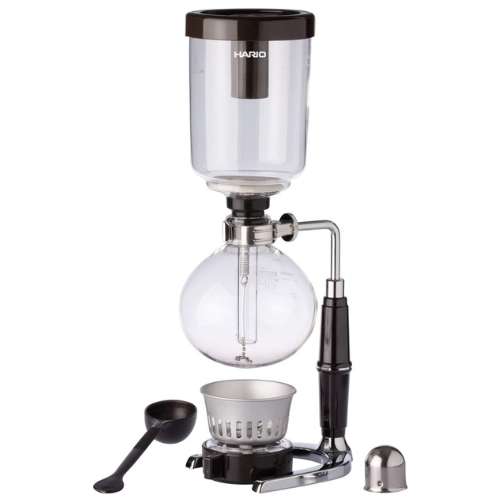

1 – Hario Technica Coffee Siphon
The Hario Technica Coffee Siphon isn’t something you buy because you want coffee fast. You buy it because you want to make coffee. The kind where you slow down, light the burner, and actually watch water rise, bloom, and pull back like a science experiment that ends in a really good cup.
Using it feels intentional. You measure your water, grind your beans, and wait for that moment when the top chamber fills and you gently stir. The smell hits first, rich and slightly sweet and then the drawdown happens, pulling the brewed coffee back into the lower bowl, clear and glossy. No grit. No sludge. Just clean, and elegant coffee.

What really stands out is the build. The glass is thick and heat-resistant, the stainless steel stand feels solid, and even small details like the brass fasteners give it that “this will last if I treat it right”. It’s not flashy, but it is timeless.
Is it practical for rushed mornings? Not really. And yes, you’ll probably upgrade the burner or switch to a permanent filter after a while. But if coffee is a hobby and not just fuel, the Hario Technica turns brewing into something you actually look forward to.
Stovetop siphon with replaceable parts
Rating:
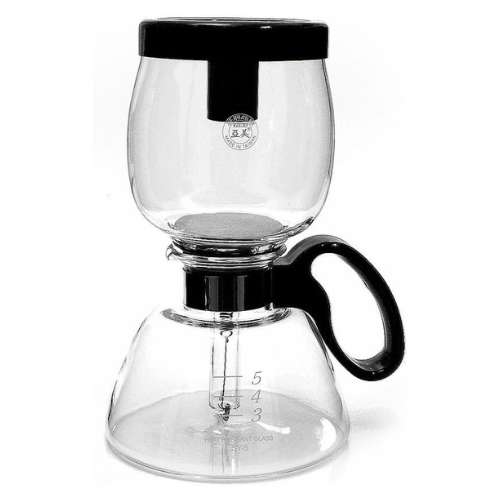
2 – Yama Glass 5-Cup Stovetop Coffee Siphon
The Yama Glass 5-Cup Stovetop Coffee Siphon stands out from most siphon brewers because it’s designed to work directly on your stovetop. Instead of needing a dedicated alcohol or butane burner. That one detail changes the entire experience.
You get more control over heat, more stability during brewing, and a setup that feels easier to live with if you already cook with gas or electric. It’s still a siphon with glass chambers, vacuum action, and all. But it feels less complicated than the classic lab-style setups.
This isn’t a push-a-button situation, though. You’re heating water, watching bubbles cling to the glass, seating the upper chamber at the right moment, and staying present in a way most modern machines never ask you to.

The first time you use one, you’re probably half convinced you’re going to mess it up. Too hot? Too fast? Too bitter? And your early attempts might not be perfect. But once you start understanding how the heat behaves and when to add the coffee, something clicks.
The payoff is a cup that feels almost unfairly smooth. Clean, full-bodied, and strong without being sharp. Because everything is borosilicate glass and the filter is cloth, the flavor comes through pure, without any metallic edge or paper taste. It also stays hot longer than you’d expect, especially if you preheat the glass and pour it into a thermal carafe.
Is it slower than drip? Absolutely. More involved? Definitely. But if you enjoy being part of the process, the Yama turns coffee into something you slow down for rather than rush through.
Clean, bold coffee—no sludge
Rating:

3 – Bodum PEBO Vacuum Coffee Maker
The Bodum PEBO Vacuum Coffee Maker sits in a different lane from more traditional siphons, and you feel that difference almost immediately. Where classic siphons lean heavily into ritual and fine control, the PEBO feels more contained.
You lock the two glass bowls together, heat the water, and the vacuum process happens inside a sealed system that doesn’t ask you to constantly second-guess every step.
The first time you use it, you’ll be surprised by how straightforward it feels. You boil water in a kettle, pour it into the lower bowl, add your grounds up top, and within minutes the coffee is brewing smoothly. No second-guessing whether you seated the chamber correctly, etc.
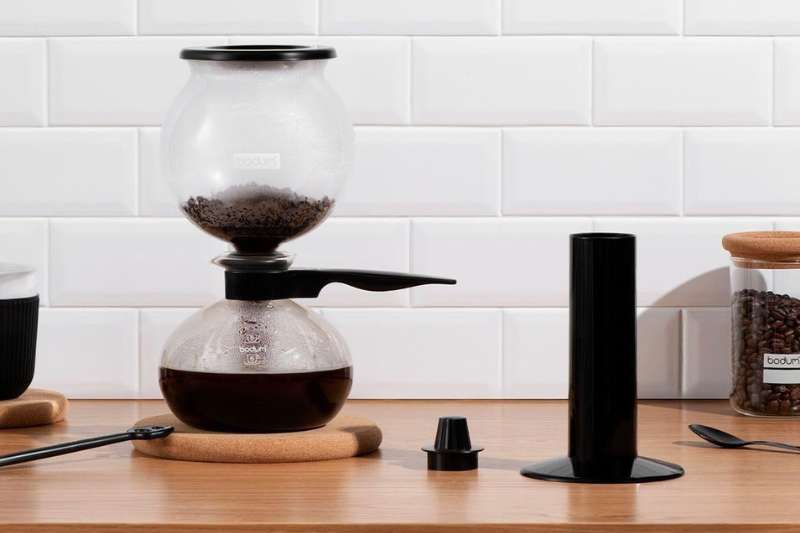
What really wins you over is the flavor. The PEBO pulls a cup with the depth of a French press but none of the grit. Strong, aromatic, and clean all at once. If you love bold coffee but hate that muddy sludge at the bottom of your mug, this hits a very comfortable sweet spot.
You can brew lighter roasts or go dark and heavy, and it stays consistent as long as your grind is coarse and your timing stays reasonable.
It’s also quicker than most siphons once you get into a rhythm. From kettle to cup, you’re usually done in under eight minutes. This makes it feel practical for everyday use. Cleanup is simple too, though you do need to respect the glass. This isn’t something you toss into a crowded sink without thinking.
If you want vacuum-brewed coffee without fully committing to the old-school siphon learning curve, the Bodum PEBO is a strong choice.
Showpiece balance brewer, guest wow-factor
Rating:
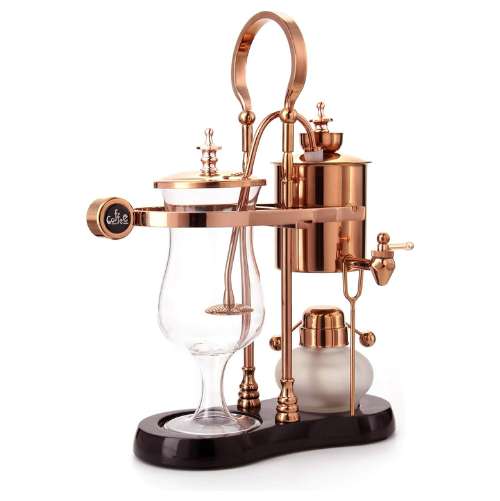
4 – Diguo Belgian Balance Syphon Coffee Maker
The Diguo Belgian Balance Syphon Coffee Maker is not the kind of brewer you hide in a cabinet. You leave this one out. On purpose. The rose-gold finish, wooden base, and old-world balance mechanism turn coffee making into something closer to a performance than a routine.
The first time I saw one in action was at a friend’s place, and I’ll admit, I barely paid attention to the conversation. Watching the balance arm rise, the flame flicker underneath, and the brewed coffee slowly siphon back down is pretty exciting.
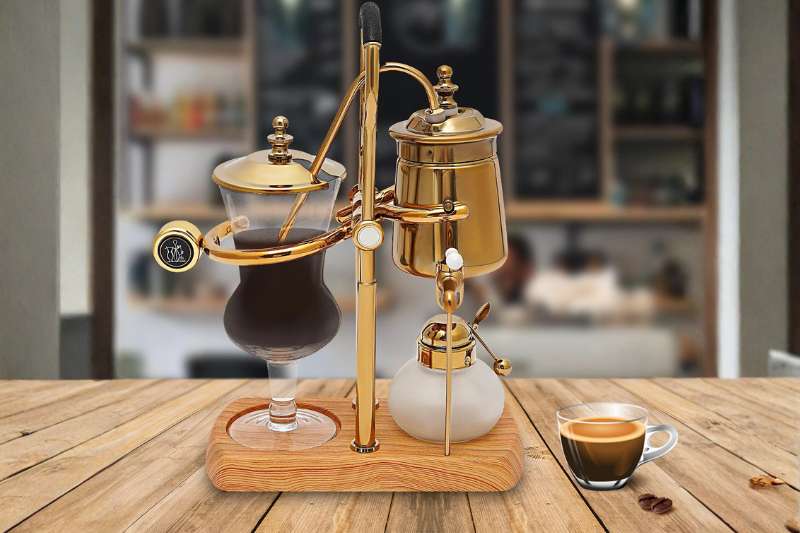
What surprised me most wasn’t the looks, though. It was the coffee. Clean, aromatic, and bold without any harsh bite. The cloth filter lets just enough texture through to give body, but not enough to muddy the cup. It sits somewhere between the richness of a French press and the clarity of a siphon (a nice middle ground).
The balance system makes brewing feel more forgiving than traditional siphons. You’re not hovering over heat adjustments every second, and once you get the rhythm, it’s surprisingly consistent. Still, this isn’t a weekday-rush brewer. It takes time, space, and a little patience.
But if you love sharing coffee with guests, slowing things down, and enjoying the process as much as the cup, the Diguo isn’t just a coffee maker. It’s an experience. And honestly, that’s exactly why people fall for it.
Fast electric siphon with presets
Rating:

5 – Tiger Siphonysta
The Tiger Siphonysta feels like it was built for you if you love siphon coffee but don’t always have the patience for burners, timers, and constant supervision. Instead of lighting alcohol and hovering over glass, you add your coffee, fill the tank, pick a setting, and let the machine handle the hard parts.
What makes this machine different is how much control you still have. You can tweak strength, adjust acidity versus bitterness, and play with different roasts until you dial things in exactly how you like.

I remember running the same medium-dark beans through two different settings and being surprised at how much the flavor shifted: smoother here, brighter there. It’s siphon coffee, but without the guesswork.
The speed is a big deal too. Traditional siphons can easily turn into a 10–15 minute commitment. With the Siphonysta, you go from grinding beans to sipping coffee in under five minutes, cleanup included. And because there’s no paper filter, you keep those oils that give the coffee body and aroma.
It won’t replace the drama of a balance siphon or the charm of glass over flame. But if you want siphon-level flavor in a machine that fits into real mornings (not just slow weekends) this one makes a very strong case for itself.
How to Choose the Right Siphon Coffee Maker?
Buying a siphon coffee maker sounds simple until you actually start looking. Suddenly you’re staring at glass towers, burners, balance arms, cloth filters, and wondering if you’re about to buy a coffee brewer or a science exhibit.
The good news? You don’t need to overthink it. In my experience, it really comes down to three things:

1 – How hands-on do you want to be?
Some siphon brewers want your full attention. You’re controlling heat, watching bubbles, adjusting timing, and learning the rhythm of the brew. Others guide the process more, so you’re not constantly second-guessing yourself.
For example, the Hario Technica Coffee Siphon puts you right in the driver’s seat. You’ll feel every small mistake early on, too much heat, too much stirring, coffee going bitter fast. That sounds intimidating, but once it clicks, it’s pretty enjoyable.
On the other end, a balance siphon like the Yama Balance Siphon takes some of that pressure off. The heat control is more forgiving, and the system naturally ends the brew for you. You’re still involved, but you’re not hovering every second.
Ask yourself: do you enjoy tinkering, or do you want something that gently keeps you on track?
2 – How much coffee are you actually making?
Siphon “cups” are misleading. A 5-cup siphon isn’t five mugs, it’s more like two decent cups.
If you’re mostly brewing for yourself or one other person, smaller models make sense. They heat faster and use less fuel.
If you regularly brew for guests or want to fill a thermal carafe and be done for a while, bigger siphons are worth it. Just know they take longer. A full cycle on a large siphon can easily take 12–15 minutes, especially if you’re careful with heat.
There’s no wrong answer here. Just don’t buy large because it looks impressive. You’ll resent it on sleepy mornings.
3- Where will it live—and how careful are you?
All siphon coffee makers are glass.
Some designs are compact and easy to store. Others are tall, wide, and absolutely not something you casually shove into a cabinet. Balance siphons especially tend to live out in the open and you need to be careful when cleaning.
You should ask yourself two questions:
- Do I have the counter space?
- Am I the kind of person who knocks things over while rinsing dishes?
If your kitchen is tight, or you’re a little clumsy (no shame), simpler stovetop siphons are easier to live with. Replacement parts also matter more than you think. Brands that sell extra filters, seals, and glass pieces make long-term ownership way less stressful.
Last Thoughts
Have you ever used a siphon coffee maker before? If so, we’d love to hear about your experience! Do you have questions about finding the right one or how to get started? Make sure to drop them in the comments below and with that voilà!
Questions? We Have Answers.
Get answers to a list of the most Frequently Asked Questions.