
Espresso Shot Time Explained (Fast vs Slow + Fixes)
Last updated on April 6th, 2026 at 02:24 pm
You pull a shot. The espresso rushes out in fifteen seconds and tastes sharp, thin and almost sour. Next time you grind finer… and now the machine chokes, dripping slowly into the cup like something went wrong. Bitter this time. Heavy. Still not good.
This is where a lot of people get stuck with espresso shot time.
I remember when I bought my Barista Express. Fairly expensive machine, great reviews everywhere, people talking about café-quality espresso at home. So I assumed the hard part was already solved. Fill the hopper, press the button, enjoy the coffee.
Then I pulled my first shot. Wow… it tasted awful.
Not “a little off.” I mean sour and harsh in a way that made me question the beans, the grinder, maybe even my life decisions for a second while staring at the cup. The shot ran fast. The next one ran slow. Nothing seemed consistent.
That started a few weeks of trial and error. Adjusting the grinder, changing the dose, scrolling through Reddit threads late at night where strangers argued about extraction ratios like it was a philosophical debate. Some advice helped. Some made things worse.
Eventually things started to make sense.
Because once you understand how espresso shot time works, why a shot runs fast, why it drags, and how small adjustments change the flow, dialing in espresso stops feeling random. Not perfect. Espresso rarely is. But a lot less frustrating.
Key Takeaways
- Shot time is a signal, not a rule. Most balanced espresso shots take about 25–30 seconds, but the taste in the cup matters more than the timer.
- Fast shots usually mean less resistance. A grind that’s too coarse, a low dose, or uneven puck preparation often lets water move through the coffee too quickly.
- Slow shots usually mean too much resistance. Grinding finer than needed, overfilling the basket, or compressing the puck too much can restrict the flow and drag extraction out.
What Is Espresso Shot Time?
Espresso shot time is the number of seconds it takes to extract a shot. The clock usually starts when the pump begins pushing water through the coffee.
Though some people start counting at the first drip. Either way, you’re measuring the short stretch where pressurized water moves through a compact puck of ground coffee and becomes espresso.
Most guides point to 25–30 seconds as the typical window. That number works well with a 1:2 brew ratio, about 18 grams of coffee producing 36 grams of espresso in the cup.
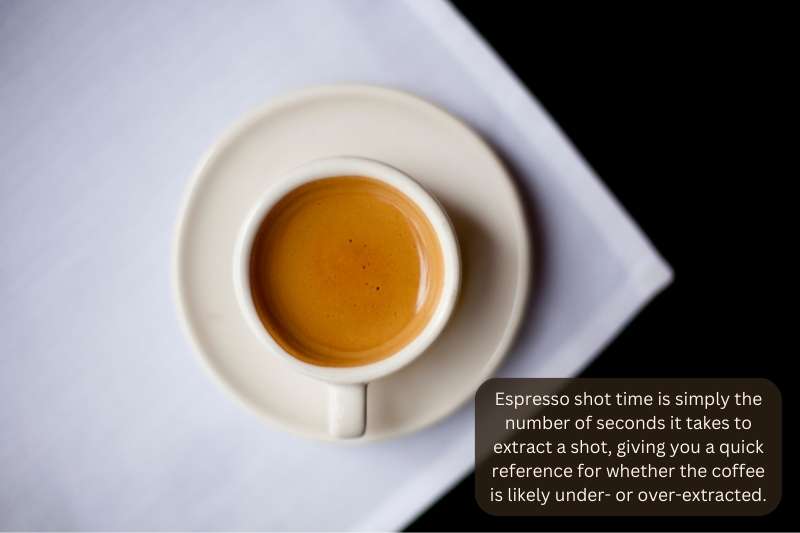
Inside that range, extraction tends to land in a balanced place. Water moves slowly enough to pull sweetness and body from the grounds. But not so slowly that bitterness starts dominating the cup.
In theory, anyway. Espresso has a habit of ignoring tidy explanations.
Why is timing only a guideline?
Beans behave differently. Roast level shifts things. Grinders drift slightly even when you swear you didn’t touch the dial. Because of that, shot time isn’t a strict rule. It’s closer to a starting reference.
Some coffees taste better a few seconds faster. Others stretch longer and still feel balanced. The timer helps you see what’s happening during extraction. But the cup decides whether the shot actually worked.
How Shot Time Affects Espresso Flavor?
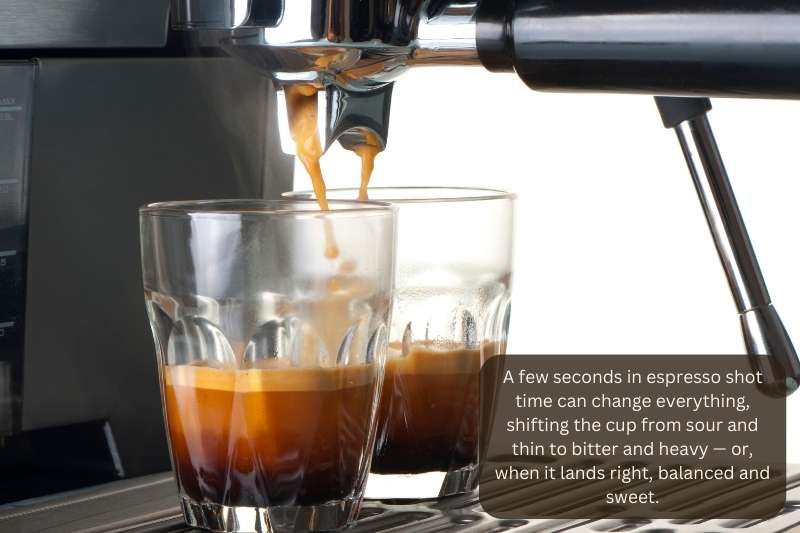
A few seconds can shift the entire character of a shot. Not always. Espresso isn’t that predictable. But it happens enough that you start paying attention to the shot time.
Fast Shots (Under-Extraction)
Sometimes the espresso runs out almost immediately. You start the pump, glance down for a second, and the stream is already moving faster than it should.
Water passes through the puck too easily. Not enough resistance.
The flavor comes out sharp and a little hollow. Sour notes dominate, the body feels thin, and the crema looks pale (almost blond), spreading across the surface before fading away.
Slow Shots (Over-Extraction)
Nothing appears for a moment under the portafilter. Then a thick drip pushes through, slow and dark, like the machine is struggling a bit. Water is meeting too much resistance inside the puck.
The result tends to swing the other way. Bitter, heavier, sometimes dry on the finish. The crema comes out darker and thicker, and the espresso’s texture feels dense and almost syrupy. Not always terrible. But rarely balanced.
The Balanced Shot
The stream starts thick, then smooths out into something steady. And crema forms a rich layer on top, holding its color for a while.
Flavor lands somewhere in the middle. Sweetness comes first, acidity keeps the cup lively, and bitterness stays in the background instead of taking over. Smooth body and warm aroma.
What Causes an Espresso Shot to Pull Too Fast?
Usually, it’s because the puck doesn’t have enough resistance. The water finds easier ways through and takes it.
| Cause | What’s Happening |
|---|---|
| Grind Size Too Coarse | The particles are too large, leaving open space in the puck. Water slips through quickly instead of slowing down and extracting flavor. |
| Low Coffee Dose | With less coffee in the basket, the puck becomes thinner. That thinner layer offers less resistance, so the shot runs faster than expected. |
| Weak or Uneven Tamp | If the puck isn’t compressed evenly, water searches for the weakest path. This creates channeling, where parts of the coffee barely extract at all. |
| Old or Stale Coffee Beans | As beans age, they lose gas and structure. The puck becomes less resistant, so water moves through more easily and the shot speeds up. |
| Poor Puck Preparation | Clumps or uneven distribution create tiny gaps in the puck. Water finds those gaps immediately and rushes through them. |
How to Fix a Fast Espresso Shot?
When a shot runs fast, the first instinct is to stare at the timer. I still do that sometimes. Twenty seconds… already blonding… great.
Most of the time the fix starts with the grinder. Go a little finer but not too much. Just a small step to make the coffee packs tighter and slow the water down. That alone solves a surprising number of fast shots.
If it still races through, the basket might simply need more coffee. Add a gram, or maybe half a gram. The puck gets thicker, and resistance increases.
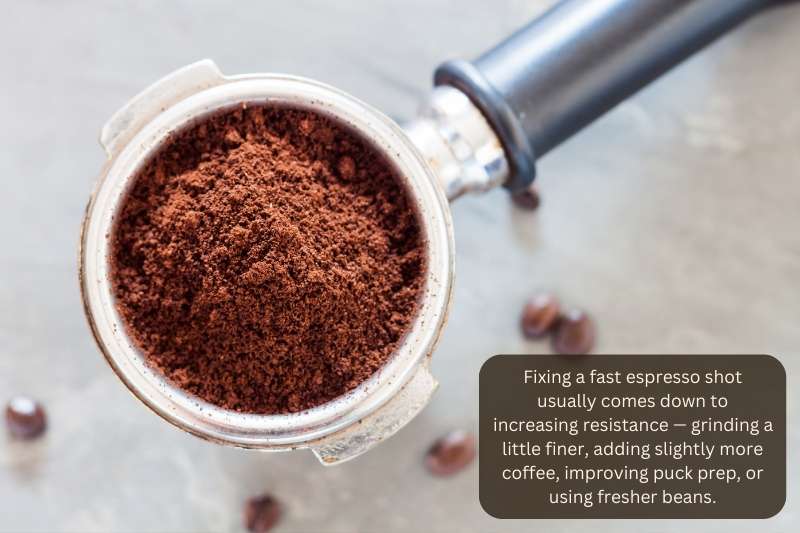
Distribution comes next. Though it’s easy to forget when you’re half awake making morning espresso. Grounds pile unevenly, tiny clumps form, and water finds those weak spots instantly. A quick stir with a WDT tool or even a thin needle helps. Then tamp, level, steady, nothing heroic. Just enough to compress everything evenly.
Beans can sabotage you too. Old beans can look perfectly fine in the hopper, but once the machine starts brewing, they behave a little… off. Shots speed up, crema turns pale. Swap in fresher beans and the puck suddenly pushes back against the water again.
What Causes an Espresso Shot to Pull Too Slow?
The water’s trying to get through. The puck isn’t cooperating.
| Cause | What’s Happening |
|---|---|
| Grind Too Fine | The coffee particles pack tightly together, leaving very little space for water to move through. The flow slows to a crawl, sometimes just a few thick drops at a time. |
| Too Much Coffee in the Basket | Over-dosing makes the puck thicker and denser. With more coffee packed into the basket, water struggles to pass through the entire layer. |
| Tamping Too Hard | Excess pressure compresses the puck beyond what’s needed. The coffee becomes compact enough to restrict water flow. |
| Dirty Machine or Blocked Shower Screen | Coffee oils and residue slowly collect around the shower screen and group head. Over time those tiny holes narrow, limiting how evenly water reaches the puck. |
| Incorrect Basket Size | When the dose is too large for the basket, the puck sits too close to the shower screen. That cramped space restricts water movement and slows extraction. |
How to Fix a Slow Espresso Shot?
The grinder is often the first place to look. Go slightly coarser and I mean slightly. Espresso reacts to tiny movements of that dial in ways that still surprise me.
One notch and the shot crawls. Another notch and suddenly it flows like it remembered what it was supposed to do.
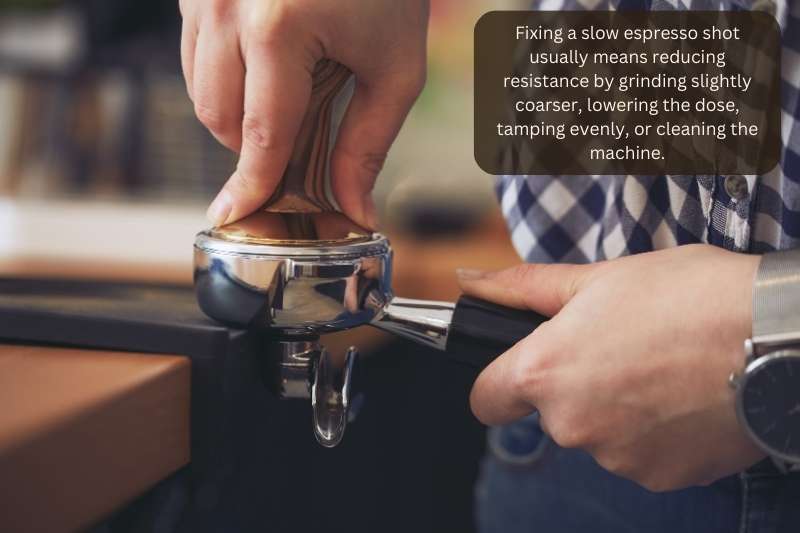
Dose plays its part too. If the basket is packed too full, the puck becomes dense enough to slow everything down. Removing half a gram, maybe one gram, can change the whole extraction. Nothing special, but enough that the espresso begins to move again.
Tamping can be another problem. Usually, by people who think the solution is pushing harder. It isn’t. What helps more is consistency: a level tamp and steady pressure.
Machines contribute to the problem as well. Coffee oils collect over time, especially around the group head and shower screen. The buildup is gradual, almost invisible, until the flow starts slowing down for no obvious reason. A proper backflush and quick cleaning can fix what looked like a dialing-in problem.
And occasionally the issue sits in the hardware itself. The basket might be wrong for the dose, or the portafilter holes aren’t letting the espresso flow freely.
You adjust one variable, pull another shot, watch the stream form again, darker at first, then settling and for a moment you stand there listening to the machine hum.
A Simple Step-by-Step Dial-In Process
You’re not chasing perfection here. Just trying to get the shot to stop fighting you.
1 – Start with a basic recipe
Begin somewhere solid: 18 grams in, 36 grams out. It’s not magical, but it gives you a reference point, which matters more than people admit.
2 – Pull a shot and watch the time
Brew one as-is and see what happens. Not just the number on the timer. You want to look at the flow too. Does it rush out? Drip like syrup? I always end up leaning in a little.
3 – Adjust the grind
If the shot runs too fast, go finer. If it drags, go coarser. Small moves only. Espresso has a way of overreacting when you get impatient.
4 -Taste it, then decide
The timer helps, sure, but the cup gets the final word: sour, thin, sharp, or something’s off. Bitter and heavy? Also off. When it starts tasting rounder, sweeter, you’re getting closer.
5 – Repeat until it settles
Pull another shot. Tweak again if needed. Then one more. Eventually the espresso lands in that place where the flow looks right, the taste makes sense, and you stop second-guessing it for a second.
Last Thoughts
Next time you pull a shot, it’s worth paying attention for a second. Did the espresso rush out or struggle to flow? Did the cup taste thin… or heavy and bitter? And when something feels off, what did you adjust: the grind, the dose, or nothing at all? Small questions like that lead to better shots.


