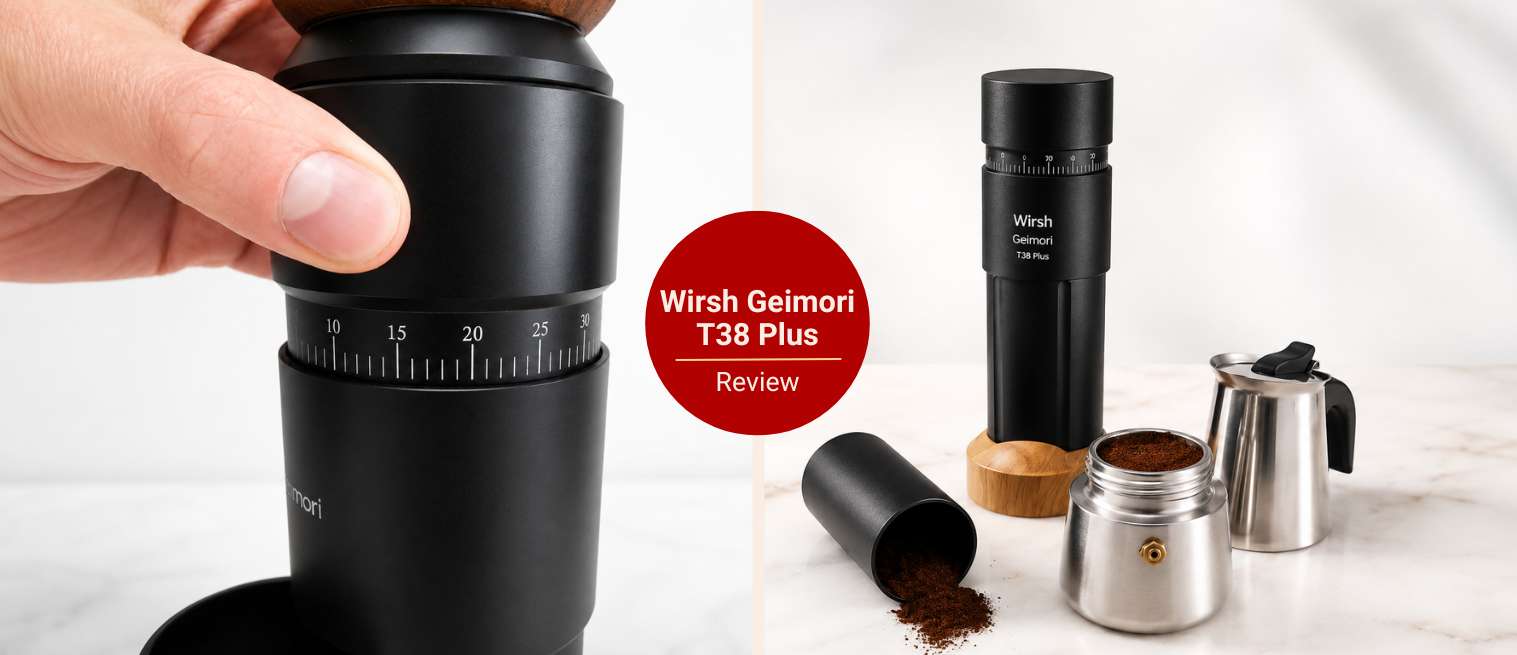
Wirsh Geimori T38 Plus Review: Compact Grinder Tested at Home
Most compact coffee grinders sound good on paper until you actually use them at home. Then the little annoyances show up. Grounds cling to everything, the cup tastes a little uneven, the motor screams across the kitchen, or the whole grinder feels like one bad morning away from cracking apart.
That’s why I wanted this Geimori T38 Plus review to be practical, not just a list of specs. Wirsh sent me the grinder for testing, but they did not tell me what to say. This review is based on my honest experience using it at home.
I tested it with my Moka pot and French press, two brewers that many people already have in the kitchen. I also tried different grind settings, from a very fine grind that looks suitable for espresso-style brewing to a coarser grind for French press and cold brew.
Mostly, I wanted to see one thing: does this small grinder actually make daily coffee easier, cleaner, and better? So let’s find out.
First Impressions and How I Tested It
Wirsh sent me the Geimori T38 Plus around a month ago, and my first impression was good. As soon as I opened the box, the design stood out. It’s compact compared to many countertop grinders, but it still has that solid and serious feel.
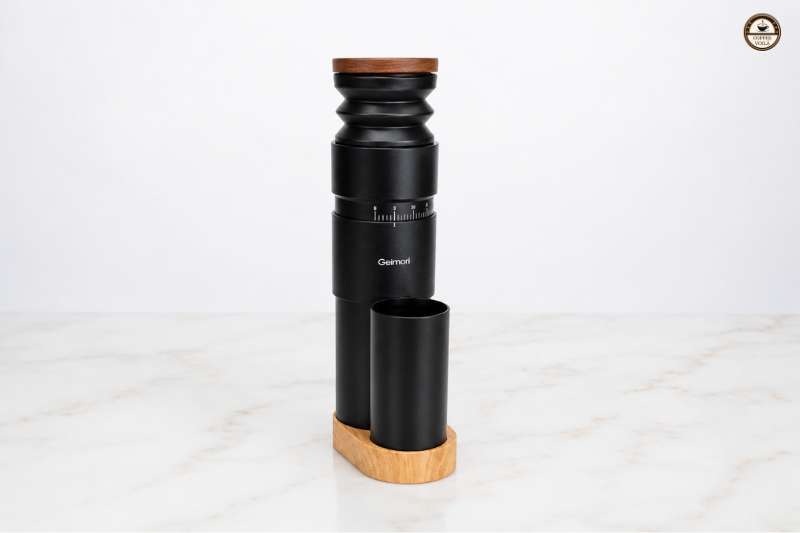
The full metal body helps. It feels sturdy, like it could take a few knocks without breaking apart, though I wouldn’t suggest testing that. I also liked the wood hopper lid and the magnetic dosing cup. Small details, but they make the grinder feel nicer to use.
It also comes with a small 5 ml spray bottle for RDT, so you can lightly spray the beans before grinding. That helps reduce static and keeps the grounds from making as much mess.
There’s also a small brush included, which is useful for cleaning leftover grounds around the dosing cup, chute, or burr area after use.
The grinder is about 22 cm tall (roughly 8.7 inches) and weighs about 1.60 kg (about 3.5 pounds).
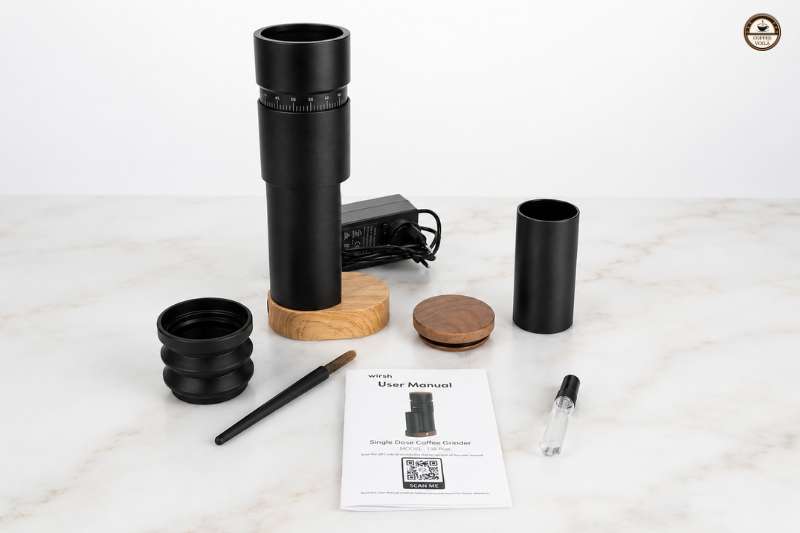
For this review, I tested it at home with a moka pot and French press. Those are brewers that many people already have. I also focused on the things that matter in daily use: workflow, grind quality, mess, retention, and how the coffee tasted in the cup.
What Is the Wirsh Geimori T38 Plus?
The Wirsh Geimori T38 Plus is a compact electric burr grinder built for people who want something smaller than a full countertop grinder. But still more serious than a basic travel grinder or a cheap blade grinder.
It sits in a slightly odd place. It looks portable, and size-wise it is, but it is not fully cordless. The T38 Plus uses an AC power adapter, so you still need a plug nearby.
That makes it better suited for home kitchens, office coffee setups, RVs, hotel rooms, or travel where you know you’ll have power.
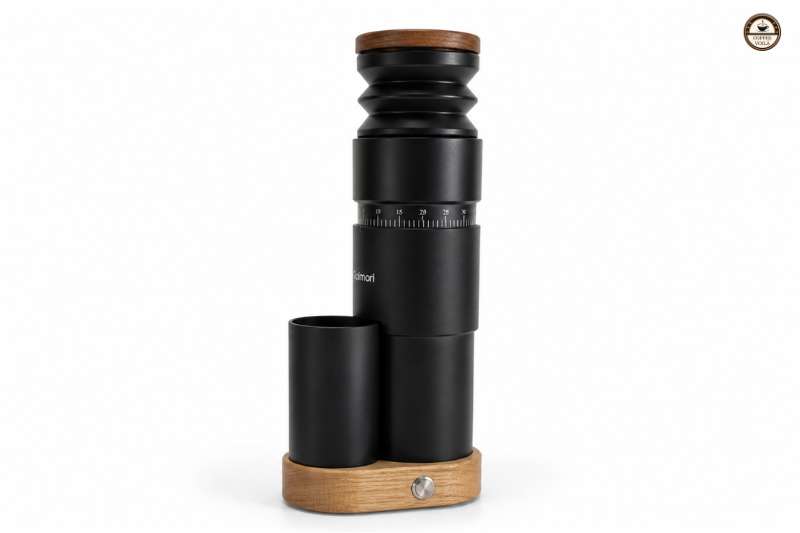
For camping without an outlet, the regular Geimori T38 makes more sense because it’s battery-powered. Here’s the quick breakdown:
| Feature | What It Means |
| Grinder type | Compact electric burr grinder |
| Burrs | 38mm 6-axis conical burrs |
| Grind adjustment | Stepless, so you can make small grind changes instead of being locked into fixed clicks |
| Body | Aluminum and wood design |
| Power | Corded AC-powered grinder with adapter |
| Rated power | 76W |
| Grinding speed | Around 190RPM |
| Hopper capacity | About 30g of beans |
| Dosing cup capacity | About 40g of ground coffee |
| Best fit | Home brewing, small kitchens, office setups, and travel where you have access to power |
| Main difference from T38 | The regular T38 is cordless and battery-powered; the T38 Plus is corded and more home-focused |
The 38mm conical burrs are the main thing that makes this more interesting than a basic compact grinder. Burr grinders give you more control over particle size, which becomes useful when you’re switching between brew methods.
For moka pot, I usually want something on the finer side. For French press, I’m looking for a coarser grind that doesn’t leave the cup overly muddy.
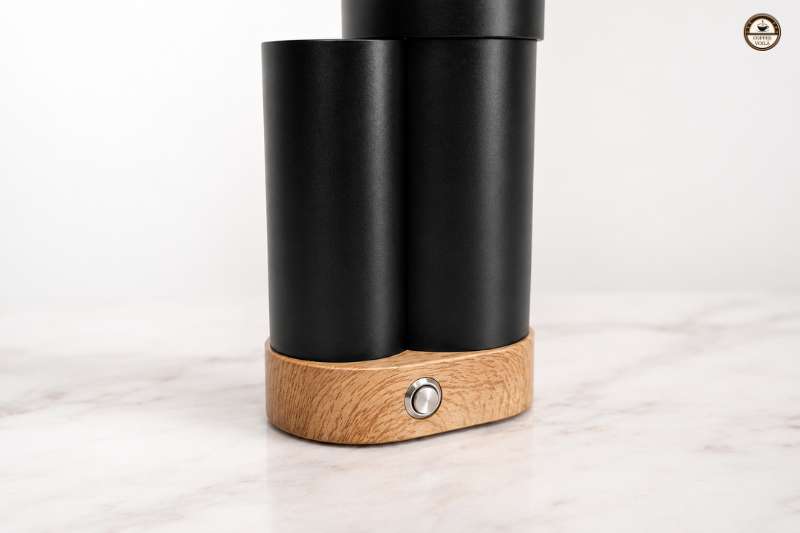
The stepless adjustment also gives you more control, though it does mean you need to pay attention. There isn’t a simple “French press,” “moka pot,” or “espresso” button.
The manual does give suggested grind ranges for each brewing method, which helps. But you still have to make small adjustments based on your beans and taste. That part is normal with grinders, but it’s worth knowing before you expect perfect coffee on the first try.
So I’d describe the T38 Plus as a compact, home-friendly grinder with some travel potential, not a true off-grid travel grinder. It has the size for travel. It just needs electricity.
Get 15% Off with Code COFFEEVOILA
Wirsh Geimori T38 Plus: Grind Adjustment and Grind Range
The Geimori T38 Plus has a stepless adjustment dial that runs from 0 to 65. You change the grind size by rotating the top adjustment collar of the grinder. It’s easy enough to turn, although I did catch myself checking the number more than once, especially after moving the grinder around.
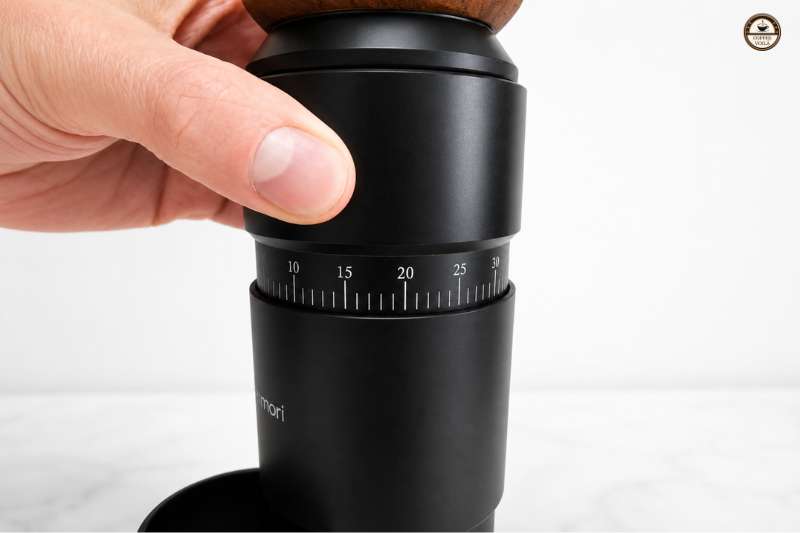
The manual gives suggested starting points for different brew methods:
| Brew Method | Suggested Grind Range |
| Espresso | 0–20 |
| Moka pot | 21–35 |
| V60 / pour-over | 25–50 |
| AeroPress | 30–60 |
| French press / cold brew | 50–60 |
I’d treat the manual’s numbers as a starting point (not a rule). The brew method gives you the general range, but the beans still decide the final adjustment.
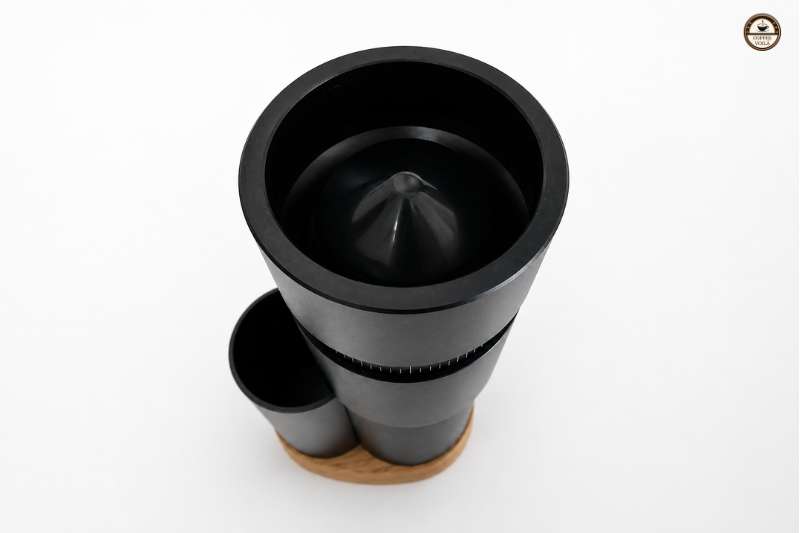
A lighter roast may need a slightly finer setting, while a darker roast may taste better with a coarser setting if bitterness starts creeping in.
That’s where the stepless adjustment helps. You can make small changes instead of jumping from one fixed click to another. It gives you more control, but it also means you’ll probably want to save your favorite settings somewhere.
I’d keep a small note on your phone, especially because it’s easy to lose your number after cleaning the grinder or accidentally rotating the collar.
French Press Test
For the French press test, I used 17g of whole beans to 250ml of water, close to a 1:15 ratio. The beans were 100% Arabica. The bag doesn’t clearly state the roast, but the intensity is on the stronger side. So I treated it like a medium-dark coffee.
I measured the beans into the magnetic dosing cup, gave them a light spray with the RDT bottle, and started with the dial at 60, which sits in the French press/cold brew range from the manual.
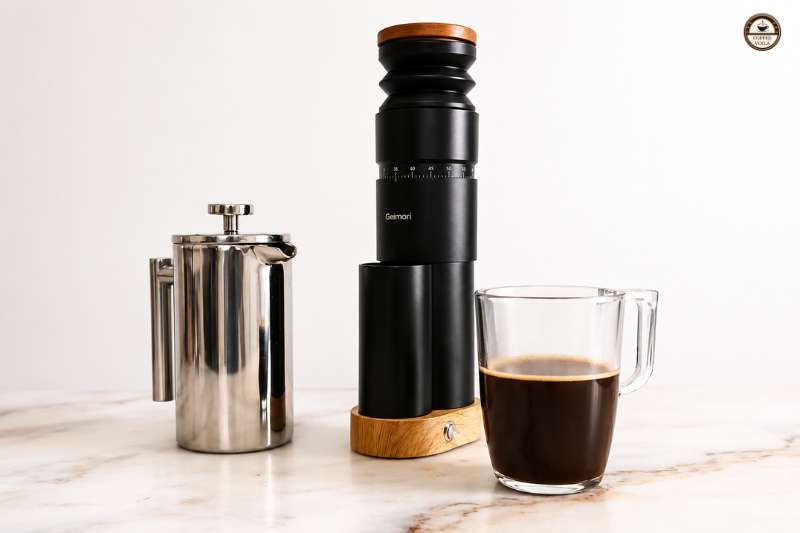
The grind looked fairly even and coarse, close to coarse sea salt. I added the grounds to the French press, poured in a little hot water first to bloom the coffee and let some of the gas escape.
Some people say blooming isn’t really needed with French press. Maybe they’re right. I still do it anyway, partly out of habit. Then I added the rest of the water, stirred gently with a spoon, and let it steep for about 4 minutes.
The coffee smelled great, but the cup felt a bit thin. It was clean and had almost no sediment, but it lacked some color and flavor. My guess is that the grind was too coarse for these beans.
#2 French Press Test
On the second try, I moved the dial down to 50 and kept everything else the same. This cup was noticeably better: darker color, stronger aroma, more flavor, and still barely any bitterness.

I may still test between 50 and 55, or keep it at 50 and steep closer to 5 minutes for more intensity. But for these beans, the finer French press setting worked better.
I used a Secura stainless steel French press with a three-layer filter. That may have helped keep the cup cleaner, because I only found a small amount of sediment at the very bottom.
Get 15% Off with Code COFFEEVOILA
Moka Pot Test
For the moka pot test, I ground 9g of beans at dial 30. That sits inside the moka pot range from the manual, and it looked about right to me: finer than what I used for French press, but not powdery.
I filled the bottom chamber with water, added the grounds to the basket, leveled them off, and didn’t tamp. With moka pot, I try not to overcomplicate it. Water in the base, coffee in the basket, medium heat, then wait until it starts sputtering.

The cup came out clean and smooth. I think the 100% Arabica helped here because moka pot coffee can sometimes lean bitter, especially with some Arabica/Robusta blends.
I’ve had moka pot brews where I need a glass of water next to me because the bitterness lingers too much. This wasn’t like that.

At dial 30, the coffee had enough body without becoming harsh. It still had that stronger moka pot feel, but it didn’t taste burnt or rough.
For my beans and small moka pot, this setting worked well enough that I’d start there again before adjusting finer or coarser.
Wirsh Geimori T38 Plus: Static, Retention, and Mess
Static is one of those small things that can make a grinder annoying fast. If the grounds cling to the dosing cup, spray onto the counter, or sit around the chute, you end up cleaning more than brewing.
I’ve used grinders like that before. You grind coffee, then stare at the table like, “How did it get there?” With the Geimori T38 Plus, the workflow was cleaner than I expected.
The first time I used it for French press, I actually forgot to spray the beans with the RDT bottle. I ground around 10g, and even without the water spray, I didn’t notice much static.
The grounds mostly dropped straight into the magnetic dosing cup, without coffee flying around the counter.
I did sometimes give the grinder a gentle shake while grinding, just to help the last few beans feed into the burrs. That is not unusual with single-dose grinders, especially when there are only a few beans left near the end.
To check retention and grind range, I also tested 10g of beans at three different settings:
| Grind Setting | Beans In | Grounds Out | Difference |
| Dial 1 — fine / espresso range | 10g | 9g | 1g |
| Dial 30 — moka pot range | 10g | 9g | 1g |
| Dial 50 — French press / cold brew range | 10g | 9g | 1g |
The process was clean across all three tests. Dial 30 and 50 ground the beans quickly, in just a few seconds. After grinding, I used the bellows (the rubber pump with the wooden handle) to push air through the grinder and help clear out any grounds left inside.
Dial 1 was different
That setting is very fine, almost powdery to the eye. It took longer to grind the same 10g, and I had to tap the grinder a few times to help the beans feed properly.
At one point, I even used the handle of my coffee brush to gently move a few beans toward the burrs. Not a huge problem, but it did take a bit more work than the coarser settings.
The fine grind looked excellent, though. Very uniform. Actually, all three grind samples looked pretty consistent to me, especially for a compact grinder.

I’ll talk more about how they brewed in the moka pot and French press sections, because looking at grounds only tells you so much.
The only real mess I noticed was inside the dosing cup. A small amount of coffee tends to stick there after grinding, but nothing dramatic. The included brush clears it out easily.
So yes, there was some retention. Around 1g in my simple test. But in normal use, the grinder didn’t feel messy, and the counter stayed surprisingly clean. I’ll take that. Especially before coffee.
Noise and Daily Use
One thing I really liked about the Geimori T38 Plus is how quiet it is. I mean, it still sounds like a grinder. Let’s not pretend it disappears into the room.
But it doesn’t have that harsh, screaming noise some small electric grinders make, where you start feeling guilty for making coffee before everyone else is awake.
If you brew early in the morning, this is the kind of grinder I can see using without waking up your family, your neighbors, the dog, and probably the cat who already judges you anyway.
It also barely vibrated on my table. That helped the whole process feel calmer. I could weigh the beans, spray them, grind, use the bellows, and move on with the brew.
Wirsh Geimori T38 Plus: Cleaning and Maintenance
Nobody buys a grinder because they’re excited to brush old coffee grounds out of it. But it matters. If stale grounds sit inside the grinder for too long, they can mix with fresh coffee and slowly make your brews taste flat, bitter, or just a little off. Not ruined, maybe. Just not as clean as it should be.
For normal home use, I’d give the dosing cup and chute a quick brush after most uses, especially if you’re grinding fine.

Then do a deeper clean every few weeks, or sooner if you change beans often, use darker oily beans, or notice old grounds collecting inside.
The good thing is that cleaning the Geimori T38 Plus isn’t complicated. You gently unscrew the bean hopper clockwise until it loosens, then remove it.
After that, you take out the outer burr housing and use the included brush to sweep leftover grounds down through the grind chute and into the dosing cup.
That’s mostly it. Brush the burr area, clean the chute, empty the cup, and reassemble everything when you’re done. I wouldn’t overthink it.
The dosing cup is even easier. You can brush it out after grinding, or rinse it with water if grounds are sticking inside. Just make sure it’s dry before using it again, unless you enjoy coffee grounds clinging to damp metal. I don’t.
Can the Wirsh Geimori T38 Plus Grind for Espresso?
The T38 Plus can definitely grind very fine. When I tested 10g at dial 1, the grounds came out extremely fine and uniform, almost powdery.
That said, I’m not treating this as a full espresso test. Grinding fine enough for espresso and actually dialing in espresso shots are not the same thing.

Shot time, crema, channeling, pressure, basket type — all of that matters once you put the grinder next to an espresso machine.
So based on grind range, yes, the T38 Plus looks capable of going into espresso territory. But the stronger part of my own testing was with moka pot and French press, where I could properly judge the taste and workflow.
What I Liked and Didn’t Like
After using the Geimori T38 Plus, a few things stood out. Some are small details, but they matter when you’re using a grinder every morning and not just looking at it on a product page.
| What I Liked |
|---|
| Compact size: It doesn’t take over the counter, which makes it good for small kitchens or smaller coffee setups. |
| Solid metal body: It feels sturdy in the hand. Like it could take a few knocks without falling apart. |
| Stepless adjustment: You get more control over the grind size, especially when switching between moka pot, French press, or finer grind settings. |
| Magnetic dosing cup: Small detail, but useful. It snaps into place nicely and makes transferring grounds easier. |
| Consistent grind: Across the settings I tested, the grounds looked pretty uniform for each range. |
| Clean workflow: I didn’t have coffee grounds flying all over the counter. Even when I forgot the RDT spray, the process stayed cleaner than I expected. |
| Included accessories: The spray bottle, bellows, and brush actually help. They don’t feel like random extras thrown into the box. |
| What I Didn’t Like |
|---|
| Settings are easy to lose: Since it’s stepless, you may need to keep notes of your favorite grind numbers. |
| Fine grinding takes more effort: At dial 1, the beans needed more tapping and help feeding into the burrs. |
| Not fully cordless: It’s compact enough for travel, but it still needs a power source. |
Last Thoughts: Who Should Buy It?
If you’re looking for a small burr grinder around the $100 range, the Geimori T38 Plus is worth considering. It’s compact, feels sturdy, and doesn’t take over your counter like some bigger grinders do.
I also liked how quiet it was. Some grinders sound like a truck crushing beans in your kitchen. This one doesn’t. You can use it early in the morning without announcing coffee time to the whole neighborhood.
The clean workflow is another strong point. The dosing cup catches the grounds well, the RDT spray helps with static, and I didn’t end up wiping coffee dust off the counter every time.
I’d recommend it most for someone who brews with a moka pot, French press, AeroPress, or pour-over, especially in a small kitchen.
If you want a fully cordless grinder for camping or travel, this isn’t really the one. The regular Geimori T38 makes more sense because it’s battery-powered.


