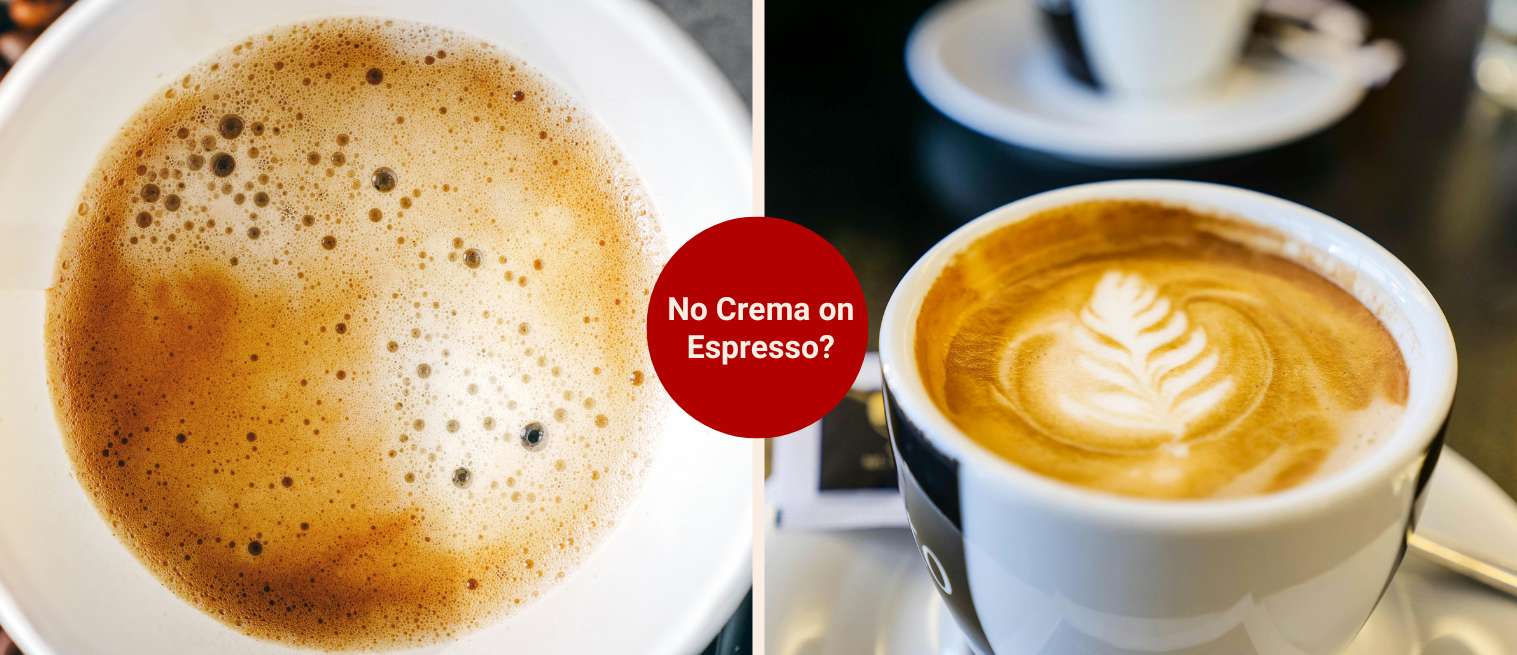
No Crema on Espresso? 5 Causes and Easy Fixes
A flat espresso shot can be frustrating fast. You lock in the portafilter, press the button, watch the coffee come out, and instead of that golden layer on top, you get something thin and dull that looks more like strong drip coffee in a tiny cup.
When I first bought my Barista Express, I thought it would be simple: “Good machine equals good espresso.” That would have been too easy. I started changing things without really knowing what I was chasing.
A slightly finer grind one day, a different tamp the next, maybe a little more coffee in the basket, maybe less. I kept looking at the shot like the machine was hiding something from me.
The annoying part is that several different problems can lead to no crema, and they can all look similar. Old beans, coarse grind, low dose, weak pressure, even coffee that isn’t ideal for espresso. So it is easy to waste time fixing the wrong thing while the real problem sits there quietly.
That is more or less what happened to me until I stopped and looked at the bag itself. Then it hit me. This coffee I bought was already six months old.
In this guide, I’ll walk through the five most common reasons your espresso has no crema, what the signs aalook like, and how to fix each one without turning the whole thing into guesswork.
Quick Diagnosis: Why Your Espresso Has No Crema
If you want the quick version, this is the part to scan first. And if one of these sounds like your problem, keep reading after the table because I break each one down in more detail.
| Problem | What You’ll Notice | Best Fix |
| Your coffee beans are too old | The shot looks flat from the start and tastes dull | Use fresher whole beans with a recent roast date |
| Your grind size is too coarse | The espresso runs too fast and looks pale or watery | Grind finer and slow the shot down |
| Your coffee dose is too low | The shot feels thin, weak, and the crema fades quickly | Weigh your dose and match it to your basket |
| Your machine isn’t creating enough pressure | Shots stay weak and inconsistent no matter what you change | Clean, descale, and make sure the machine is fully heated |
| You’re using the wrong coffee for espresso | Technique seems fine, but crema stays thin or disappears fast | Try a medium or medium-dark espresso roast, or a blend with more crema potential |
What Is Crema, Really?
Crema is that golden-brown layer that sits on top of an espresso shot. The part people look for first, sometimes before they even taste the coffee. I get it. When the shot lands right and that thin layer forms on top.
What is happening there is not magic. Crema comes from pressure pushing hot water through finely ground coffee, and from the carbon dioxide still trapped in fresher beans. Add the coffee oils into that, and you get that foamy layer sitting on top of the shot.
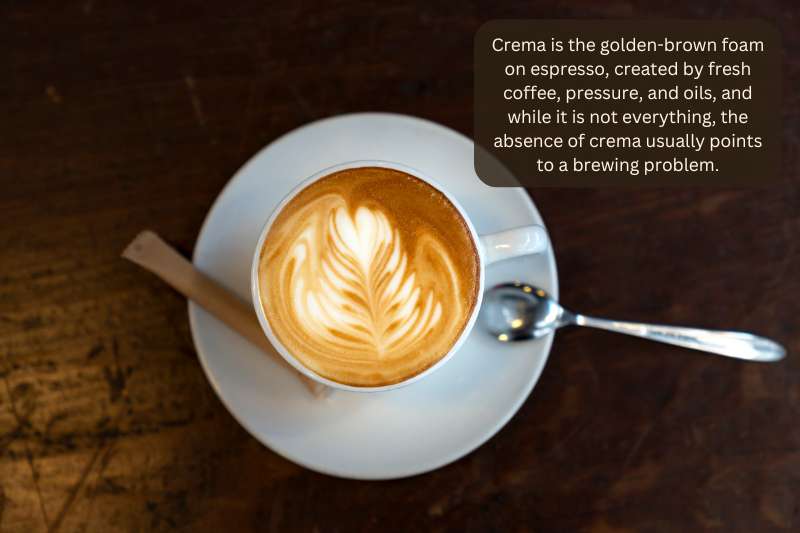
Fresh coffee helps a lot here. Usually, old coffee has little left to give.
Still, crema is not everything. I have had shots with less crema that tasted perfectly decent, and shots with prettier crema that weren’t worth repeating. So it isn’t some sign that the espresso is automatically good.
But no crema at all, that is different. When the top of the shot looks completely flat from the start, it often means something went wrong somewhere. It could be the beans, the grind, or the machine not pulling its weight.
Want better espresso at home? At reliable machine makes all the difference.
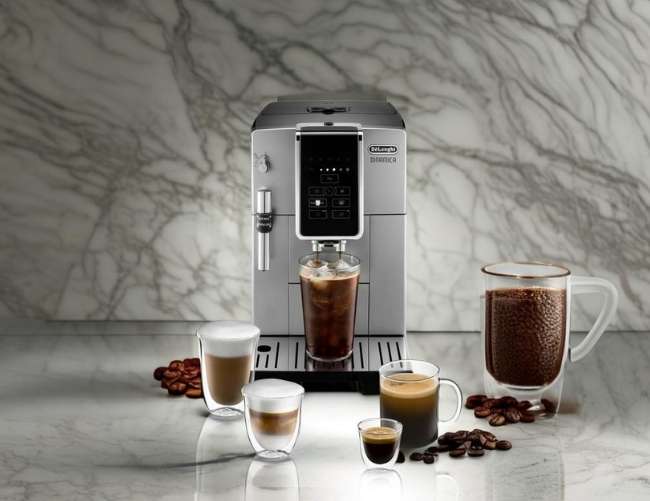
12 Best Home Espresso Machines (2026)
From beginner models to prosumer setups, we highlight:
Best overall, budget, automatic, and café-quality picks
1 – Your Coffee Beans Are Too Old
Old beans are one of the most common reasons espresso comes out with little or no crema. Fresh coffee still has gas trapped inside it, and that matters more than people realize.
When the shot pulls, that trapped carbon dioxide helps create the crema on top. Once the beans get too old, that part starts fading. The espresso looks flatter, thinner, a little tired before you even taste it.
Pre-ground coffee makes this worse. It loses freshness faster, which is why those convenient bags so often disappoint. You really do have to be careful with the coffee packs you grab at the supermarket.
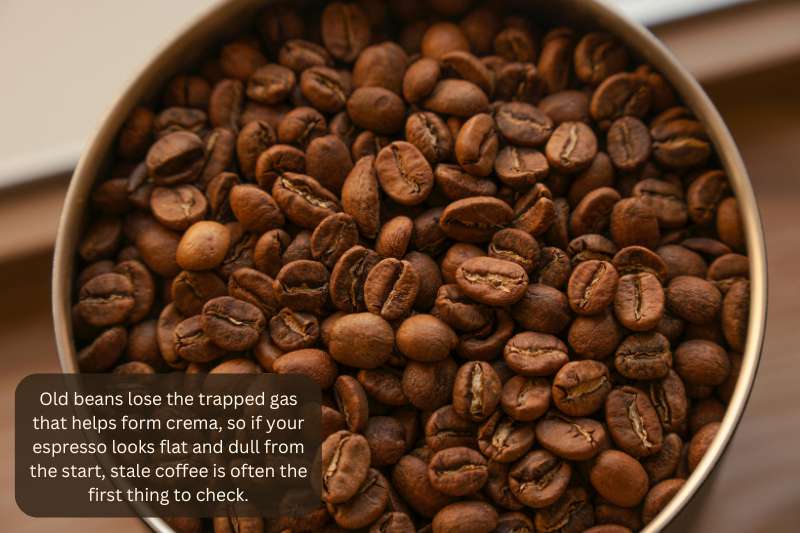
I once bought one without paying much attention, got home, made a shot, and knew something was wrong almost immediately. It looked dull from the start. No life on top, no real body underneath, just a dark cup that seemed older than it should have been.
Signs this is the issue
- The shot looks flat right from the start
- The espresso tastes dull or slightly cardboard-like
- The bag has been open for weeks
- You are using supermarket pre-ground coffee
How to fix it
- Use freshly roasted whole beans
- Look for a roast date, not just an expiry date
- Use the beans within a reasonable window after roasting
- Store them in an airtight container away from heat and light
2 – Your Grind Size Is Too Coarse
This is another one that shows up fast in the cup. Espresso needs a fine enough grind to slow the water down and create some resistance. If the grind is too coarse, the water runs through with barely any fight, and the shot comes out thin and pale. Not always awful on the first sip, which is part of the problem. Sometimes it simply tastes weak.
You see it in the flow too. The shot runs too quickly, almost right away, and before long you are holding a cup with barely any crema and not much body.
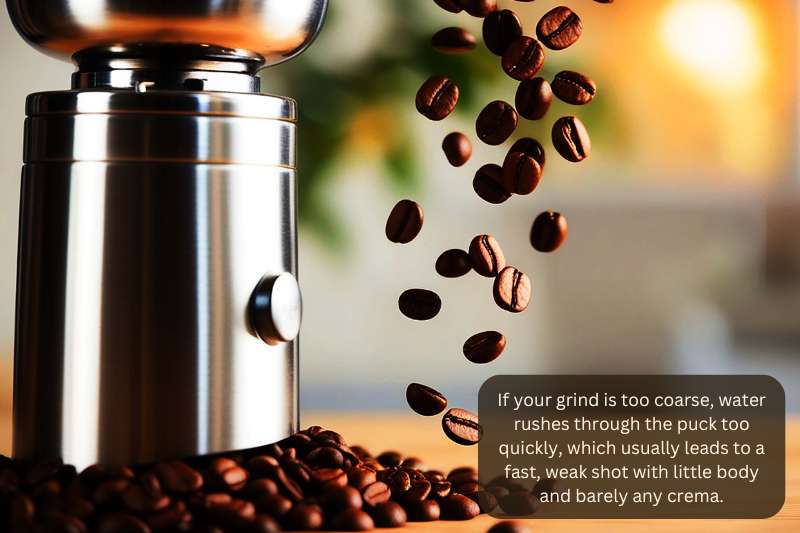
I have had shots like that, but the espresso itself felt hollow, and the puck afterward looked looser and wetter than it should have been. That usually tells the story before anything else does.
Signs this is the issue
- The espresso runs too fast
- The shot finishes in under 20 seconds
- The coffee tastes sour or weak
- The puck looks loose or watery after brewing
How to fix it
- Grind a little finer
- Adjust one step at a time
- Aim for a slower, more controlled flow
- Use shot time and taste together, not time alone
3 – Your Coffee Dose Is Too Low
This one catches people because the grind seems like the obvious suspect first. But sometimes the grind is close enough, and the real issue is that there isn’t enough coffee in the basket to slow the water down.
The machine starts pushing through too easily, and the shot comes out thin, fast, and a little empty. You get less resistance, less body, less crema, all of it.
Dose matters more than people think, especially once you start dealing with different basket types. A pressurized basket can hide some mistakes for a while.
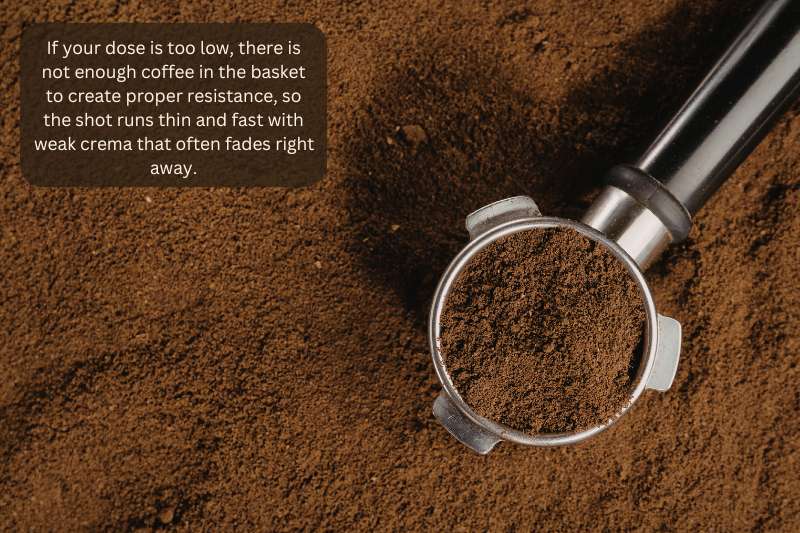
A non-pressurized one is less polite about it. If the dose is too low, the shot may still run. But it often looks weak from the start and the crema, if it appears at all, disappears almost before you finish looking at it.
I have had shots where the puck afterward looked more like wet sludge than something that had actually held its shape. Not a promising sight.
Signs this is the issue
- The shot pulls too fast even with a finer grind
- The espresso tastes thin
- The puck looks soupy
- The crema disappears almost immediately
How to fix it
- Use a coffee scale
- Start with a consistent dose, around 16 to 18 grams depending on your basket
- Do not rely on scoops
- Match the dose to your portafilter basket size
4 – Your Espresso Machine Isn’t Creating Enough Pressure
Crema needs pressure. That is one of the plain truths of espresso. If the machine is not building enough pressure, or not doing it consistently, the shot usually shows it.
This can happen for a few reasons. Sometimes the machine isn’t very capable to begin with. Other times, it hasn’t been cleaned or descaled in far too long, which is more common than people admit.
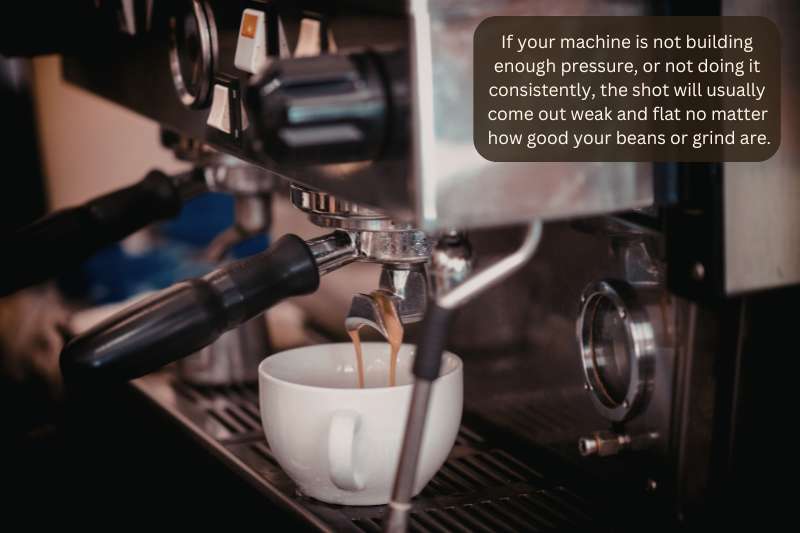
And sometimes the setup is off. Wrong basket, half-heated machine, something clogged where it shouldn’t be.
Budget machines can make this more confusing because some use pressurized baskets that whip up a kind of fake-looking crema, enough to make the shot look better for a second, even when the coffee underneath is still not right. I have seen that fool people before. It looks promising until you taste it.
Signs this is the issue
- The coffee comes out weak no matter which beans you use
- Shots are inconsistent from one pull to the next
- The machine seems to struggle pushing water through
- You never get crema, even with fresh beans and a fine grind
How to fix it
- Descale the machine
- Clean the group head and basket
- Check that you are using the right basket for your setup
- Let the machine heat fully before brewing
- If the machine is very cheap, keep your expectations realistic
5 – You’re Using the Wrong Coffee for Espresso
Sometimes the beans aren’t stale, the grind is close, the dose is fine, the machine is behaving, and the crema is still underwhelming. Some coffees just don’t give you the thick top layer people expect from espresso, even when the shot itself isn’t badly made.
Darker espresso roasts give you more visible crema. Very light roasts, not so much. They can still make a good shot, though the top may look thinner and disappear faster.
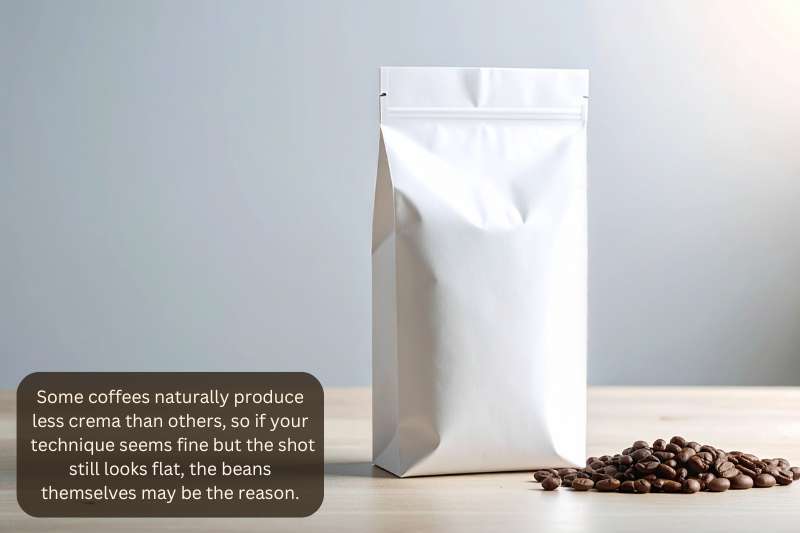
That throws people off because the espresso can be decent, but the cup doesn’t look like what they imagined.
Robusta blends tend to go the other direction. They often build a thicker crema than with 100% arabica, sometimes almost too much, depending on the blend and what you are after.
I have seen this confuse people because the technique seems fine and the coffee still comes out looking a little flat. Then you taste it and it is brighter, more acidic, lighter on the tongue. Not ruined. Just a different kind of espresso than the thick, darker style most people picture first.
Signs this is the issue
- Your technique seems fine, but the crema is still thin
- The coffee tastes bright or acidic
- You are using light roast beans
- Crema appears, then fades quickly
How to fix it
- Try a medium or medium-dark espresso roast
- Use beans labeled for espresso
- Experiment with blends if you want thicker crema
- Do not judge light roast espresso by crema alone
Last Thoughts
If you have tried some of these fixes, I’d be curious to know how it went. And if you worked through them and your espresso still has no crema, leave a comment below and say what your setup is doing. Often, the small detail you nearly ignored is the one causing all the trouble.
Questions? We Have Answers.
Get answers to a list of the most Frequently Asked Questions.