Super Automatic vs Nespresso: Which Coffee System Is Better?
Last updated on April 20th, 2026 at 03:56 pm
Having both a super automatic machine and a Nespresso sitting on the counter is a bit revealing. At first glance, they seem almost identical in purpose. Press a button, coffee appears. Quick, simple, efficient. So it’s not surprising that people often search for “super automatic vs. nespresso” and wonder which makes more sense as a first purchase.
The confusion usually starts once you begin looking closer. Both machines promise convenience. Both claim to make espresso at home without the usual barista skills. And both can deliver a decent cup in under a minute.
But after spending time with both systems, the differences become hard to ignore.
The coffee itself tastes different. The way the machines work behind the scenes is completely different. Even the long-term cost of drinking coffee every day starts to move in different directions.
That’s where many buyers get stuck.
They like the simplicity of Nespresso. At the same time, they hear people talk about fresh beans and “real espresso” from super autos and start wondering if capsules are cutting corners.
So the real question isn’t just which machine is easier. It’s which system actually fits the way you drink coffee every day.
Super Automatic vs Nespresso: Quick Comparison
At a glance, the differences look simple. In daily use, they start to feel a little bigger.
| Feature | Super Automatic Espresso Machine | Nespresso Machine |
|---|---|---|
| Coffee source | Whole beans, freshly ground | Pre-sealed capsules |
| Convenience | High — mostly one-touch drinks | Extremely high — capsule + button |
| Espresso quality | Higher potential, richer body | Consistent but usually lighter |
| Drink variety | Espresso drinks built into machine | Depends on capsule selection |
| Cost per cup | Lower long-term with beans | Higher due to capsule pricing |
| Maintenance | Moderate cleaning and upkeep | Very minimal maintenance |
| Machine price | Higher upfront cost | Lower entry price |
Quick takeaway:
• Want the fastest, simplest coffee → Nespresso
• Want better espresso from fresh beans → Super automatic
What is a Super Automatic Espresso Machine?
A super-automatic espresso machine handles almost the entire brewing process on its own. You add whole beans, fill the water tank, and the machine takes care of the rest.
Grinding, dosing, tamping, extraction… all of it happens inside the machine. You mostly just stand there waiting for coffee to appear.
Inside, there’s usually a burr grinder that grinds the beans seconds before brewing. That detail matters more than people realize. Coffee loses aroma quickly after grinding. So doing it right before extraction keeps the cup tasting fuller and a little more alive.

Once the beans are ground, the machine automatically measures the dose and compresses it into a puck. No scoops or tampers sitting on the counter. Somewhere inside the machine, a small brewing chamber is doing the work while you’re watching the cup fill.
Extraction itself is also controlled by the machine. Water pressure, shot timing, and volume are handled automatically. Though most models still let you tweak the strength or drink size if you want to adjust.
Milk drinks work in a similar way. Many super automatics include automatic milk systems that steam and foam milk for cappuccinos or lattes.
Press a button and the machine does it all alone: espresso first, milk second without much intervention.
Who should get it?
Usually, people who still care about fresh beans but don’t want to spend their mornings learning espresso technique. It’s also closer to café-style coffee than pod machines.
Want better espresso at home? A reliable machine makes all the difference.
8 Best Super Auto Espresso Machines (2026)
Want café-quality espresso at the push of a button? We break down the top super automatic machines — comparing espresso taste, milk systems, ease of use, and long-term value.
What Is a Nespresso Machine?
A Nespresso machine works very differently from a traditional espresso machine. Instead of grinding beans and preparing the coffee each time, you drop in a small capsule that already contains a measured dose of coffee. Close the lever, press a button, and the machine takes it from there.
The capsule system is really the heart of it. Each pod holds a pre-portioned amount of coffee, sealed in aluminum to keep it fresh for a long time.
No weighing beans or needing to adjust grind size. The machine simply punctures the capsule and pushes hot water through it.

That simplicity is the whole appeal. Brewing usually involves two steps: insert the capsule, press the button. A few seconds later, coffee appears in the cup.
Cleanup isn’t much more complicated either. The used capsule drops into a small container inside the machine, and you empty it later.
There’s also no grinder involved. Everything needed for extraction is already inside the capsule. So the machine itself is fairly compact. That’s one reason Nespresso machines show up often in small kitchens, offices, and apartments.
Most models fall into two main systems.
The OriginalLine machines focus on smaller espresso-style drinks, closer to what you’d expect from a café shot.
The VertuoLine machines lean toward larger coffees and use a different brewing method. Spinning the capsule rapidly while brewing to produce crema and extract the coffee.
Who should get it?
People who gravitate toward Nespresso usually want one thing above all else: convenience. It’s coffee without much thinking attached to it.
Taste Comparison: Fresh Beans vs Capsules
Flavor is where these two systems drift apart.
| Super Automatic Espresso | Nespresso | |
|---|---|---|
| Coffee source | Freshly ground whole beans | Pre-sealed capsules |
| Aroma | Stronger aroma right after grinding | More muted but consistent |
| Crema | Thicker, more traditional espresso crema | Lighter crema depending on capsule |
| Flavor depth | Usually richer and more layered | Designed to taste the same every time |
| Variety | Unlimited bean choices | Limited to capsule lineup |
A super automatic works with whole beans, which means the coffee gets ground seconds before extraction. That alone changes the cup. Aroma tends to be fuller, the crema thicker, and the flavor a little more complex. Not always a huge difference… but noticeable if you pay attention.
Nespresso takes the opposite approach. Capsules are sealed and pre-measured, so every drink is built to taste predictable. The upside is consistency; the espresso today will taste close to the one you had last week.
The downside is that the flavor range is mostly limited to whatever capsules the system offers.
Super Automatic vs Nespresso: Drink Variety
This is one of those areas where the two systems feel similar at first until you start using them.
| Super Automatic Machines | Nespresso Machines | |
|---|---|---|
| Typical drinks | Espresso, Americano, Cappuccino, Latte, Flat White, Macchiato | Espresso, Lungo, Capsule-based coffee drinks |
| Customization | Strength, volume, temperature adjustments | Mostly fixed by capsule design |
| Milk drinks | Often built directly into the machine | Usually requires separate frother |
| Flexibility | Depends on machine settings | Depends on capsule lineup |
With a super-automatic machine, the drink menu is usually built into the machine itself. Espresso, cappuccino, latte… sometimes a flat white if the model is more ambitious. Press the icon and the machine runs through the sequence on its own.
But the interesting part isn’t the menu. It’s the small adjustments around it. Strength settings, drink volume, and sometimes temperature. You can nudge things slightly until the cup lands where you want it. Not endless control. But enough to make the coffee feel more personal.

Nespresso works differently. The machine is simple, but the capsules carry most of the variety. One pod for espresso, another for lungo, others for flavored blends or seasonal releases. Change the capsule, change the drink.
Milk drinks are where the gap shows up more clearly. Many Nespresso setups have a separate frother sitting next to the machine, while super automatics tend to build the milk system directly into the machine.
So both offer variety. One creates it through machine settings and fresh beans. The other through an expanding lineup of capsules.
Super Automatic vs Nespresso: Cost Per Cup
This is where the quiet math of coffee starts creeping in.
| Super Automatic (Fresh Beans) | Nespresso (Capsules) | |
|---|---|---|
| Typical cost per drink | ~$0.40 – $0.70 | ~$0.70 – $1.20 |
| Coffee source | Whole beans | Single-use capsules |
| Bulk savings | Possible with larger bean bags | Rare — capsules priced per unit |
| Long-term cost | Usually lower over time | Gradually adds up |
With a super-automatic machine, the cost mostly comes down to the beans you buy. A decent bag of whole beans might run somewhere between $12 and $18, depending on the roast or origin. From that bag, you’re getting quite a few shots of espresso, enough that the per-cup cost ends up hovering around forty to seventy cents.
Of course, that number shifts if you buy premium beans or smaller specialty roasts. Coffee people often do that. Still, the math rarely gets dramatic unless you’re chasing rare micro-lots.
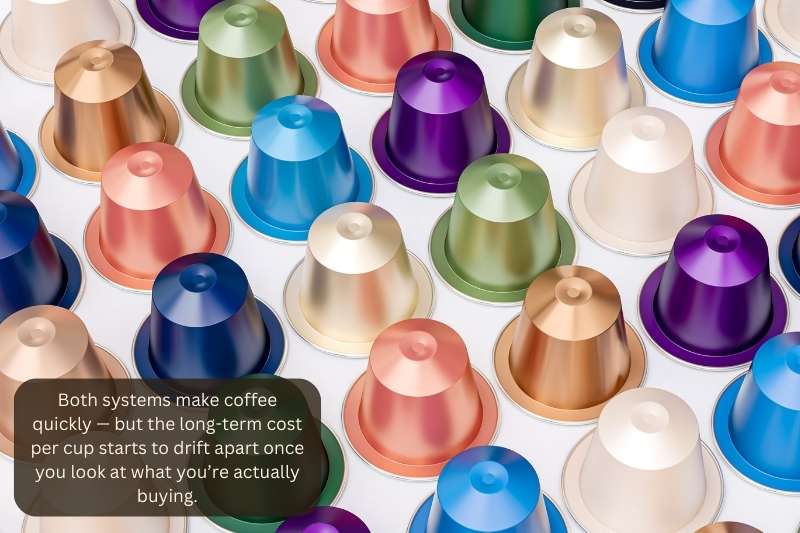
Capsules work differently. Each drink has a fixed cost because the coffee is sealed inside a single pod. Most Nespresso capsules cost between 70 cents and $1.20 per cup, depending on the blend.
That doesn’t sound like much at first. One coffee, maybe two a day. But stretch it across months and the difference starts showing up.
Super Automatic vs Nespresso: Maintenance & Cleaning
Coffee machines don’t stay invisible forever. At some point they ask for a little attention back.
| Super Automatic Machines | Nespresso Machines | |
|---|---|---|
| Daily upkeep | Empty grounds container | Discard used capsules |
| Cleaning tasks | Brew group rinse, milk system cleaning | Basic rinsing |
| Descaling | Required periodically | Required occasionally |
| Automation | Many machines run cleaning cycles | Very little internal cleaning needed |
Super automatic machines have more happening inside them, so maintenance comes with the territory. Grounds collect in a container that eventually fills up. The brew group benefits from a quick rinse every now and then. And if the machine has a milk system, you should keep it clean.
None of this is complicated, but it’s part of the routine. Many machines try to make it easier by running automatic rinse cycles or reminding you when it’s time to descale. The machine keeps track. Sometimes it even nags you a little.
Nespresso machines are simpler. The capsule drops into a used-pod container after brewing, and you empty it when it’s full. Every once in a while, the machine asks for a descaling cycle. But otherwise, there isn’t much internal cleaning to think about.
Machine Price Comparison
The price difference becomes obvious the moment you start browsing machines.
| Machine Type | Example Model | Typical Price (USD) |
|---|---|---|
| Super Automatic | De’Longhi Magnifica Evo | ~$750 – $900 |
| Philips LatteGo 4400 | ~$800 – $900 | |
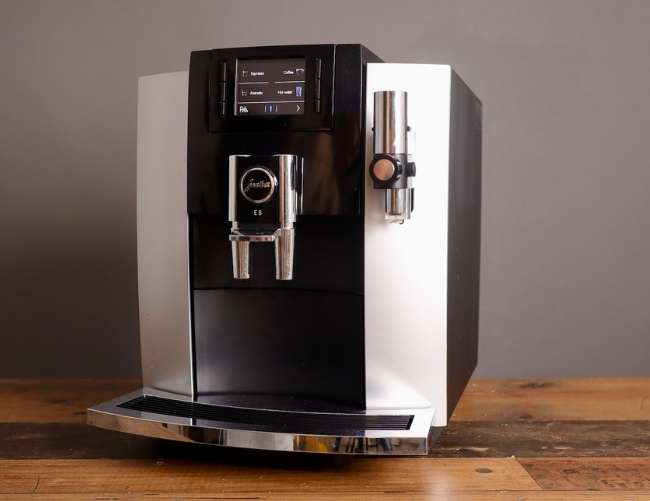
| Jura E8 | ~$2,700 – $2,800 | |
| Nespresso | Nespresso Essenza Mini | ~$70 – $120 |
| Nespresso Vertuo Plus | ~$200 – $270 | |
| Nespresso Gran Lattissima | ~$350 – $400 |
Super-automatic machines fall into a much higher price bracket. Even the more approachable models start somewhere around six or seven hundred dollars.
Then climb quickly as milk systems, better grinders, and additional drink programs get added. Under the shell there’s quite a bit going on: a grinder, a brewing unit, pumps, sensors. So the price reflects that complexity.
Nespresso machines, many entry-level models, cost about the same as a good coffee grinder. The mechanics are simpler. No internal grinder, dosing system, or brew chamber moving.
Last Thoughts: Which Machine Is Better for You?
If your goal is pure convenience, something where you drop in a capsule, press a button, and coffee appears a few seconds later, a Nespresso machine like the VertuoPlus is hard to beat. It’s compact, quick, and the learning curve is basically nonexistent.
If flavor matters more and you prefer using fresh beans rather than capsules, a super automatic such as the De’Longhi Magnifica Evo is the better long-term choice.
The espresso tends to taste fuller, and the machine can handle everything from a quick shot to a cappuccino without much effort once it’s set up. Still have questions? Leave them below.