7 Espresso Tonic Variations and Flavor Ideas
I have always enjoyed tonic water, even though its bitter taste is not for everyone. There is something about that sharp, fizzy taste, especially when the bottle is cold and the glass is full of ice.
Still, I never thought of combining tonic with coffee.
A friend changed that one afternoon when we went to a small coffee shop near the park. He ordered an espresso and a bottle of tonic water separately. I assumed he was going to drink one after the other, which already seemed strange enough. Instead, he asked for a glass with ice, poured in the tonic, then slowly added the espresso over the top.
I remember looking at the glass and thinking, “That cannot possibly taste good.” It did.
The bitterness was there, but it felt cleaner and brighter than a regular iced coffee. The bubbles made the espresso lighter, and the tonic’s citrus notes brought out flavors I had barely noticed before.
The only problem is that the basic version can become repetitive rather quickly. Espresso, tonic, ice. That is where each espresso tonic variation starts becoming more interesting.
Add grapefruit and rosemary, strawberry and basil, or even pineapple and coconut, and the drink moves in a completely different direction.
Basic Espresso Tonic Formula
Let’s start with the basic version before adding fruit, herbs, or anything else.
You need a glass filled with ice, about 5-6 ounces of cold tonic water, and one double shot of espresso. I usually let the espresso sit for a minute before pouring it.
Not long enough for it to go cold, just enough so it does not hit the tonic boiling hot and send foam over the edge of the glass. I have done that before. The counter got most of the drink.

You can also add ½ to 1 ounce of syrup, juice, or another fruit flavor, but the plain version is useful to try first. It gives you a better idea of how bitter your tonic is and whether the espresso works with it.
Ingredients
- Ice
- 5–6 ounces tonic water
- 1 double shot espresso, slightly cooled
- ½–1 ounce syrup, juice, or fruit flavor, optional
- Citrus peel, herbs, fruit, or spices for garnish
Fill the glass with plenty of ice, then pour in the tonic water. Add any syrup or juice before the espresso so you do not need to stir the finished drink too much.
Now pour the espresso slowly over the top. I normally pour it over the back of a spoon, although you do not have to. It helps create that darker layer at the top instead of turning everything brown immediately.
Add the garnish and drink it while the tonic is still lively. A strip of orange peel is enough for the basic version. Sometimes I twist it over the glass and leave it sitting between the ice cubes, where it usually disappears after a few sips.
Best Coffee for Espresso Tonic
The first time I made an espresso tonic with a very dark roast, I thought the tonic water was the problem. I tried another bottle from the fridge, added more ice, and even squeezed in some orange. It was still harsh.
The coffee was simply too smoky for it.
I normally prefer a lighter or medium-roast espresso here, especially one with citrus, berry, or floral notes. The acidity stays clean against the tonic water instead of adding another heavy layer of bitterness. Lavazza Espresso Italiano or illy Classico can be an easy starting point. Even though you can use whatever coffee you already enjoy.
A dark roast can still work, especially in a sweeter variation with strawberry, cherry, or vanilla. For the plain version, I would leave the smoky beans for another drink.
7 Espresso Tonic Variations to Try
one entry point here. Now let’s go through some great summery flavors.
1 – Grapefruit Rosemary Espresso Tonic
Honestly, I am not a huge fan of rosemary. I find it too strong in some drinks, especially when someone drops half a branch into the glass and leaves it there.
But grapefruit can handle it.

The fruit already has that slightly bitter edge, so the rosemary does not feel as though it wandered in from a roast chicken recipe. You still notice the herbal aroma, particularly when the sprig sits near the top of the glass, but the grapefruit keeps it bright.
Ingredients
- Ice
- 5–6 ounces tonic water
- 1 double shot espresso, slightly cooled
- ½–1 ounce grapefruit juice or grapefruit syrup
- 1 small rosemary sprig
- Grapefruit peel
Fill the glass with ice, then add the tonic water and grapefruit juice or syrup. Pour the espresso slowly over the top. I would use a small rosemary sprig at first. You can lightly tap it against your hand before adding it to release some of the aroma, although crushing it too much can make the drink taste woody.
Finish with a piece of grapefruit peel. I sometimes run it around the rim first, mostly because the smell reaches you before the coffee does.
This variation is sharper than the others and does not try to hide the bitterness of the tonic. It is probably the closest one here to a gin-and-tonic-style drink, only with espresso sitting at the top.
2 – Orange Cardamom Espresso Tonic
Orange is probably the easiest place to start with espresso tonic. It already works with coffee, it works with tonic water, and you do not need much before the whole glass smells better.
Cardamom is where I would be careful.

The first time I added it, I used what looked like a small pinch. It was not small enough. The drink tasted fine at first, then the spice sat at the back of my throat and stayed there. Now I use barely any, just enough to catch when I lift the glass.
Ingredients
- Ice
- 5–6 ounces tonic water
- 1 double shot espresso, slightly cooled
- ½–1 ounce orange syrup or orange juice
- A very small pinch of ground cardamom
- Orange peel
Fill the glass with ice, then add the tonic and orange syrup or juice. Stir the cardamom into the espresso before pouring it over the top. I find it mixes better that way instead of floating around in little brown specks.
Finish with orange peel. A wider strip works nicely here because you can twist it over the glass and rub it lightly around the rim.
It still tastes like a citrus espresso tonic, only warmer around the edges.
3 – Yuzu Vanilla Espresso Tonic
I love vanilla, so this is probably one of the versions I would reach for first.
Yuzu is sharper than orange and a little stranger than lemon. The first time I tried it with coffee, I expected the espresso to disappear beneath all that citrus, but it stayed there. The drink just became brighter.
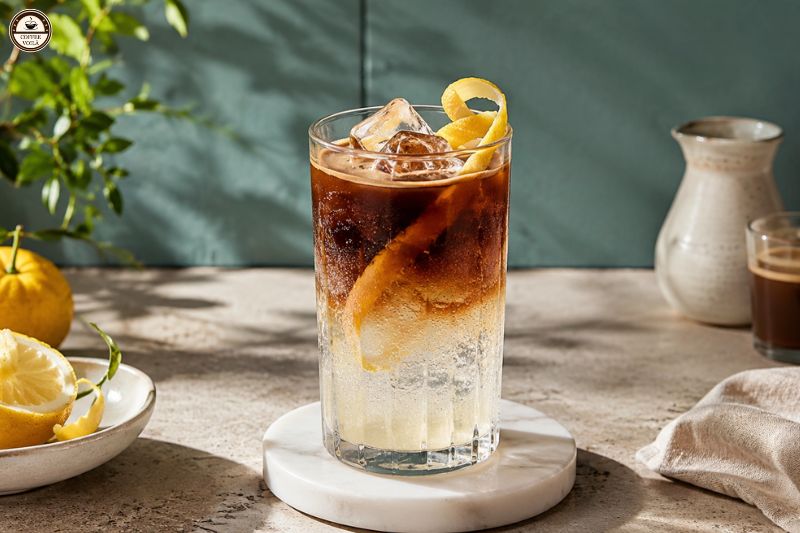
Then the vanilla comes in and smooths the edges. That is the part I enjoy most. You still taste the yuzu, but it no longer feels as sour or aggressive.
Ingredients
- Ice
- 5–6 ounces tonic water or yuzu tonic
- 1 double shot espresso, slightly cooled
- ½ ounce yuzu syrup or a small amount of yuzu juice
- ¼–½ ounce vanilla syrup
- Lemon or yuzu peel
Pour the tonic over the ice first, then add the yuzu and vanilla syrup. Yakami Orchard 100% Pure Japanese Yuzu Juice is a good bottled option here, although you only need a small splash because it is quite tart.
Give everything a brief stir. I once added the vanilla after the espresso, and most of it settled near the bottom beside one stubborn ice cube, so now I add it first.
Pour the espresso slowly over the top and finish with a strip of lemon or yuzu peel.
I would still be careful with the vanilla, even though I am tempted to add more. Too much and the drink starts moving into fizzy dessert-coffee territory. A little keeps the espresso smooth without covering the citrus, which is why I like this version so much.
4 – Strawberry Basil Espresso Tonic
This is the one I would give to someone who looks at espresso tonic and says, “That sounds too bitter.”
Strawberry changes the drink quickly. It adds sweetness, some color, and enough fruit flavor to make the tonic feel less sharp. Basil keeps it from turning into strawberry soda with coffee poured over it.
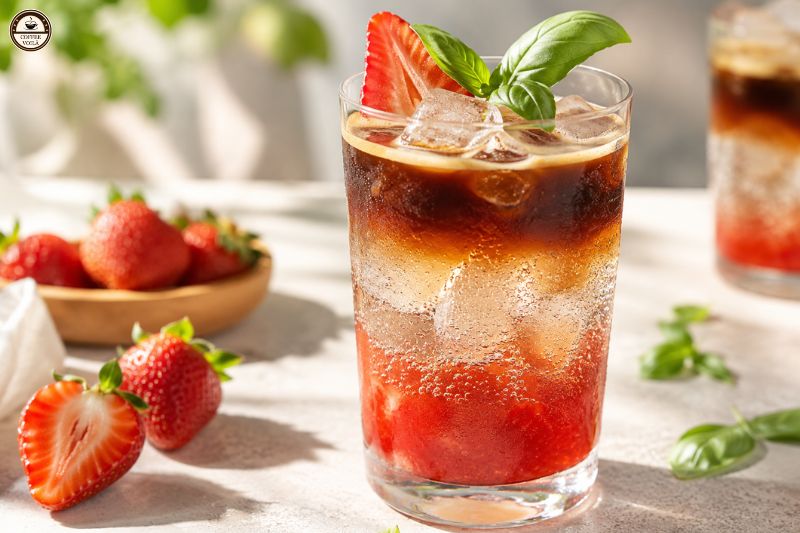
I prefer using syrup here because it mixes easily, although muddled strawberries work too. The seeds tend to float around the glass afterward. I do not mind that, but they somehow end up stuck to the straw.
Ingredients
- Ice
- 5–6 ounces tonic water
- 1 double shot espresso, slightly cooled
- ½–1 ounce strawberry syrup, or 2–3 muddled strawberries
- 2 small basil leaves
- Sliced strawberry
Add the strawberry syrup or muddled fruit to the bottom of the glass, then press one basil leaf gently between your fingers and drop it in. You do not need to crush the basil heavily. It becomes grassy rather quickly.
Pack the glass with ice and pour in the tonic water. Add the espresso slowly, then place the remaining basil leaf and a sliced strawberry near the top.
The strawberry takes some of the bite out of the tonic, but you still taste the espresso underneath. I nearly said this was the safest variation of the group. Orange probably still wins there, though this one is easier for anyone who prefers sweeter iced coffee.
5 – Cucumber Mint Espresso Tonic
Cucumber is a weird one in coffee. I know.
The first time I saw it in an espresso tonic, I thought someone had confused the drink with flavored water. But it can be very refreshing, especially when the weather is hot and the idea of milk in coffee feels like too much.
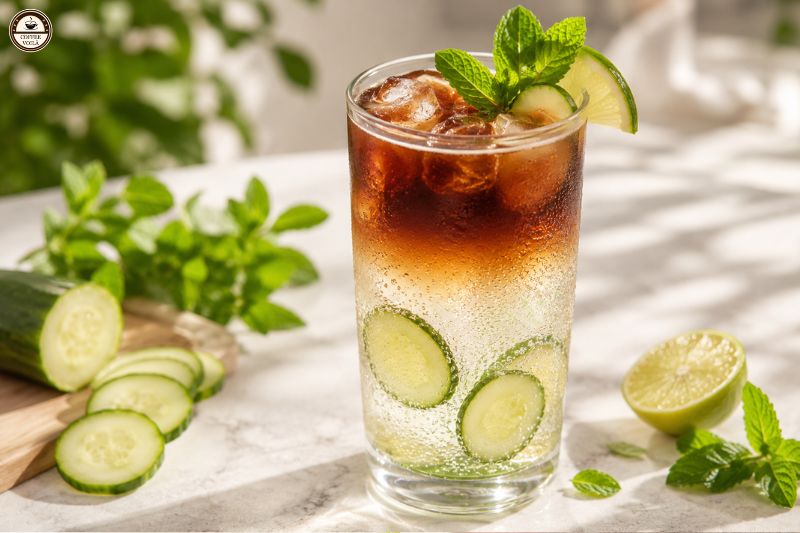
This version works best with a clean espresso and a tonic that is not overly sweet. The cucumber does not add much sweetness anyway. It mostly changes the smell and gives the drink that cool, watery freshness you notice before the espresso reaches you.
Ingredients
- Ice
- 5–6 ounces tonic water
- 1 double shot espresso, slightly cooled
- 3–4 thin cucumber slices
- 2–3 mint leaves
- ¼–½ ounce simple syrup, optional
- Lime wedge
Place two cucumber slices and the mint in the glass, then press them gently with the back of a spoon. I would not muddle them heavily. The mint can become bitter, and the cucumber starts breaking into little pieces that float around the ice.
Add the syrup if you are using it, then the ice and tonic water. Pour the espresso over the top and finish with the remaining cucumber slices and a lime wedge.
This one stays lighter than the fruit versions. It is the kind of drink I would make on one of those afternoons when the kitchen feels warm, the ice tray is nearly empty, and even an iced latte sounds heavy.
6 – Cherry Lime Espresso Tonic
Cherry gives this one more weight than the other fruit versions. Not heavy exactly, but the flavor stays around longer than orange or cucumber.
Then the lime cuts through it.
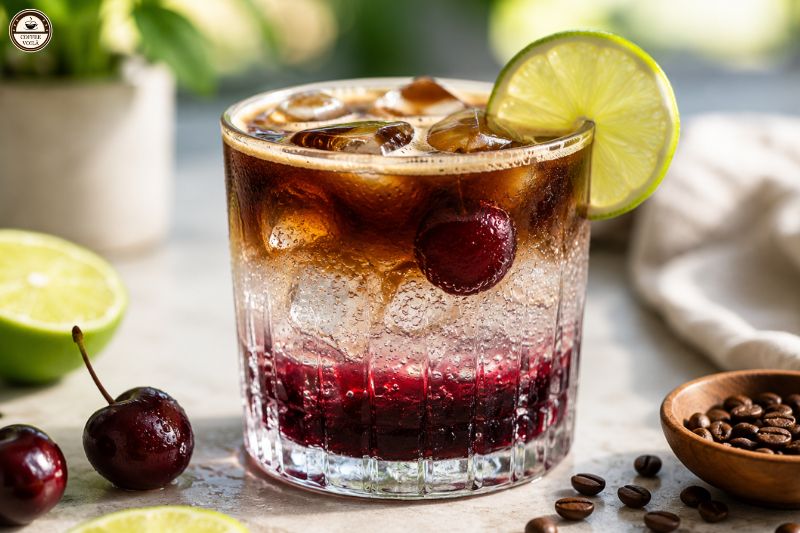
I like tart cherry juice here because it doesn’t make the drink too sweet, though cherry syrup is easier if that is what you have. The color also turns quite dark once the espresso goes in. Mine looked almost purple near the bottom, which was unexpected.
Ingredients
- Ice
- 5–6 ounces tonic water
- 1 double shot espresso, slightly cooled
- ½–1 ounce cherry syrup or tart cherry juice
- A small squeeze of lime juice
- Lime wheel or cherry for garnish
Add the cherry and lime juice to the glass first. Drop in the ice, pour over the tonic water, then taste it before adding the coffee. I sometimes add too much lime without noticing, particularly when the fruit is small and I assume it will not have much juice.
Pour the espresso over the top slowly. Finish with a lime wheel or a cherry, though the cherry usually sinks after a minute and sits at the bottom.
This version has more punch than the citrus drinks. The cherry gives it a deeper fruit flavor, while the lime stops it from drifting too close to cola.
7 – Coconut Pineapple Espresso Tonic
This is probably the strangest one in the group.
But it works better than I expected. The pineapple brings enough acidity to stand beside the tonic, while the coconut softens the whole thing without making it creamy.
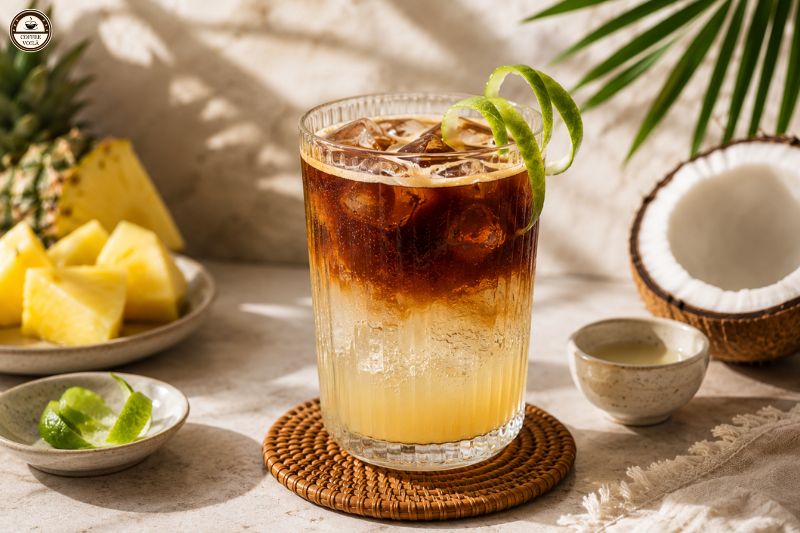
You do need to be careful with the pineapple. I once poured in what looked like a harmless amount, then tasted nothing but juice and a little coffee somewhere behind it.
Ingredients
- Ice
- 5–6 ounces tonic water
- 1 double shot espresso, slightly cooled
- ½ ounce pineapple juice
- ¼–½ ounce coconut syrup or coconut water
- Lime peel
Pour the pineapple juice and coconut syrup into the glass, then add the ice and tonic water. If you are using coconut water instead, you can add a little more, though I would still keep it restrained.
Let the espresso run slowly over the top. The layers look especially good in this one because the pale tropical base sits under the darker coffee, at least until someone stirs it.
Finish with lime peel. I would skip a large pineapple wedge unless you enjoy trying to drink around fruit balanced on the rim.
The espresso gives the drink a darker edge, so it never quite becomes a tropical mocktail. It gets close for a moment, then the coffee pulls it back.
Quick Flavor Guide
If you are still staring at the seven options and wondering which one to make first, this should narrow it down.
| If You Like… | Try This Variation |
|---|---|
| Bitter citrus drinks | Grapefruit Rosemary |
| Warm citrus with a little spice | Orange Cardamom |
| Vanilla and modern café flavors | Yuzu Vanilla |
| Sweeter, fruit-forward coffee | Strawberry Basil |
| Light and cooling drinks | Cucumber Mint |
| Tart flavors with more punch | Cherry Lime |
| Tropical summer drinks | Coconut Pineapple |
Last Thoughts
Have you tried any of these espresso tonics, or do you have your own combination that you keep making every summer?
Maybe you add ginger, use a flavored tonic, or have some strange ingredient that should not work but somehow does. Share it in the comments. I am always curious about the recipes people make when nobody is watching and there is half a bottle of syrup left in the fridge.
Questions? We Have Answers.
Get answers to a list of the most Frequently Asked Questions.