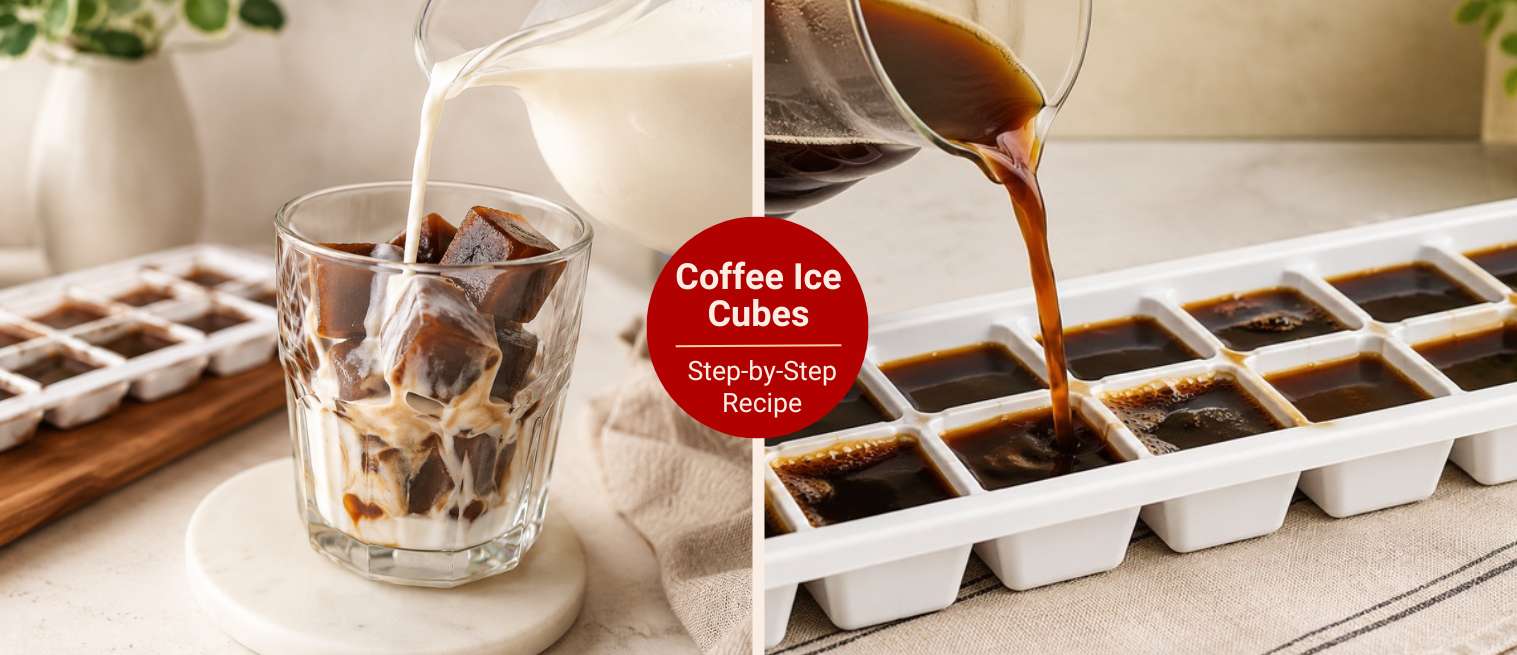
Coffee Ice Cubes: Iced Coffee That Doesn’t Taste Watery
Last updated on July 6th, 2026 at 02:53 pm
Now we are finally in summer. I know some people love it. I’m not one of those people, at least not most days.
The weather gets too hot, you spend half the day sweating, and everywhere you go there are too many people. The beach, the supermarket, the little café where you wanted some quiet coffee. Suddenly everyone has decided to exist outside at the same time.
But iced coffee? That part I love.
Iced lattes, cold brew, protein iced coffee, frozen coffee, whatever version is cold enough to make the day feel less annoying. The problem is that warm weather doesn’t give your drink much time. Regular ice melts fast, and after a few minutes your coffee starts tasting thin, weak, and a little sad.
A few years ago, I started using coffee ice cubes instead. I just froze leftover coffee in an ice cube tray, mostly because I didn’t want to throw it away. Then I added the cubes to iced coffee and realized the drink stayed stronger as it melted. Small trick. Big difference.
What Are Coffee Ice Cubes?
Coffee ice cubes are exactly what they sound like. Instead of filling an ice cube tray with water, you fill it with brewed coffee and freeze it.
You can make them with drip coffee, cold brew, espresso, moka pot coffee, or leftover coffee from the morning. I’ve done the leftover coffee version plenty of times, usually because there’s half a cup sitting there and I don’t feel like throwing it away.
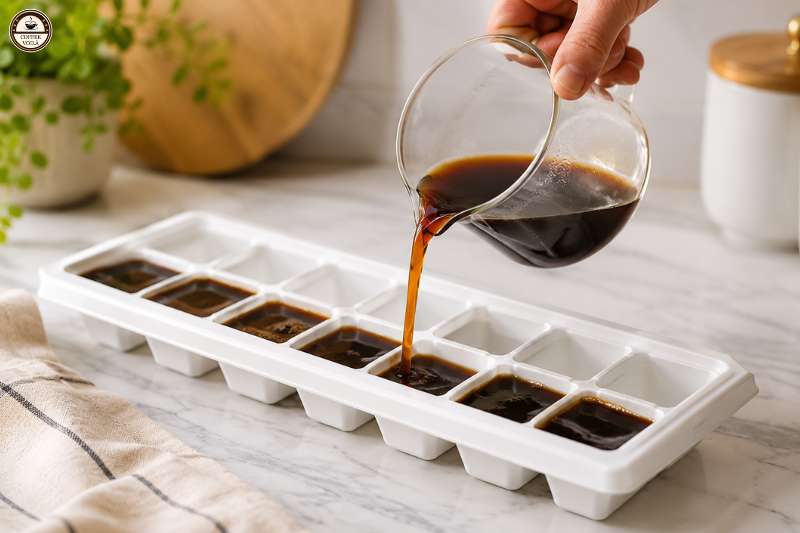
Just don’t freeze coffee that already tastes burnt or stale. The freezer will not make it better. It will just save the disappointment for later.
They work like regular ice, except when they melt, they melt into coffee instead of water. That small difference matters more than it sounds, especially if you sip slowly or get distracted and leave your glass on the counter for ten minutes.
Coffee ice cubes are best for iced coffee, iced lattes, cold brew, protein iced coffee, and milk-based coffee drinks. I prefer them most in drinks where the coffee flavor usually gets weaker as the ice melts.
Why Coffee Ice Cubes Work Better Than Regular Ice
Regular ice does its job at first. It chills the glass, makes the drink look right, and then slowly starts undoing your coffee when you’re not paying attention.
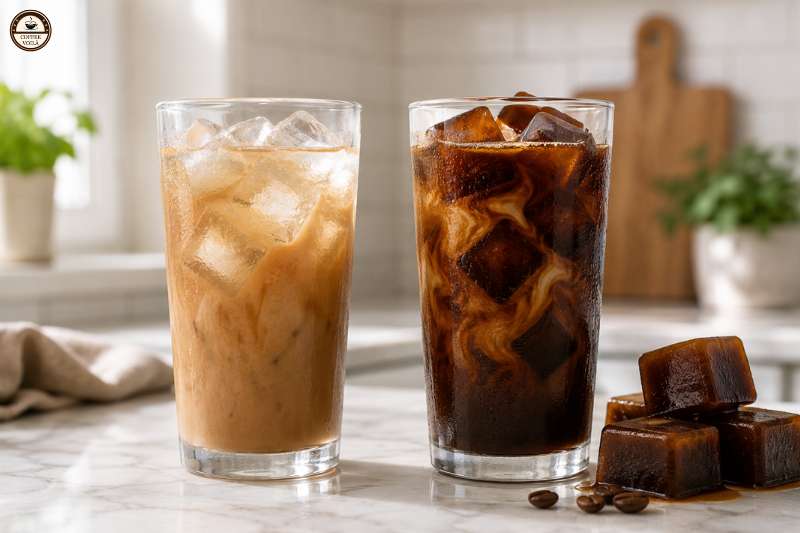
Regular ice waters down iced coffee.
This is the obvious problem. The ice melts, the coffee gets thinner, and after a few minutes the drink tastes boring and watery.
Coffee cubes keep the drink strong as they melt.
Since the cubes are made from coffee, they add more coffee back into the glass instead of plain water. Small difference on paper. Big difference when you’re still sipping twenty minutes later.
They help iced lattes taste more coffee-forward.
Milk can soften coffee fast, especially if you use a lot of it. Coffee cubes keep the drink more intense, so it doesn’t turn into cold milk with a faint coffee flavor.
They are a good way to use leftover coffee.
If there’s half a cup sitting in the pot, I’d rather freeze it than pour it down the sink. As long as it still tastes good, it can become tomorrow’s iced coffee cubes.
They make summer coffee drinks easier to prep.
Once the tray is frozen, you already have part of the drink ready. Toss a few cubes into a glass, add cold brew, milk, or whatever you’re making, and you’re halfway there.

How to Make Coffee Ice Cubes
Equipment
- Coffee maker: drip machine, French press, moka pot, espresso machine, or whatever you normally use.
- Ice Cube Tray: silicone trays are easier to twist, but any clean tray works.
- Measuring cup or small pitcher mostly so you don’t pour coffee everywhere.
- Freezer bag or sealed container useful after the cubes freeze, especially if your freezer smells like frozen onions.
Ingredients
- Freshly brewed coffee or cold brew
- Ice cube tray
- Optional: sweetener, vanilla, cinnamon, cocoa, or a splash of milk
Instructions
- Brew the coffee slightly stronger than usual.
- Let it cool completely before pouring it into the tray.
- Pour the coffee into an ice cube tray.
- Freeze until solid, usually a few hours or overnight.
- Transfer the cubes to a sealed freezer bag or container.
- Use them whenever you make iced coffee, iced lattes, cold brew, or frozen coffee.
Notes
What Coffee Should You Use For This?
Not every coffee is worth freezing. If it already tastes weak, stale, or bitter, freezing it will not make it better.
- Cold brew concentrate — smooth, strong, and probably my favorite option.
- Strong drip coffee — easy everyday choice if that’s what you already make.
- Espresso with a little water — bold, but less intense than freezing straight espresso.
- Moka pot coffee — strong and a little heavier, good for milk drinks.
- Leftover coffee — useful, but only if it still tastes good.
Avoid weak coffee, old coffee, or anything that already tastes burnt before it goes into the tray.
How Long Do Coffee Ice Cubes Last?
Technically, coffee ice cubes can last longer in the freezer. But for the best flavor, I’d use them within 1–2 weeks. After that, they may still be frozen and usable. However, coffee has a way of picking up freezer smells if you leave it sitting around too long. Nobody wants iced coffee with a hint of frozen peas.
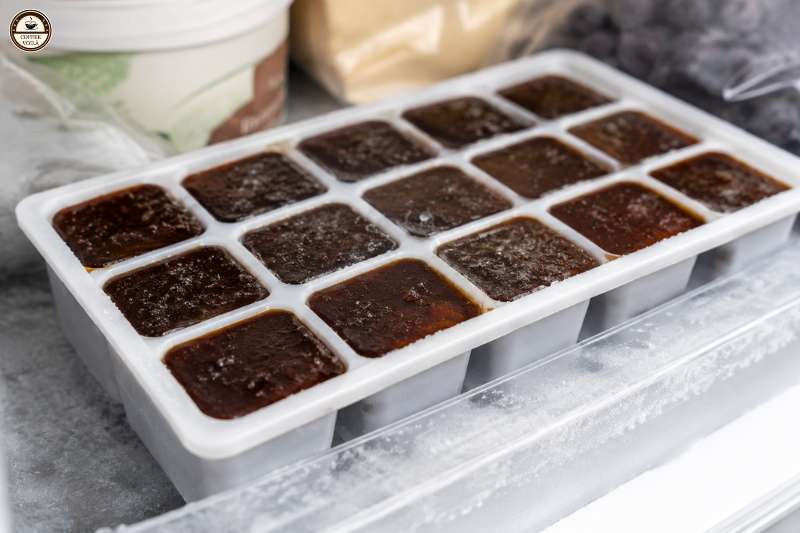
The main thing is storage. Once the cubes are solid, move them from the tray into a sealed freezer bag or a covered container. That keeps them cleaner, makes the tray free again, and stops the cubes from drying out or tasting strange.
Also, keep them away from strong freezer smells, especially onions, fish, and garlic. Coffee is not as neutral as water. It can absorb weird flavors faster than you expect. If you make flavored cubes, label them. A small piece of tape is enough.
Quick Coffee Ice Cube Ratio Guide
I don’t measure coffee cubes every single time. Most days I simply grab a handful and move on with my life. But if you want a starting point, this gives you a decent idea before you start filling the glass like you’re building a small frozen wall. (make a pin here)
| Drink Style | Coffee Ice Cubes | Liquid |
| Light iced coffee | 4–5 cubes | 1 cup chilled coffee |
| Strong iced coffee | 6–8 cubes | ¾ cup chilled coffee or cold brew |
| Iced latte style | 5–7 cubes | ¾ to 1 cup milk or oat milk |
| Cold brew | 4–6 cubes | ¾ cup cold brew |
| Frozen coffee | 1 cup coffee cubes | ½ cup milk or strong coffee |
| Protein iced coffee | 4–6 cubes | Coffee mixed with protein and milk |
Start with fewer cubes if your glass is small. I’ve overfilled a glass, then I was left with barely enough room for the milk.
Last Thoughts
Have you tried making coffee ice cubes at home? Do you keep them plain, or do you add vanilla, cinnamon, cocoa, or something else before freezing? Let me know in the comments below.
And if you know someone who keeps complaining that their iced coffee gets watery after five minutes, share this post with them. They probably need a tray of frozen coffee more than they realize.
Questions? We Have Answers.
Get answers to a list of the most Frequently Asked Questions.