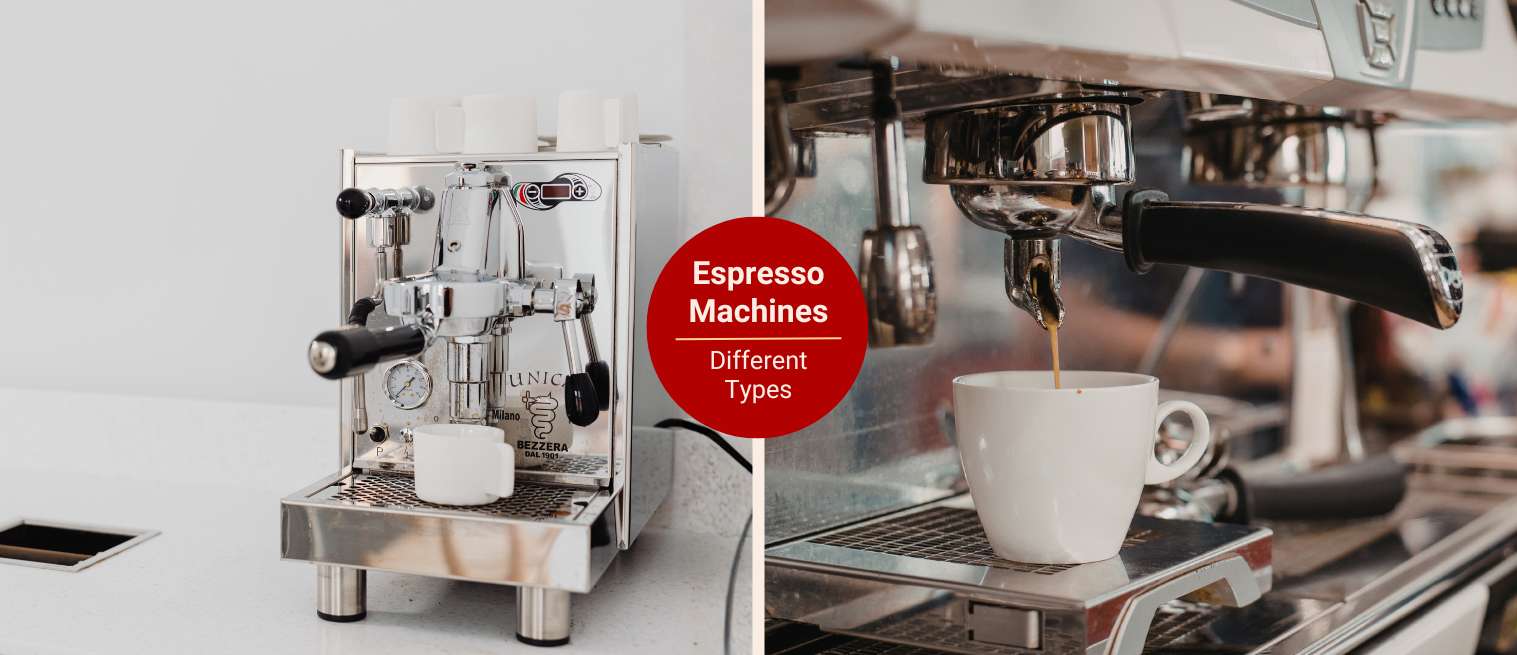
Types of Espresso Machines (Which One Should You Choose?)
Last updated on April 7th, 2026 at 11:57 am
When I first started a few years ago, I thought an espresso machine was just… an espresso machine. You press a button, coffee comes out, that’s it.
Then I started watching a few YouTube videos and suddenly there were manual machines, semi-automatic, super-automatic, commercial, all these categories I didn’t even know existed. I remember pausing one video, rewinding it, thinking I missed something. I hadn’t. It was just more complicated than I expected.
That’s where most people get stuck.
You start looking for a machine and end up comparing things you don’t fully understand. One promises control, another promises convenience, and somehow they all sound right. Until you realize they’re built for completely different people.
Pick the wrong type, and it shows quickly. Coffee that doesn’t taste right. A machine you don’t feel like using. Or something that simply sits there.
This guide breaks down the types of espresso machines in a way that actually makes sense. So you can choose based on how you drink coffee, not what looks good online.
Quick Comparison — Which Espresso Machine Should You Choose?
If you just want the answer without reading everything this is where you start.
| Machine Type | Control | Ease of Use | Typical Price | Best For | Quick Advice |
|---|---|---|---|---|---|
| Manual (Lever) | Very High | Low | $250 – $1,500+ | Enthusiasts, hobbyists | Only worth it if you enjoy the process, not just the result |
| Semi-Automatic | High | Medium | $300 – $1,200 | Home baristas | Best balance — this is where most people should start |
| Automatic | Medium | High | $400 – $1,000 | Beginners | Good if you want consistency without much thinking |
| Super-Automatic | Low | Very High | $600 – $2,500+ | Busy users | Maximum convenience, minimal involvement |
| Capsule (Pod) | Very Low | Extremely High | $100 – $500 | Convenience-first users | Cheap upfront, expensive over time |
| Stovetop (Moka) | Low | Medium | $20 – $100 | Budget users | Not espresso, but close enough for most people |
| Commercial | Very High | Low | $2,000 – $10,000+ | Professionals / serious hobbyists | Only if you really know why you need it |
Hint: Think about your worst mornings and your actual setup (home vs café); if the machine doesn’t fit both, it’s probably not the right one.
Espresso Machines: Why the Type Matters?
You want to find the perfect match for your needs, preferences, and lifestyle. So here’s why understanding the different types of machines is so important.

Depends on Your Budget
If you’re a beginner, a semi-automatic or pod machine might be all you need to start without breaking the bank.
On the other hand, if you’re a coffee enthusiast who loves total control, a manual lever machine could be worth the investment. Once you understand the differences, you can spend your money wisely.
Getting The Best Brewing For You
The type of machine you choose can make or break your brewing experience. For example, super-automatic machines handle everything for you, such as grinding, brewing, and frothing. While manual machines let you fine-tune every step of the process.
Saves Time
Well, not everyone has the patience to spend hours learning how to properly use a machine. So, you should pick the one that aligns with your skill level and your schedule can save you a ton of frustration.
If convenience is your top priority, an automatic or capsule machine can simplify your routine. If you’re up for a challenge and enjoy the process, a manual or semi-automatic machine could be your new favorite gadget.
Key Types of Espresso Machines
When it comes to espresso machines, there’s something out there for every coffee lover. So let’s talk more in detail about each one:
Manual (Lever) Espresso Machines
With a manual machine, you’re the one in charge. You pull the lever to force water through the coffee grounds, meaning every espresso shot is truly your creation. It’s hands-on, requires some patience, and takes a bit of practice to get just right.
| Pros | Cons |
|---|---|
| Full control over the entire brewing process | Steep learning curve (not beginner-friendly) |
| Capable of café-quality espresso with the right technique | Inconsistent results early on without practice |
| No electricity needed (great for simple or portable setups) | Slower workflow, especially for multiple drinks |
| Built to last, fewer electronic parts to fail | |
| Quiet, almost no noise during use |
Popular Examples:
La Pavoni Europiccola: A stunning, vintage-style machine that’s perfect for espresso purists who appreciate design and function.

Flair Espresso Maker: A lightweight, portable option for those who want top-notch espresso without a bulky machine.
Elektra Micro Casa a Leva: Known for its gorgeous, timeless design and reliable performance.
Best For:
If you’re someone who enjoys fine-tuning every detail and doesn’t mind putting in the effort, these machines are incredibly rewarding. Plus, they look amazing on your counter!
Semi-Automatic Espresso Machines
With a semi-automatic machine, you control how long the water flows through the coffee grounds. However, the machine takes care of maintaining the right pressure.
It’s a perfect middle ground for home baristas who want some hands-on involvement but aren’t ready to tackle a manual lever machine.
| Pros | Cons |
|---|---|
| Strong balance between control and ease of use | Takes some practice before results feel consistent |
| Lets you adjust shot timing and extraction to your taste | Not as convenient as fully automatic machines |
| Capable of very good espresso with the right setup | Slightly more expensive than entry-level machines |
| Capable of very good espresso with the right setup | |
| Room to improve skills without jumping into full manual |
Popular Examples:

Breville Barista Express: A popular option with built-in grinder and great for beginners wanting to grow their skills.
Gaggia Classic Pro: A sturdy, no-frills machine that’s beloved for its reliability and consistent espresso.
Rancilio Silvia: A long-time favorite among enthusiasts for its commercial-grade components and excellent performance.
Best For:
I find these machines amazing for home baristas who want to refine their skills and experiment with different brewing techniques.
They strike the right balance of letting you feel like a pro without being overly complicated. If you enjoy a bit of a learning curve and love tweaking your espresso, this type of machine will keep you engaged and caffeinated!
Automatic Espresso Machines
If you’re looking for an espresso machine that’s easy to use and delivers consistent results every time, automatic machines are a solid choice.
These machines do the heavy lifting by automatically stopping the water flow at just the right time. All you have to do is press a button, sit back, and let the machine work its magic. You have no timers and stress. It really can’t get simpler.
| Pros | Cons |
|---|---|
| Consistent shots without needing to manage timing manually | Limited control over extraction and shot adjustments |
| Very easy to use. Minimal learning curve | Limited control over extraction and shot adjustments |
| Faster workflow for daily coffee routines | |
| Reduces mistakes like over- or under-pulling shots | |
| Good entry point if you’re new to espresso |
Popular Example:
De’Longhi Magnifica S: A beginner-friendly machine that’s reliable and easy to use. It gives you café-quality espresso without all the complicated settings, making it great for hassle-free mornings.

Best For:
If you’re new to espresso or just want a machine that keeps things simple, this is the perfect fit. All you need is to press a button, grab your cup, and enjoy!
Super-Automatic Espresso Machines
These machines do it all at the touch of a button! With a super-automatic machine, you don’t have to lift a finger beyond selecting your drink.
The machine handles every step of the process, from grinding the beans to pouring your perfectly brewed espresso. It’s basically your personal barista at home.
| Pros | Cons |
|---|---|
| Fully automated from grinding to brewing and milk | Expensive compared to other machine types |
| Consistent drinks with almost no effort | Limited control over finer espresso adjustments |
| Fast workflow, ideal for busy mornings | It can be more difficult to clean |
| Built-in milk systems for cappuccinos and lattes | |
| Great for households where multiple people use the machine |
Popular Examples:
Jura E8: Known for its sleek design and ability to easily create great espresso and milk-based drinks.

Philips 3200 Series: A budget-friendly super-automatic option that still delivers on quality and convenience.
Breville Oracle Touch: Combines automation with some customization features, perfect for those who want a bit more control.
Best For:
If you love the idea of pressing a button and getting a delicious espresso, latte, or cappuccino without any extra steps, this is the machine for you. It’s ideal for anyone who values convenience and consistency above all else!
Capsule (Pod) Espresso Machines
These machines use pre-packaged pods or capsules filled with coffee grounds. You pop one in, press a button, and within seconds, you’ve got a fresh shot of espresso. It’s as simple as it sounds, which is why they’re so popular.
| Pros | Cons |
|---|---|
| Quick and easy to use | Pods can be expensive |
| Minimal cleanup | Limited grind customization |
| Wide variety of flavors available | Environmental concerns with single-use pods |
Popular Example:
Nespresso VertuoPlus: A sleek, user-friendly machine that brews a range of coffee styles, from espresso to larger cups, with the same ease.

Best For:
If you’re someone who wants a good cup of coffee fast and doesn’t want to deal with grinding or cleanup, this is the way to go. Plus, the variety of capsule options means you can switch up flavors and roasts with zero effort!
Stovetop Espresso Makers (Moka Pots)
Stovetop espresso makers or Moka pots brew rich, espresso-like coffee using steam pressure generated on your stovetop.
The water in the bottom chamber heats up, creating steam that pushes through the coffee grounds and into the top chamber. It’s a simple and classic way to make strong coffee without an expensive machine.
| Pros | Cons |
|---|---|
| Very affordable. One of the cheapest ways to get strong coffee | Doesn’t produce true espresso (lower pressure extraction) |
| Compact and easy to store or travel with | Easy to overheat and end up with bitter, burnt coffee |
| No electricity needed. Works anywhere with a stovetop | |
| Durable, simple design that lasts for years | |
| Produces a rich, strong cup that’s closer to espresso than regular coffee |
Popular Examples:
Bialetti Moka Express: The iconic Moka pot is known for its timeless design and reliable performance.

Primula Stovetop Espresso Maker: A budget-friendly option that’s durable and easy to use, great for beginners.
Best For:
I suggest this option for anyone on a budget or who travels frequently and wants espresso-like coffee on the go. If you love a strong cup of coffee and enjoy the ritual of brewing, this old-school method is perfect. Plus, they’re small enough to fit in your bag for camping or road trip
Commercial Espresso Machines
Commercial machines are designed for heavy-duty use, brewing multiple shots back-to-back without breaking a sweat. Often, they come with multiple group heads, large boilers, and tons of customization options, so you can fine-tune every cup to perfection.
| Pros | Cons |
|---|---|
| Built for high-volume use without slowing down | Expensive and often unnecessary for home use |
| Delivers consistent, café-level espresso shot after shot | Requires space, setup, and some experience to use properly |
| Powerful steam and temperature stability | |
| Wide control over brewing variables | |
| Designed to handle years of heavy daily use |
Popular Example:
La Marzocco Linea Mini: A scaled-down version of a café machine, it’s perfect for serious coffee lovers who want professional-grade quality at home.

Best For:
I suggest these machines for coffee shop owners or die-hard coffee fans who are serious about their espresso game. If you’re all about crafting the perfect cup and don’t mind the price tag (or the counter space it takes up), this machine will make your coffee dreams come true!
Key Factors to Consider When Choosing an Espresso Machine
So are you still struggling to pick the right one? Well, here’s a quick breakdown to help you:
| Factor | What to Consider |
|---|---|
| Skill Level | Are you a beginner or a pro? Manual machines require more expertise, while automatics are great for starting out. |
| Budget | Espresso machines range from affordable to high-end. Decide how much you’re willing to invest based on features you actually need. |
| Space Requirements | Got limited counter space? Compact machines or pod systems are better for small kitchens, while bigger setups need more room. |
| Customization Needs | Do you want total control over your coffee (grind size, brew time, temperature), or are you happy with a simpler setup? |
Final Note:
At the end of the day, the best espresso machine is the one that fits your needs and makes you excited to brew coffee. Think about how involved you want to be in the process, how much space you have, and how much you’re willing to spend.
Last Thoughts
Most people don’t need a commercial machine. For home use, a semi-automatic or super-automatic usually makes more sense.
But where do you actually fall: do you want control, or just consistency? Are you okay learning a bit, or do you want something that works every morning? And more importantly, will you still use it a month from now? If you’re stuck between two options, drop it in the comments.
Questions? We Have Answers.
Get answers to a list of the most Frequently Asked Questions.