Why Coffee Syrup Crystallizes (And How to Prevent It)
One of the coffee syrups I like making at home is brown sugar syrup. I use it in coffee, but also in cocktails. Now that summer is getting close, drinks like mojitos, caipirinhas, iced lattes, and whatever else ends up in the glass start sounding a lot better.
Brown sugar syrup has more flavor than plain white sugar syrup. It tastes deeper, a little warmer, almost caramel-like without needing to make actual caramel. I love that. And I don’t, because the first few times I made it, I kept running into the same annoying problem.
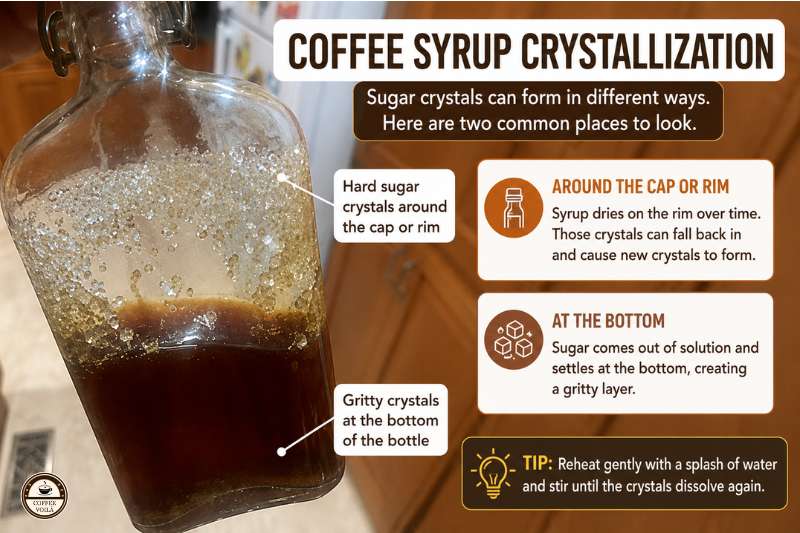
After a few weeks, the syrup would start turning gritty at the bottom. Sometimes I’d see little crystals around the cap. The bottle still smelled fine, but the texture was off, and nobody wants crunchy syrup in an iced coffee. Or in a cocktail, honestly. That feels worse.
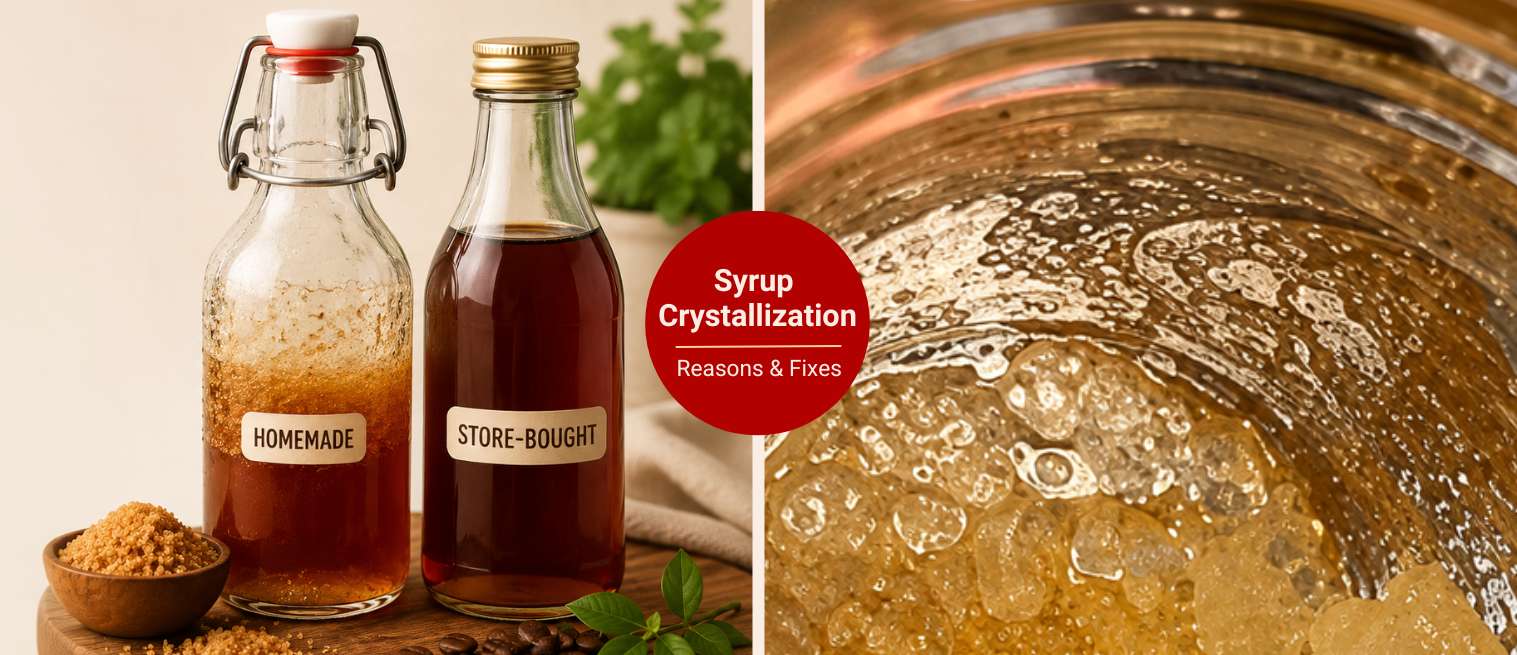
Coffee Syrup Crystallizes when sugar stops staying dissolved and starts forming crystals again. It can happen with homemade syrup, and sometimes even store-bought bottles do it around the rim.
The good news is that most of the time, it’s preventable. You just need to know what caused it before blaming the syrup like it personally betrayed you.
Quick Troubleshooting
If you just want the fast version, start here. This table gives you a quick idea of why your coffee syrup turned grainy, what probably caused it, and what to try first. For more detail, keep reading below.
| What You Notice | Most Likely Issue | Try This First |
| Crystals at the bottom of the bottle | Syrup is too concentrated or the sugar was not fully dissolved | Reheat gently with a small splash of water |
| Hard crystals around the cap | Dried syrup has built up around the rim | Clean the cap and wipe the bottle rim after using |
| Syrup turned cloudy or grainy | The syrup cooled strangely, got too thick, or has settled ingredients | Warm gently and strain if needed |
| Crystals appeared after refrigeration | The syrup may be too thick for cold storage | Reheat once, then use a 1:1 ratio next time |
| Brown sugar syrup feels gritty | Brown sugar was not fully dissolved | Heat slower and stir until the syrup looks smooth |
| Store-bought syrup has crystals near the opening | Syrup dried around the cap or bottle neck | Clean the rim and store it as the label says |
| Sugar-free syrup crystallized | The sweetener may be recrystallizing | Use a recipe made for that specific sweetener |
| Syrup smells sour, fizzes, or has mold | Possible spoilage | Throw it away |
If the syrup smells normal and you only see sugar crystals, it is usually a texture problem. If you see mold, fizzing, or smell something sour, don’t try to rescue it.
What Coffee Syrup Crystallization Looks Like
I usually make brown sugar coffee syrup at home, and after a few weeks I sometimes notice sugar crystals collecting at the bottom of the bottle. Not the biggest problem in the world.
But when you’re half-awake trying to make iced coffee and the syrup pours out gritty, it gets annoying.
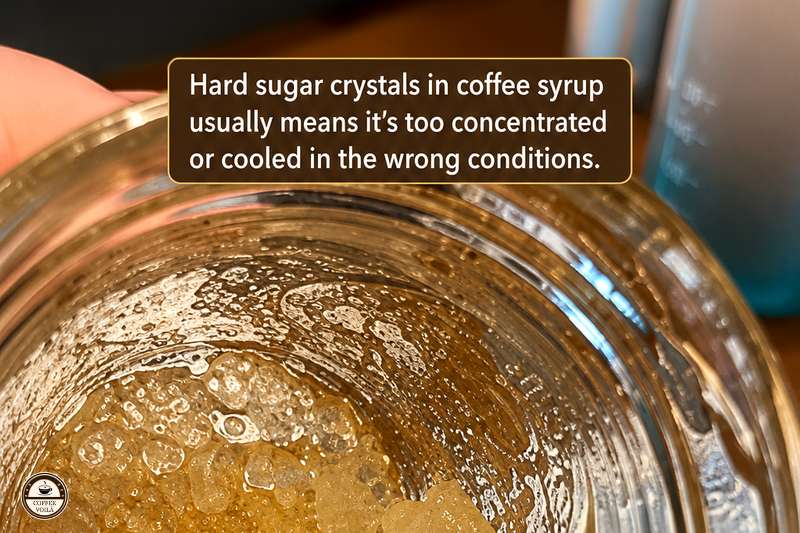
Crystallization can show up in a few different ways. Some are obvious. Others are easy to miss until you stir the syrup into a drink and suddenly feel little sugar grains at the bottom of the glass.
| What You See | What It Usually Looks Like |
| Gritty sugar at the bottom | A sandy layer sitting under the syrup |
| Hard crystals around the cap or rim | Crunchy dried syrup near the bottle opening |
| Cloudy syrup | Syrup that used to look clear but now looks hazy |
| Crunchy texture in iced coffee | Little sugar grains that do not dissolve smoothly |
| Thick syrup turning grainy | The syrup looks rough instead of glossy |
| Crystals forming faster in the fridge | Syrup looks fine at first, then gets grainy after chilling |
Before throwing the bottle away, look at what kind of change you’re dealing with. Sugar crystals are usually a texture problem. Mold, fizzing, or a sour smell is different. That’s when I wouldn’t try to be clever with it.
Why Coffee Syrup Turns Grainy and How to Fix It
Coffee syrup crystallizes when sugar stops dissolving and starts forming crystals again. That sounds a bit science-class, I know, but in real life it usually means one thing: the syrup became unstable.
Homemade syrup is more likely to do this because you’re working with sugar, water, heat, cooling, bottles, spoons, and, by the end, probably a slightly sticky counter. Small things matter more than you’d think.
1 – The Syrup Is Too Concentrated or Boiled Too Long
If there is too much sugar and not enough water, the sugar has a harder time staying dissolved. A rich syrup, like a 2:1 sugar-to-water syrup, is thicker and stronger, but less forgiving.
This can also happen by accident. You may start with a normal syrup, let it boil for too long, and lose more water than planned. The syrup may look fine while it’s hot, then turn cloudy or grainy once it cools. Annoying little trick.
How to prevent it: start with a 1:1 ratio if you’re new to making coffee syrup. One cup of sugar and one cup of water. Use medium-low heat, stir until the sugar dissolves, then remove it from the stove once the flavor has infused. Coffee syrup usually doesn’t need a dramatic rolling boil.
2 – The Sugar Wasn’t Fully Dissolved
If some sugar grains are left behind, they can act like little starter crystals. Once one crystal forms, more sugar can attach to it, and slowly the syrup turns gritty.
This happens a lot with homemade syrup. Brown sugar syrup is especially sneaky because it can look dissolved before it really is. You look at the pan, think “good enough,” and then a week later the bottle has a sandy layer at the bottom.
How to prevent it: heat the syrup gently and stir until the sugar is fully dissolved. With white sugar, the syrup should look clear. With brown sugar, look for a smooth texture with no grainy layer at the bottom of the pan.
3 – Sugar Crystals Got Back Into the Syrup
Sometimes the syrup starts out fine, but crystals get introduced later.
This can happen if sugar sticks to the side of the pan and falls back in. It can also happen when dried syrup around the bottle rim becomes crusty and drops into the bottle. Even a spoon with sugar on it can restart the problem.
How to prevent it: avoid splashing syrup up the sides of the pan while stirring. If sugar does stick there, you can wipe it down with a wet pastry brush. Also, use a clean bottle and wipe the rim before closing it.
4 – Cooling or Cold Storage Changed the Texture
Syrup can crystallize as it cools, especially if it cools too fast or gets disturbed too much. Pouring very hot syrup straight into a cold bottle does not help either.
The fridge can also make this more noticeable. Cold temperatures can make sugar less willing to stay dissolved, so thicker homemade syrups may turn grainy faster after refrigeration.
How to prevent it: Let the syrup cool naturally before bottling. For homemade syrup, I’d still store it in the fridge for freshness, unless you’re following a tested shelf-stable recipe. If crystals show up later, reheat the syrup gently with a small splash of water.
5 – Some Ingredients Make Crystals More Likely
Not all coffee syrups behave the same. Brown sugar, demerara sugar, turbinado sugar, caramel, cocoa powder, and some spices can make the syrup thicker or less smooth. Sugar-free syrups can be tricky too, especially if the sweetener is prone to recrystallizing.
That does not mean you should avoid them. Brown sugar syrup is still one of my favorites. It just needs a little more patience.
How to prevent it: dissolve everything fully, strain the syrup if needed, and avoid overheating. If your syrup keeps crystallizing, you can add a small helper like corn syrup, glucose syrup, or a tiny amount of lemon juice or citric acid. Start small, though. You want smoother syrup, not lemon coffee by accident.
6 – Store-Bought Syrup Has Dried Around the Cap
Store-bought coffee syrup can crystallize too. With bottles from brands like Torani, Monin, or similar syrups, the problem often starts around the cap or rim.
A little syrup drips, dries, and turns crusty. Then those dried sugar crystals can fall back into the bottle or make the opening feel gritty. Sometimes the syrup itself is fine, but the cap makes it look worse than it is.
Old bottles, loose caps, cold storage, or leaving syrup exposed to air can also make crystals more likely. This is more common if the syrup has natural ingredients, a high sugar concentration, or has been sitting around for a long time.
How to prevent it: wipe the rim after using the syrup, close the cap tightly, and store it the way the label recommends. If only the cap is crusty, clean the cap and check the syrup itself. But if it smells sour, looks moldy, fizzes, or tastes strange, throw it away.
Homemade vs Store-Bought Coffee Syrup
Homemade coffee syrup usually crystallizes faster because it is simpler. It has no special stabilizers or a factory-controlled cooking process. Just you at the stove, probably stirring it while also checking if your coffee is getting cold.
Store-bought syrups from brands like Torani, Monin, and others are usually made to stay smooth longer. They may use different types of sugars, acids, preservatives, or stabilizers to keep the texture more consistent.
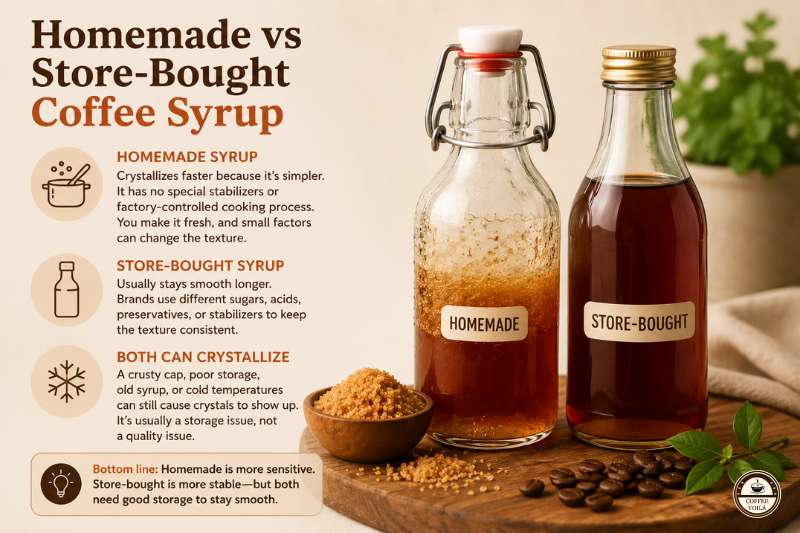
That does not mean they can never crystallize, though. A crusty cap, poor storage, old syrup, or cold temperatures can still cause crystals to show up.
| Syrup Type | Why It Crystallizes | How Common It Is | Best Prevention |
| Homemade 1:1 syrup | Sugar was not fully dissolved, bottle was not clean, or fridge storage changed the texture | Moderate | Dissolve the sugar fully and use a clean bottle |
| Homemade 2:1 syrup | Too much sugar, water loss from boiling, or cold storage | Higher | Avoid overboiling and consider a small stabilizer |
| Brown sugar syrup | Molasses and minerals can make the texture thicker and less smooth | Moderate | Heat gently, dissolve fully, and strain if needed |
| Caramel syrup | Overcooking or concentration changes can make it unstable | Moderate to high | Control the heat and avoid cooking it too far |
| Store-bought syrup | Old bottle, dried syrup around the rim, air exposure, or poor storage | Lower | Keep the cap clean and store as directed |
| Sugar-free syrup | Some sweeteners can recrystallize more easily than sugar | Higher with some sweeteners | Follow a recipe made for that specific sweetener |
Tip: Clean bottles, proper ratios, gentle heat, and good storage go a long way. Most crystallization issues are easy to prevent with a few small habits.
Coffee Syrup Ingredients That Can Turn Grainy Faster
Some coffee syrup ingredients are more likely to cause problems than others. Not always full crystallization, to be fair. Sometimes the syrup turns cloudy, gritty, separated, or a little rough-looking.
But when you’re pouring it into coffee, the result feels the same: not smooth. Here are the ingredients I’d watch more carefully.
| Ingredient | What Can Happen | Best Tip |
| Very concentrated white sugar syrup | Sugar can fall out of solution and form crystals | Use a 1:1 ratio or avoid boiling it too long |
| Brown sugar | Can turn gritty if the sugar is not fully dissolved | Heat slowly and stir until the syrup looks smooth |
| Demerara or turbinado sugar | Larger crystals can be harder to dissolve fully | Use gentle heat and strain if needed |
| Caramelized sugar | Can become unstable if cooked too far or reduced too much | Control the heat and don’t let it get too thick |
| Cocoa powder | May clump or settle, making the syrup seem grainy | Whisk well and strain before bottling |
| Spices like cinnamon or ginger | Can leave sediment or make the syrup cloudy | Use whole spices when possible, then strain |
| Sugar-free sweeteners | Some sweeteners, especially erythritol, can recrystallize | Follow a recipe made for that specific sweetener |
Ingredients like corn syrup, glucose syrup, invert sugar, or a tiny amount of acid can help reduce crystallization by disrupting the way regular sugar crystals form. But I wouldn’t overcomplicate it at first.
Most homemade coffee syrups behave better when the sugar is fully dissolved, the syrup is not boiled to death, and the bottle is clean. Boring advice. Usually the kind that works.
Final Thoughts
Has your coffee syrup ever turned grainy at the bottom, or started forming crystals around the cap?
And if it happened, was it homemade syrup or a store-bought bottle that had been sitting around for a while?
Try one or two of the fixes above next time, especially using a clean bottle and not boiling the syrup too long. Then share what happened. I’d be curious to know if your syrup stayed smooth, or if sugar decided to be annoying anyway.
Questions? We Have Answers.
Get answers to a list of the most Frequently Asked Questions.