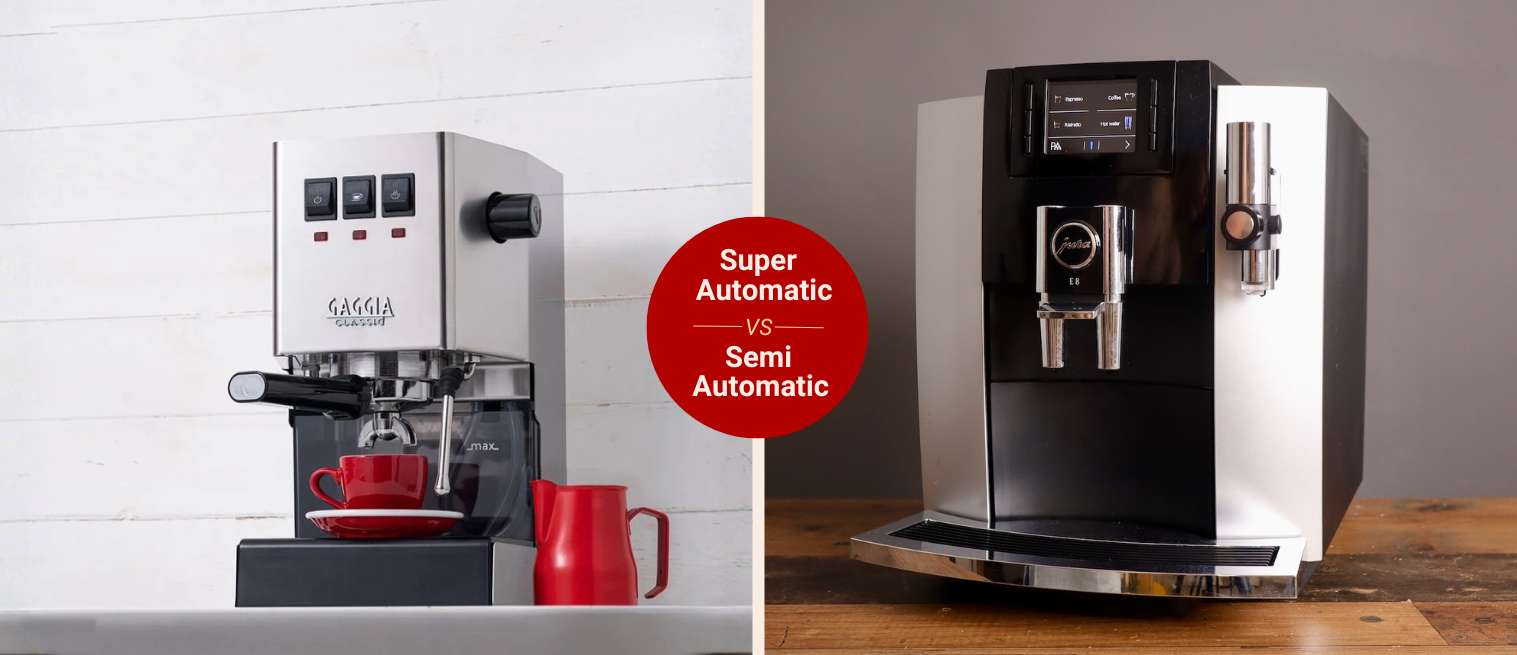
Super Automatic vs Semi-Automatic Espresso Machines: Which Is Better?
Last updated on March 11th, 2026 at 11:52 am
I remember when I first started getting serious about making better coffee at home. I was ready to buy an espresso machine. Felt confident. Then I stumbled into the whole super automatic vs semi-automatic espresso machine debate… and suddenly I wasn’t confident at all.
People were arguing about control, convenience, craft, and brewing as if I were choosing a lifestyle rather than something that sits on a counter. One side made push-button coffee sound lazy.
The other made manual espresso feel like a badge of honor. Meanwhile, I was trying to figure out what would work on a Tuesday morning.
That’s the frustrating part. The terminology is confusing, and the opinions are loud. One machine promises one-touch drinks with almost no effort.
The other promises deeper control and better potential if you’re willing to learn. So I went deep on both and here’s what actually matters.
Super Auto vs Semi-Auto: Quick Comparison
If you’re the kind of person who scrolls first and commits later, here’s the bird’s-eye view before we start arguing with ourselves.
| Category | Super Automatic | Semi-Automatic |
|---|---|---|
| Ease of Use | Push a button, wait | Grind, dose, tamp, pull manually |
| Taste Potential | Consistent, very good | Higher ceiling, more variability |
| Learning Curve | Low | Real, but manageable |
| Milk Frothing | Automatic system | Manual steam wand |
| Customization | Limited adjustments | Full control over variables |
| Upfront Cost | Higher, all-in-one | Wide range + separate grinder |
| Maintenance | Internal systems, more sensitive | More visible, hands-on cleaning |
| Longevity | Complex internals | Simpler mechanics |
The table makes it look simple, but it’s not. “Push a button” is easy but it doesn’t capture the small satisfaction of locking in a portafilter.
And “higher ceiling” doesn’t mention the sour shots when you miss the grind by a notch. Super automatics fade into the background. Semi-autos don’t. The chart helps. It just doesn’t choose for you.
What Is a Super Automatic Espresso Machine?
The first time I put one on my counter, I kept bracing myself for the complicated part. There’s usually a complicated part with espresso. A learning curve. But… nothing happened.
You pour whole beans into the hopper and that’s it. No pre-ground coffee or measuring scoops scattered around. The machine takes over from there. It grinds, doses, tamps somewhere inside this little sealed you barely see. Then it runs the shot the way it thinks it should be run.
Milk drinks feel even stranger the first time. There’s usually a tube or a small container clipped to the side, and when you press “latte” or “cappuccino,” it handles it. Espresso first, then milk.
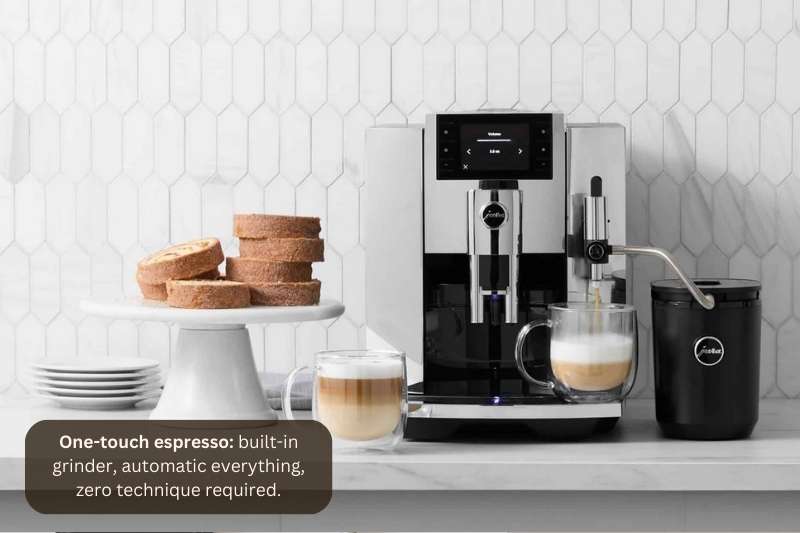
And the transition is smooth. I remember standing there watching it switch from coffee to foam and thinking, this is either genius or slightly ridiculous. Maybe both.
Everything important is happening inside: the grinder, the brew unit, and the heating system. You’re not tamping. You’re not squinting at a shot timer trying to decide if 27 seconds is better than 30.
These machines are built for mornings when your brain isn’t fully online. The kind where you’re replying to emails you barely remember receiving, hoping caffeine fixes something. Convenience isn’t glamorous, but it’s powerful.
They also make sense in shared kitchens. One person wants a long coffee. Someone else wants a cappuccino heavy on milk. Nobody wants a debate about grind settings early morning. You press a button and it works. End of discussion.
I’ve had friends tell me they don’t “deserve” a machine like this because they’re not serious about coffee. That logic never made sense to me. You don’t need to treat espresso as a competitive sport to enjoy it.
Some people love dialing in everything. Others want something solid in their cup without a ritual attached to it. And honestly, that’s enough.
What Is a Semi-Automatic Espresso Machine?
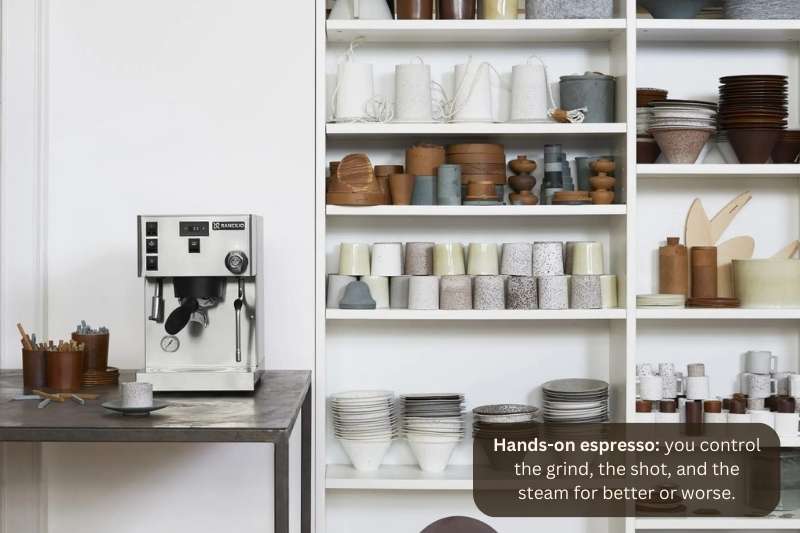
With a semi-automatic, you dose the coffee into the portafilter yourself. You tamp it down, not too hard. I used to lean into it like I was sealing a letter with wax. Completely unnecessary. Still did it.
Then there’s extraction. You start the shot and decide when to stop it. No pre-programmed timing unless you count your own nervous internal clock.
The first few weeks I hovered over the cup as something might explode. Watching the stream, is it too fast? Too slow? I once stopped a shot at 19 seconds because I panicked. It tasted sour, not good.
Milk is its own story.
Instead of an automatic frothing system, you get a steam wand. Which sounds romantic at first, until I found myself holding a metal pitcher at an awkward angle and burning my hand more than once. Some mornings I nailed it (silky, glossy microfoam). Other mornings, not so much.
A semi-automatic espresso machine gives you control. With grind size, dose, extraction time, and milk texture. You can adjust everything.
It’s slower and demands attention. You can’t just press a button and walk away. But if you enjoy the process of weighing, tamping, and making small adjustments that slowly improve your shots, you really taste the difference when you get it right. And you definitely taste it when you don’t.
I’d suggest it for people who actually want to experiment. Who don’t mind standing there in the morning, half awake, doing something with their hands before the day starts pulling at them.
Want better espresso at home? A reliable machine makes all the difference.
8 Best Super Auto Espresso Machines (2026)
Want café-quality espresso at the push of a button? We break down the top super automatic machines — comparing espresso taste, milk systems, ease of use, and long-term value.
Super Auto vs Semi-Auto: Taste & Espresso Quality
When people ask which one actually tastes better, they usually want a clean winner. I used to try to give one. Now I hesitate a bit, take a sip, and admit it depends more on the person than the machine. Here’s how the taste compares when you put them side by side:
| Taste Factor | Super Automatic | Semi-Automatic |
|---|---|---|
| Flavor Depth | Good, balanced, sometimes slightly muted | Can be deeper and more expressive if dialed in properly |
| Crema Quality | Consistent, thick but uniform | Can be richer and more textured, but varies shot to shot |
| Body & Mouthfeel | Reliable, medium-bodied | Potentially heavier or silkier depending on grind and dose |
| Acidity Control | Limited adjustment | Full control — can soften or highlight acidity |
| Consistency | Very high — same result daily | Depends entirely on user skill |
| Bad Shot Risk | Low | Higher (especially early on) |
With a super automatic, you get dependable flavor. It might not blow your mind, but it rarely disappoints. I’ve had weeks where every morning shot tasted almost identical.
Now semi-automatic is different. It can absolutely taste better. I’ve pulled shots that felt syrupy and layered, where you can notice sweetness developing as it cools. But I’ve also pulled shots that tasted like sour citrus water because I misjudged grind size by one notch. That’s the tradeoff.
Super Auto vs Semi-Auto: Cost Comparison
Money tends to sneak into the conversation sooner or later, even if we pretend we’re just talking about flavor. So, here’s side by side comparison, with real machines people buy:
| Cost Factor | Super Automatic | Semi-Automatic |
|---|---|---|
| Entry Price | Around the price of a solid laptop | Lower to start… but that’s not the whole story |
| Popular Examples | Jura E8, De’Longhi Dinamica, Philips 3200 | Breville Barista Pro, Gaggia Classic Pro (+ grinder), Rancilio Silvia (+ grinder) |
| Grinder Included? | Yes, built in | Usually separate (unless it’s a combo model) |
| Upfront Simplicity | One purchase, done | Often two purchases, sometimes three |
| Upgrade Potential | Limited | Endless — for better or worse |
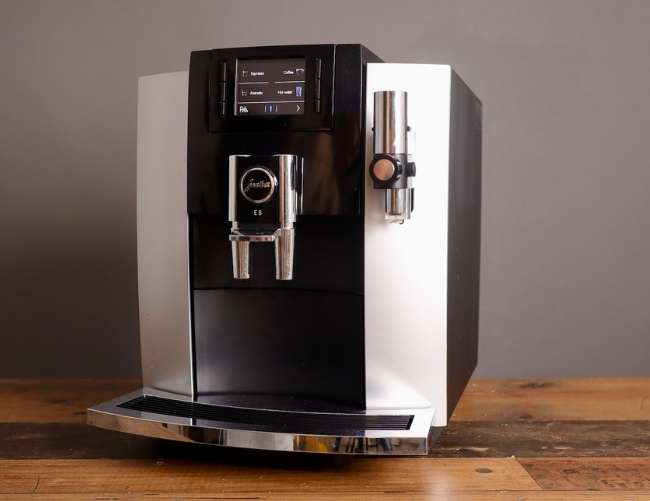
A super automatic like a Jura E8 or De’Longhi Dinamica sits in that higher upfront range. It feels expensive when you click “buy.” But you’re getting the grinder, brew system, milk system everything sealed into one machine.
Meanwhile, semi-automatic looks cheaper at first glance. A Gaggia Classic Pro or Rancilio Silvia seems reasonable on its own. But then you remember you need a decent grinder.
Not a $40 blade grinder. A real burr grinder. Suddenly, you’re adding another few hundred, maybe more if you get ambitious.
And that’s where it gets slippery.
Because a high-quality semi-auto setup , say a Silvia paired with a solid grinder, can climb to the same price as a mid-range super automatic. Or beyond it. I’ve watched people start with “I’ll keep it simple” and end up with upgraded baskets, distribution tools, precision tampers… it adds up.
At the same time, semi-auto gives you room to grow. You can upgrade piece by piece. Grinder first. Machine later. Or the other way around. Super automatics don’t need that. They’re more self-contained, more final.
So, it depends on whether you want a machine or a rabbit hole.
Super Auto vs Semi-Auto: Maintenance & Cleaning
This is the part nobody really thinks about when they’re comparing machines — until something smells off.
Here’s what the maintenance reality looks like side by side:
| Maintenance Factor | Super Automatic | Semi-Automatic |
|---|---|---|
| Brew System Cleaning | Internal cleaning cycles or tablets | Remove portafilter, rinse group head manually |
| Milk System Care | Critical — automatic rinses + deep cleans | Manual steam wand purge and wipe |
| Descaling | Required, often automated program | Required, more hands-on process |
| Access to Parts | Limited, often enclosed | More accessible and service-friendly |
| Repair Complexity | Higher (more internal components) | Simpler mechanical design |
With a super automatic, most of the cleaning happens behind the scenes. It prompts you, runs a cycle, hums for a while, and you kind of trust it. I’ve stood there before listening to it flush, nodding like I knew what was going on inside.
But the milk system? That’s unforgiving. Skip one proper rinse and you’ll regret it. I did that once before a weekend away and opened it later and immediately wished I hadn’t.
Semi-automatics are more upfront. You knock out the puck, rinse the portafilter, wipe the steam wand while it’s hot. If you don’t, you’ll see (and feel) the consequences pretty quickly.
Descaling matters for both. Super automatics tend to punish neglect faster. More parts and less access.
I prefer the simplicity of semi-autos. But I also like that super automatics remind me to clean them because left alone, I might not.
Super Auto vs Semi-Auto: Durability & Longevity
This is the part nobody gets excited about when they’re shopping. But five years later, it suddenly matters a lot. Here’s how they tend to age, side by side:
| Longevity Factor | Super Automatic | Semi-Automatic |
|---|---|---|
| Mechanical Complexity | High — grinder, brew unit, milk system all internal | Simpler — pump, boiler, group head |
| Moving Parts | Many | Fewer |
| Serviceability | Often requires authorized service | Frequently user-serviceable |
| Typical Lifespan | Strong, but dependent on maintenance | Often longer if maintained properly |
| Repair Cost | Can be expensive | Usually more manageable |
Semi-automatics have this almost stubborn simplicity about them. A machine like a Rancilio Silvia or Gaggia Classic doesn’t try to hide its guts. You can open it, replace a gasket, or swap a pump.
Super automatics are impressive pieces of engineering. Grinder, brew group, and milk circuit inside. It’s convenient until something deep in there stops cooperating. Then you’re usually looking at a service center visit, and the bill can feel… pointed.
That said, if you maintain them well, they can last. I’ve seen Jura machines running beautifully after years of daily use. But they don’t forgive neglect. Miss a few cleaning cycles, postpone descaling, and sooner or later, something starts sounding off.
Semi-autos are more forgiving mechanically. But they demand more hands-on care. Gaskets wear, steam wands clog if you’re careless. Nothing huge, just normal wear.
Last Thoughts
If you’re still stuck somewhere in the middle, half drawn to the ease of a super automatic, half curious about the hands-on feel of a semi-auto, that’s normal. It’s not just a specs decision but a personality decision.
How do you actually drink coffee during the week? What would you realistically enjoy using at 7 a.m.? If you’re unsure, tell me what your mornings look like and which drinks you make most often. That usually clears things up pretty fast.